How Prepainted Steel Helps Manufacturers Improve Material Efficiency and Product Consistency
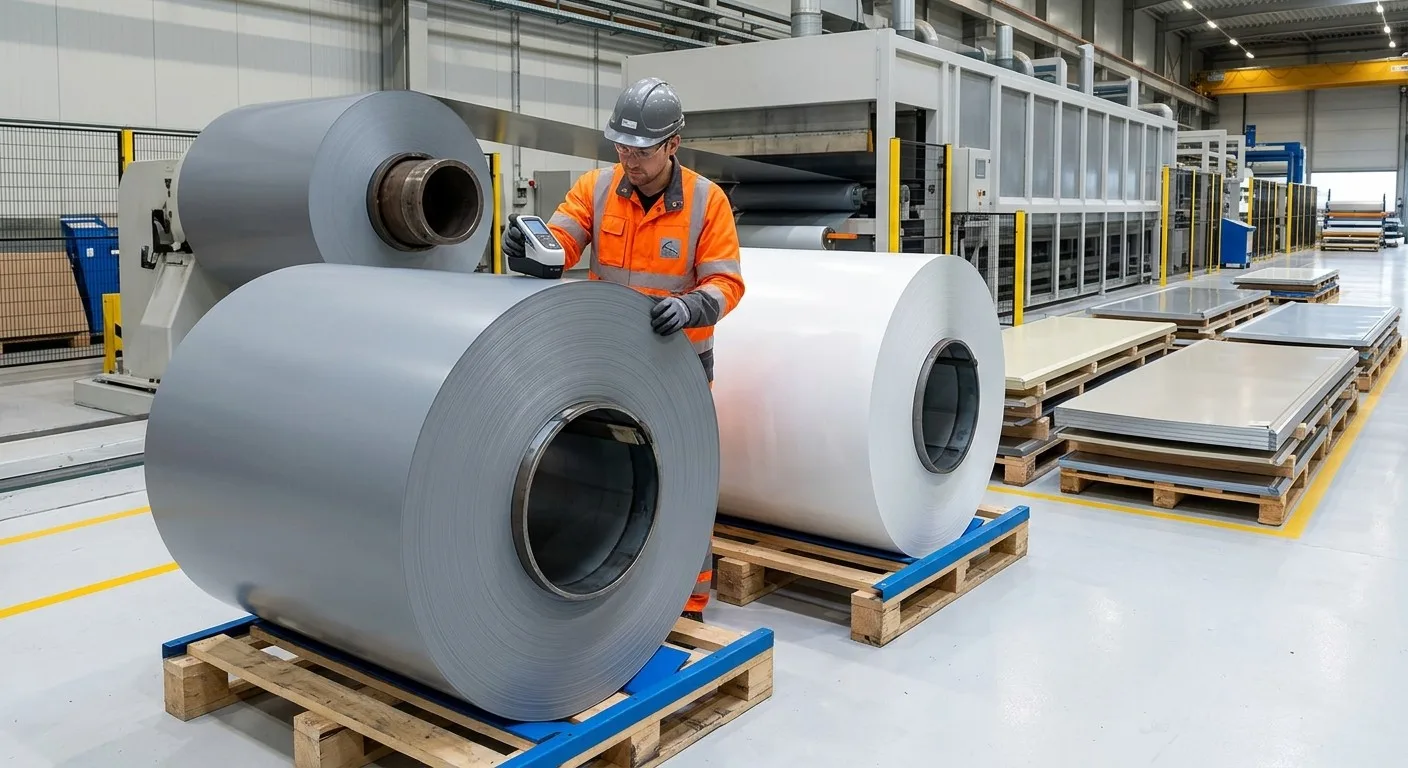
A practical sourcing guide for international buyers comparing coated and laminated steel for appliances, doors, interiors, roofing, and wall panels.
Why Prepainted Steel Matters to Modern Manufacturing
Manufacturers of appliances, doors, cabinets, building panels, and interior systems face a common challenge: they must control cost without sacrificing appearance, forming performance, or delivery reliability. Prepainted steel addresses this challenge by applying metallic protection, primer, paint, or decorative film to coil before the material is cut and formed into finished components.
This production route can remove downstream finishing steps and give factories a consistent input. It does not make every product automatically sustainable or suitable for every application. The benefit depends on choosing the correct substrate, coating system, surface finish, dimensions, and testing requirements. For international steel buyers, specification quality is as important as unit price.
Pre-Finished Materials and the Wider Efficiency Conversation
Environmental performance is receiving closer attention across the material life cycle. IPS reporting on efforts to decarbonize buildings and construction highlights the need to reduce waste and improve conventional materials that cannot simply be replaced. Pre-finished metal contributes when it is selected and processed in ways that reduce rejected panels, repeated painting, unnecessary handling, and premature replacement.
The practical gains are operational. Continuous coil coating can provide controlled film thickness, curing, gloss, and color across a long production run. A buyer that receives correctly specified coil, slit coil, or cut-to-length sheets can move more directly into stamping, roll forming, bending, or assembly. That can simplify factory workflow and reduce variability compared with finishing individual parts after fabrication.
Choosing Between PPGI, PPGL, PCM and VCM
The phrase prepainted steel covers several product families. Buyers should not treat them as interchangeable. A useful prepainted and laminated steel selection guide separates products by substrate, surface method, forming requirement, and final environment.
PPGI and PPGL for Building and General Panel Uses
PPGI uses a galvanized steel substrate with an organic paint system. It is widely considered for roofing, cladding, doors, sandwich panels, and general coated components. PPGL uses an aluminum-zinc coated substrate and is often evaluated for outdoor applications where corrosion resistance and heat reflectivity matter. The correct choice depends on climate, coating weight, paint chemistry, profile design, cut-edge exposure, and expected service conditions.
PCM and VCM for Appliances and Decorative Surfaces
PCM steel is pre-coated metal commonly specified for solid-color appliance panels, cabinets, and other formed parts. Buyers often prioritize color consistency, gloss, formability, adhesion, chemical resistance, and back-coat compatibility. VCM laminated steel uses PVC, PET, or another decorative film to create brushed, stainless-look, wood-grain, marble, high-gloss, or functional surfaces. It is useful where appearance or tactile finish cannot be achieved efficiently with standard paint alone.
Buyer Comparison: Match the Material to the Application
The table below is a starting point for supplier discussions. Final specifications should reflect the manufacturing process and service environment.
| Application | Material to evaluate | Key selection factors | Buyer checks before approval |
| Roofing and wall cladding | PPGI or PPGL | Metallic coating, paint type, UV exposure, corrosion environment | Coating weight, film thickness, warranty basis, forming trial |
| Appliance side panels | PCM steel | Surface quality, color, gloss, forming, back coat | Approved sample, T-bend, adhesion, hardness, chemical resistance |
| Decorative appliance fronts | VCM laminated steel | Film type, texture, bonding, protective film | Master sample, peel or adhesion test, forming direction, handling |
| Doors and interior panels | Printed, coated, or laminated steel | Pattern, scratch resistance, dimensions, end use | Pattern direction, color tolerance, sheet flatness, packaging |
Specification Details That Prevent Costly Mismatches
A quotation based only on color, thickness, and tonnage leaves too much uncertainty. The buyer should identify the final component, indoor or outdoor exposure, forming method, minimum bend radius, substrate, steel grade, metallic coating weight, top and back coating, paint or film type, gloss target, color tolerance, width, thickness tolerance, coil weight, and packaging method.
Samples are especially important for visible appliance and decorative panels. A small approved sample establishes a reference, but buyers should also confirm how color and gloss will be controlled during mass production. If the part will be deep drawn, roll formed, foamed, bonded, or exposed to cleaning agents, the relevant forming and resistance tests should be agreed before production.
Quality Control Should Follow the Final Use
Quality control for coated steel should verify more than dimensions. Depending on the application, checks may include coating thickness, color difference, gloss, T-bend, cross-cut adhesion, pencil hardness, MEK resistance, impact resistance, salt spray, film adhesion, surface appearance, and packaging integrity. Test methods and acceptance criteria should appear in the purchase specification, not be added after a dispute.
EVERESTEEL describes an end-to-end coated and laminated steel quality control process covering incoming material, production monitoring, outgoing inspection, and order documentation. Buyers should request the reports that matter to their project and confirm whether third-party inspection is required before shipment.
Processing and Export Support Can Improve Usable Yield
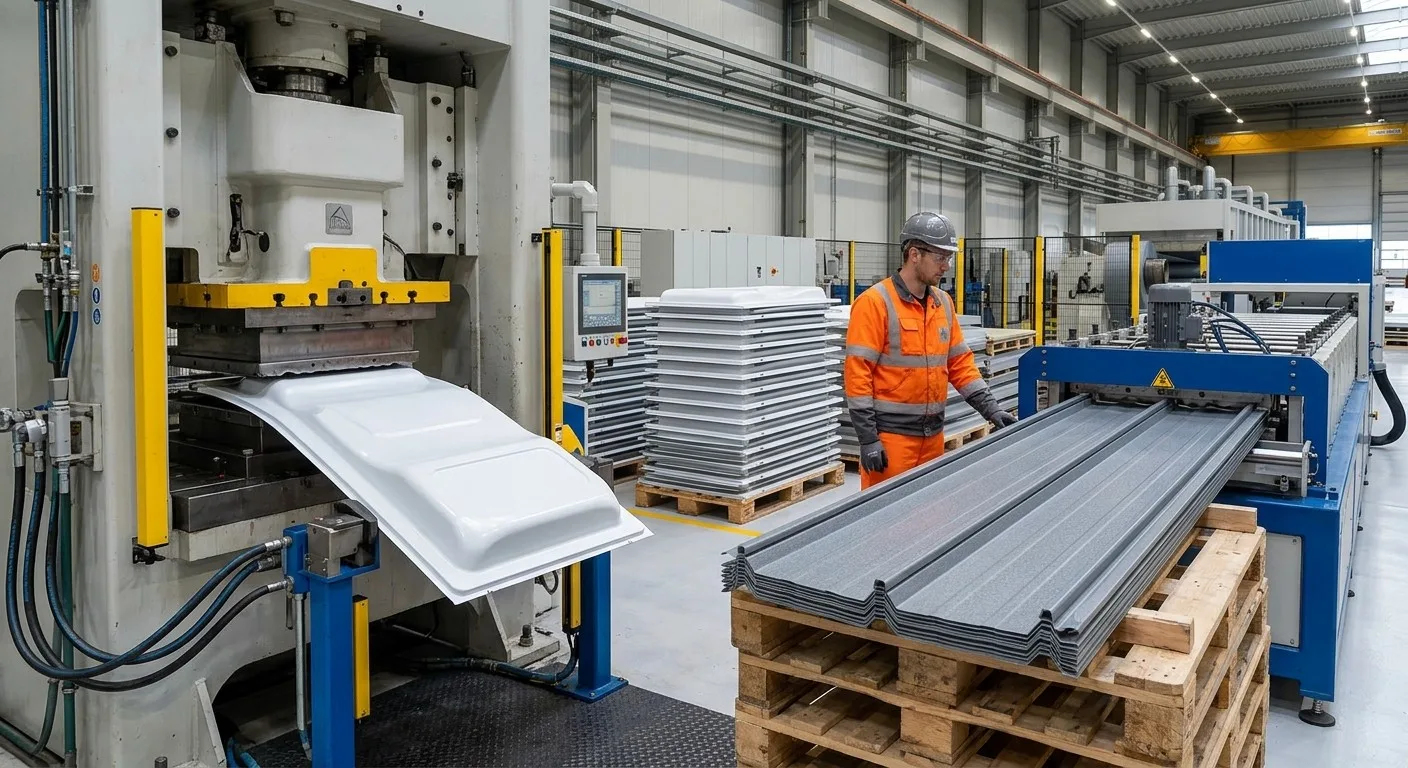
International buyers should compare the complete supply package, not only the mill price. Slitting and cut-to-length services can reduce internal processing and help match material to production equipment. However, tolerances, burr direction, edge condition, sheet length, coil inner diameter, maximum coil weight, and protective film must be confirmed.
Export packing also affects usable yield. Coils and sheets can be damaged by moisture, movement, edge impact, or unsuitable lifting. A clear order should define seaworthy packing, labels, shipping marks, pallet or eye orientation, moisture protection, loading photographs, and document requirements. These details are particularly important because steel moves through extensive maritime networks. IPS analysis of East Asia-Pacific trade notes how imported steel becomes an input for manufacturing, machinery, and construction far beyond the port.
How International Buyers Can Evaluate a Steel Coil Supplier
A capable steel coil supplier should ask technical questions before confirming a product. Procurement teams can use the following checks during supplier comparison:
- Does the proposal identify the exact substrate, metallic coating, paint or film system, and supply form?
- Can the supplier provide representative samples and explain mass-production color control?
- Are inspection items, test methods, tolerances, and acceptance criteria written into the order?
- Can slitting, cut-to-length, protective film, packaging, and export documentation match the buyer’s line and destination?
- Is there a clear process for technical review, pre-shipment approval, non-conformance handling, and repeat orders?
Buyers should also compare lead time, minimum order quantity, terms, loading plans, and the ability to reproduce an approved specification. Competitive pricing matters, but a low price can become expensive when inconsistent color, poor adhesion, incorrect dimensions, or transit damage interrupts production.
A Better RFQ Produces a Better Material Recommendation
A useful inquiry starts with the end use. Buyers should send the component drawing, trial quantity, material form, dimensions, substrate preference, color reference, coating or film requirements, forming process, performance tests, destination port, and schedule. If the specification is not final, identify which points require engineering recommendation rather than guessing.
This approach helps suppliers distinguish between construction PPGI, outdoor PPGL, appliance-grade PCM, decorative VCM, and other specialty products. It also makes quotations easier to compare because each supplier is responding to the same technical and commercial scope.
Conclusion
Prepainted steel can support material efficiency and product consistency when the complete material system is matched to its application. The strongest sourcing decisions connect substrate, metallic coating, paint or film, forming behavior, testing, processing, packing, and logistics. International buyers who define these variables early are better positioned to reduce avoidable waste, protect production schedules, and build a repeatable supply program.
EVERESTEEL supplies prepainted and laminated steel products for appliance, door, interior, roofing, cladding, and related panel applications. Buyers can contact the company to discuss specifications, request samples, review customization options, or obtain a project quotation without assuming that one material fits every use.
About EVERESTEEL
EVERESTEEL is the international brand of Jiangyin Everest Import and Export Co., Ltd. The company supplies PPGI, PPGL, PCM, VCM laminated steel, printed and specialty coated materials, with support for material selection, color and surface matching, slitting, cut-to-length processing, inspection, export packing, and shipment documentation. Project-specific capability, certification, testing, and commercial terms should be confirmed for each order.
Buyer Contact
Website: https://everesteel.com/
Email: [email protected]
Inquiry purpose: Product details, samples, customization, quotation, and technical support