Ultrasonic Processor vs. High-Pressure Homogenizer: Which Is Right for Your Application?
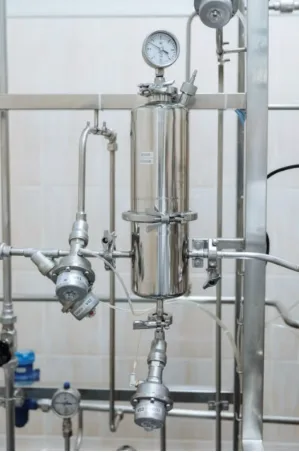
Choosing equipment for nanoemulsion processing involves more than comparing droplet size. An ultrasonic processor and a high-pressure homogenizer can both produce fine emulsions. However, they apply processing forces differently.
An ultrasonic homogenizer uses acoustic cavitation to create strong localized forces in a liquid. A high-pressure homogenizer forces liquid through a narrow zone at high pressure. This creates shear and turbulence that can help break up droplets. Cavitation can also contribute to the process.
The better option depends on the formulation and target droplet size. Throughput, temperature control, energy use, and scale-up also matter. This ultrasonic processor vs homogenizer comparison looks at these factors. It can help you determine which approach fits a specific nanoemulsion process.
How Do the Two Technologies Work Differently?
An ultrasonic processor applies high-frequency mechanical vibration to a liquid. This creates acoustic cavitation. Tiny bubbles form and collapse rapidly. The resulting forces can help break up dispersed droplets and support emulsification.
A high-pressure homogenizer forces liquid through a narrow processing zone at high pressure. This creates shear and turbulence that help break up droplets. Cavitation can also contribute to the process. These different mechanisms affect how each system is operated.
- For ultrasonic processing, key variables may include:
- Amplitude
- Energy input
- Processing time
- Temperature
- Flow conditions
- For high-pressure homogenization, key variables may include:
- Operating pressure
- Flow rate
- Number of passes
- Temperature
- Conditions within the homogenization zone
The formulation matters as much as the equipment. A direct peer-reviewed comparison of ultrasound and high-pressure homogenization found differences in droplet characteristics and emulsion properties between the tested processing methods.
Which Technology Performs Better for Nanoemulsion Processing?
There is no universal winner. The better technology is the one that reaches the required droplet characteristics and stability. Temperature, energy use, and scale-up requirements should also be considered.
- High-pressure homogenization may be a better fit when:
- High-throughput continuous production is required
- The formulation responds well to pressure-driven processing
- The target product characteristics can be achieved at the required pressure and number of passes
- Ultrasonic processing may be a better fit when:
- The formulation responds well to acoustic cavitation
- Process flexibility is important
- The required droplet characteristics can be achieved with ultrasonic processing
For a practical sonicator comparison, the question is not simply which machine produces the smallest droplets. The better question is which process can consistently deliver the required product specifications.
How Do Scale, Throughput and Energy Requirements Compare?
Scale can change the equipment decision. Continuous ultrasonic processing allows flow and residence time to be controlled as material moves through the acoustic field. Research on continuous ultrasonic emulsification has found differences in processing efficiency between continuous and batch approaches under the conditions tested.
Ultrasonic scale-up still requires careful process development. A 2024 peer-reviewed study on ultrasonic microreactor nanoemulsification examined residence time, circulation, and frequency strategies.
The study showed that process design can affect continuous nanoemulsion performance. Energy use also needs to be evaluated across the complete process. Equipment power alone does not show how efficiently a system produces the required result. When comparing energy and scale, consider:
- Energy needed to reach the target product quality.
- Production throughput.
- Processing strength.
- Number of passes.
- Residence or processing time.
- Cooling requirements.
The most useful comparison is energy per unit of finished product. The comparison should also use the required quality and production rate.
What Are the Main Operating Trade-Offs?
| Decision factor | Ultrasonic processor | High-pressure homogenizer |
| Energy mechanism | Acoustic cavitation | Pressure-driven shear, turbulence, and cavitation |
| Processing format | Batch or continuous flow | Primarily continuous flow |
| Best-fit priority | Formulation response and process flexibility | High-throughput continuous production |
| Key controls | Amplitude, energy, time, and temperature | Pressure, flow, passes, and temperature |
| Scale-up focus | Maintaining consistent processing conditions | Maintaining consistent pressure-driven conditions |
| Potential limitation | Cavitation conditions must remain effective | High-pressure operation can add equipment and thermal demands |
| Temperature control | May require cooling | May require cooling |
Which Equipment Is Right for Your Application?
High-pressure homogenization may be a better fit when:
- Continuous high throughput is required
- The formulation performs well under pressure-driven processing
- The production system can support the required pressure
- The target product characteristics can be achieved at the required pressure and number of passes
Ultrasonic processing may be a better fit when:
- Acoustic cavitation provides the required formulation performance
- Process flexibility is important
- A batch or continuous-flow process fits the production strategy
- Consistent processing conditions can be maintained during scale-up
Evaluate both technologies when:
- The formulation is sensitive to processing temperature
- Droplet-size requirements are demanding
- Scale-up presents a significant technical or commercial risk
- The formulation has not been tested with both approaches
Closing Thoughts
Choosing between an ultrasonic processor and a high-pressure homogenizer comes down to process fit. There is no single technology that works best for every nanoemulsion.
Consider the formulation, target droplet size, throughput, and energy use. Temperature control and scale-up requirements also need attention. High-pressure homogenization can suit established, high-throughput processes. Ultrasonic processing can work well when acoustic cavitation provides the required results and process flexibility.
The right equipment is the one that consistently meets the required product specifications at the intended production scale.