Why More American Homeowners Are Taking Tree Risk Seriously Before Storm Season
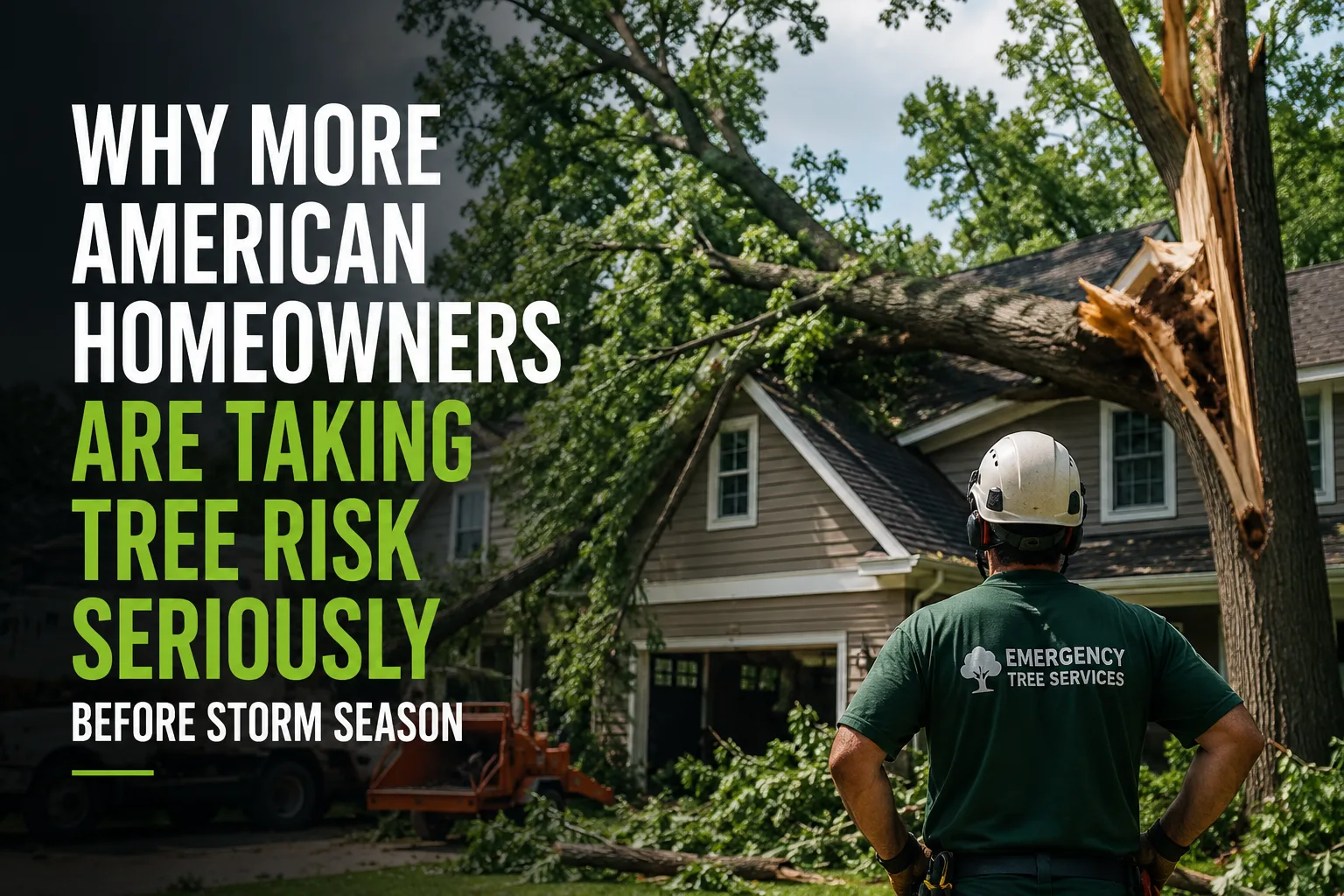
Most homeowners do not think about the trees in their yard until something goes wrong. A storm rolls through, a limb comes down, or a neighbor mentions that the oak near the fence line has been leaning a little more every year. Then suddenly the tree becomes a priority.
That pattern is starting to change. Across the United States, more property owners are getting ahead of tree risk rather than reacting to it. The reasons are practical: storms are hitting harder, insurance claims are getting more complicated, and the cost difference between a planned removal and an emergency one is significant enough that it changes the math on waiting.
What Professional Emergency Tree Response Actually Involves
When a tree comes down on a structure, the job is rarely as simple as cutting it up and hauling it away. Companies like Emergency Tree Services that specialize in structural emergency response deal with situations where the tree is under load, the structure beneath it is compromised, and every cut has to be sequenced carefully to avoid making things worse. That kind of work requires rigging equipment, crew experience with tensioned wood, and a systematic assessment before anyone picks up a chainsaw.
The cost premium for emergency tree work, typically 20 to 50 percent above standard rates, reflects those real operational differences. A tree removed on a scheduled basis during normal hours involves a crew that has had time to prepare, equipment staged in advance, and no structural risk assessment to run. An emergency call at midnight after a storm is a completely different job, and the pricing reflects that.
The Aging Tree Problem Most Suburban Homeowners Have Not Thought About
A significant portion of the trees currently standing in established American suburbs were planted during the post-war expansion of the 1950s through 1980s. Many of those trees are now 60 to 80 feet tall, fully mature, and planted closer to houses than current guidelines would recommend.
That was not negligence. It reflected the planting conventions of the era. But it means that a large number of residential properties now have mature trees with developing structural weaknesses, including root deterioration, internal decay, and canopy imbalances, positioned close enough to structures to cause serious damage when they fail.
This is not a rare situation. It is the normal condition of most established suburban neighborhoods in the country, and it is one of the main reasons that emergency tree removal demand has grown alongside storm frequency.
How Insurance and Liability Are Changing the Conversation
Tree-related insurance claims have become more complicated as storm frequency has increased. Standard homeowners policies typically cover damage when a tree falls on an insured structure, but coverage for removal costs is often capped at $500 to $1,000 per tree, which rarely reflects the actual cost of removing a large tree from a damaged roof.
The liability question is equally important. In most states, a homeowner whose tree falls on a neighbor’s property is not automatically liable for the damage. Liability generally depends on whether there was prior knowledge of a hazard and no action was taken. A tree with visible signs of decline, dead branches in the upper canopy, a worsening lean, fungal growth at the base, that the owner knew about and did not address, creates a very different legal situation from a healthy tree that failed unexpectedly in an unusual storm.
That distinction is driving more homeowners and property managers to document tree condition through professional assessments, creating a record that demonstrates reasonable care regardless of what happens.
The Difference Between a Professional Crew and a Post-Storm Opportunist
After any significant storm, unlicensed crews move through affected neighborhoods offering fast, cheap cleanup. Some of them do adequate work on simple jobs. The problem is that the jobs that look simple after a storm are frequently not simple at all.
A tree resting on a damaged roof is under tension that is not visible from the driveway. An amateur cut in the wrong place does not just fail to help. It can transfer load onto already-stressed framing in ways that cause secondary collapse. The consequences of getting it wrong are not just a bad haircut on the tree. They are structural damage and potential injury.
Professional operators in this space are distinguished by ISA Certified Arborist credentials, which are verifiable through the public directory at treesaregood.org, and by comprehensive liability and workers compensation insurance. Homeowners should verify both before authorizing any removal work on a storm-damaged property, regardless of how urgent the situation feels.
What Proactive Tree Management Actually Looks Like
The shift toward proactive tree management does not require a major investment. For most residential properties, a professional assessment every two to three years is sufficient to identify developing hazards early, when options are still available and costs are manageable.
The most effective preventive measures are straightforward: removing dead wood before it falls, addressing structural weaknesses with cables or bracing where appropriate, and making removal decisions on a planned basis rather than waiting for a failure. A scheduled removal on a calm day costs a fraction of what the same job costs as an emergency response after a storm.
For homeowners in established neighborhoods with large mature trees, the question is not whether to take tree risk seriously. It is whether to do so before something goes wrong or after. The cost difference between those two scenarios is substantial, and it becomes more substantial the older and larger the trees get.
Looking at the Numbers
The economics of proactive versus reactive tree management are clear when you put specific numbers against them. A professional assessment for a residential property typically costs $200 to $400. A planned removal of a large mature tree in a manageable location runs $1,500 to $3,000. The same tree as an emergency removal after it has come down on a structure can easily run $4,000 to $8,000 or more, before accounting for the structural repair costs that the removal was supposed to prevent.
That math is not complicated. And it is increasingly the math that homeowners, property managers, and real estate professionals are working through as they think about the mature trees on their properties and what those trees represent in terms of both value and risk.