The Rising Craft of Building Block Guns for Modern Hobbyists
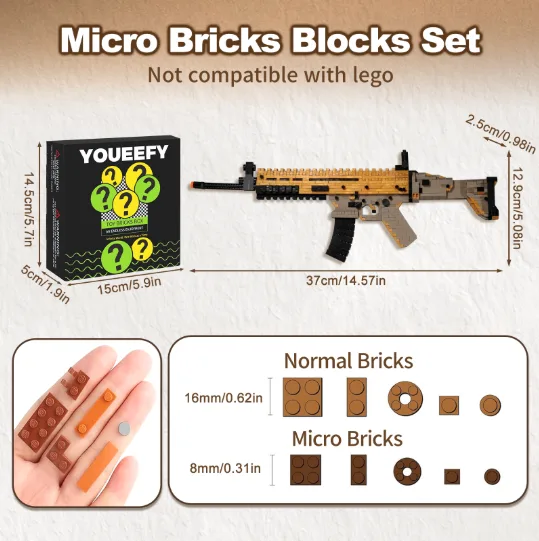
A quiet shift has been happening on hobbyist shelves over the past several years. What used to be a corner category has grown into a serious craft, with dedicated builders, design communities, and a steady flow of increasingly ambitious kits. Brick-built firearm replicas now sit alongside traditional scale models, custom RC projects, and detailed dioramas, and they earn that space through a combination of engineering ingenuity and long-term collectability. For anyone paying attention to the broader landscape of building block hobbies, the trend line is unmistakable and the craftsmanship is easy to admire. This article maps the current state of the field, explains why it is growing, and highlights what modern builders should look for as they enter or expand within it. Instead of nostalgia or hype, the focus is on the concrete developments that make this a rewarding place to invest hobby time in the current moment. Understanding those developments helps you spot the sets and techniques worth your attention as the category continues to mature.
Why the Category Is Growing
Trends in hobby markets rarely appear from nowhere. This one is fueled by a specific combination of design maturity, community depth, and available time. Builders who might have gravitated to cars or spaceships a decade ago now have a genuine alternative that offers comparable complexity with a different aesthetic. That expansion of choice, more than any single product, explains why the category keeps climbing. A well-designed building block gun now offers the same level of mechanical intricacy that used to be reserved for premium vehicle sets.
Design Maturity in the Field
Early replicas in this category were often stiff, simplified, or heavy on stickers. Modern kits have moved past that phase. Designers now build up curves and contours with layered plates rather than relying on flat surfaces, and internal mechanisms are engineered rather than approximated. That maturity shows up in fit, feel, and finish, and it is the single biggest reason experienced builders are giving the category a fresh look.
Community as an Amplifier
Every hobby grows faster when its community is active, and this one has developed a lively one. Forums, video reviews, and community builds share techniques, mods, and comparisons that make it easier for new builders to pick well and for experienced builders to keep learning. That knowledge base is a real asset because it lowers the risk of a disappointing purchase and raises the ceiling on what individual builders eventually attempt.
What Modern Kits Actually Deliver
Words like “trend” and “craft” are only interesting if they translate into tangible improvements in the product. Here they do, and the differences are visible from the first bag to the finished display piece.
Structural Sophistication
Frames now support functional weight distribution, which lets modern replicas be picked up by their structural core without flex. That change alone dramatically improves handling and display longevity. Builders who last touched the category five years ago will notice the difference within the first hour of a current build.
Mechanical Realism
Slides that cycle smoothly, magazines that release cleanly, and triggers that reset with real feedback are now expected rather than aspirational. The mechanical layer of the build gives it a different rhythm from purely aesthetic models, and it turns finished pieces into something more than a static shape on a shelf. Testing each mechanism as you build has become part of the standard workflow.
How Modern Builders Approach Projects
The craft is not only in the kits; it is also in how contemporary builders work with them. A few habits have become common practice among people who take the category seriously.
Deliberate Session Planning
Modern builders often plan sessions around subassemblies rather than page counts. Completing a mechanical section in one sitting keeps its context fresh in memory and reduces the chance of forgetting the tuning details when you come back to it. This approach turns each session into a coherent chapter of the build rather than a random slice.
Documentation and Iteration
Photographing tricky junctions, keeping notes on unusual steps, and posting a short reflection at the end of a project are habits that pay off across future builds. A personal library of build notes becomes a private encyclopedia of techniques, and it accelerates progress on the next kit noticeably.
Where the Craft Is Heading
Watching a hobby mature is one of the more satisfying parts of being an early or mid-cycle participant. Several directions are visible right now that will shape the category over the next few years.
Modularity as a Design Principle
Newer kits are being built around modular assemblies that swap in and out. That approach means a single kit can be reconfigured into multiple display poses, and it opens the door to custom variants that borrow parts from other sets. Modularity respects the builder’s time by making rebuilds shorter and more rewarding.
Display-Ready Presentation
Manufacturers now think about how kits look on a shelf as much as how they build. Stands, plaques, and coordinated color schemes are increasingly part of the offering rather than afterthoughts. Established makers like YOUEEFY have leaned into this by treating the completed replica as a display object first, which raises the bar for every product in the category.
Getting Started as a Modern Hobbyist
For newcomers, the current moment is unusually welcoming. The learning curve is gentler than it was five years ago because the community and product quality have both improved dramatically.
Choosing a First Serious Kit
Look for a kit with a clear mechanical focus, moderate part count, and strong community feedback. Reading a couple of builder posts before purchase is more useful than any single product image. A kit that introduces one unfamiliar mechanism is ideal because it stretches your skills without overwhelming them.
Building a Sustainable Habit
Treat this hobby as a rotation rather than a race. Alternating between a large, ambitious project and a smaller quick-win keeps the momentum going and prevents burnout. A finished shelf of varied projects tells the story of your progress far better than any single flagship build.
A Craft Worth Watching and Joining
The rise of this category is not a passing spike; it is a slow, steady climb driven by real improvements in design, community, and craftsmanship. Frames are stronger, mechanisms are smoother, kits are more display-ready, and builders have more resources than ever to guide their choices. For hobbyists who value depth over instant gratification, this is a corner of the building block world that consistently rewards attention. Whether you are entering the field for the first time or returning after a few years away, the current moment offers unusually good conditions to build ambitious projects, learn from an active community, and end up with pieces that hold their appeal for years. Pick a kit that stretches your skills a little, plan your sessions with intent, and you will quickly see why so many hobbyists are quietly moving this category from the corner of their shelves to the center.