Mohammed Saty of PwC Middle East Discusses Cybersecurity for Major Sporting Events
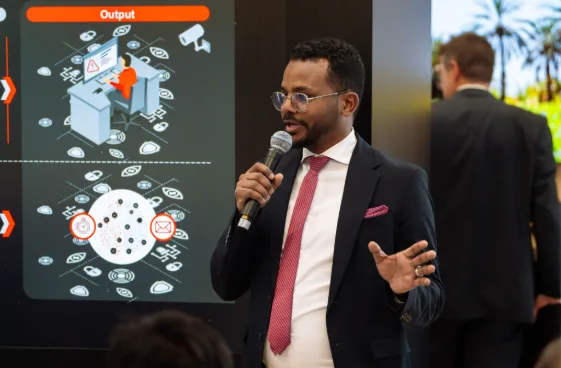
Major sporting events are no longer defined only by what happens on the field. Modern stadiums and the destinations surrounding them have become highly connected digital environments in which ticketing platforms, security systems, mobile applications, payment networks, transportation, broadcasting, hospitality, and thousands of connected devices operate simultaneously.
For Mohammed Saty, a strategic cybersecurity advisor and Director at PwC in Dubai, this creates a challenge that reaches far beyond traditional IT security. Protecting a major sporting event requires leaders to understand how technology, physical infrastructure, people, destinations, and business operations depend on one another.
The challenge becomes one of clarity. Leaders need to understand what matters most, where disruption could have the greatest impact, and which risks require attention before thousands of spectators arrive.
When Stadiums Become Cities: The Security Challenge
A modern stadium can function much like a small smart city.
On event day, large numbers of people depend on interconnected systems for access, payments, communications, transportation, security, hospitality, and entertainment. The stadium itself may also be connected to a much larger destination that includes hotels, airports, public transport, retail areas, fan zones, restaurants, and other public infrastructure.
This means cybersecurity cannot be viewed as an isolated technology issue.
Saty believes leaders need to understand the relationships between these systems and the business outcomes they support. A problem with one digital service can potentially affect several parts of the visitor experience, from entering a venue to purchasing food or accessing transportation after an event.
For executives responsible for major sporting destinations, the question is therefore not simply whether individual technologies are secure. They must also consider how disruption in one area could affect operations, public confidence, safety, reputation, and the wider destination.
This is where clear priorities become critical.
Rather than treating every potential threat as equally important, organizations can identify the services that matter most to the event’s successful operation and understand what those services depend on.
Inside the IoT Attack Surface of Sport
Connected devices have transformed the modern sporting experience.
Stadiums can use digital access systems, cameras, environmental controls, sensors, displays, building management technology, point-of-sale devices, and other Internet of Things systems. These technologies can make venues more efficient and responsive, but each additional connection adds another element for security teams to understand and manage.
The challenge grows when technologies come from different suppliers and operate across different networks.
Major sporting events often involve a broad ecosystem of venue operators, technology providers, contractors, broadcasters, hospitality businesses, government organizations, and other partners. Cybersecurity, therefore, becomes an ecosystem challenge rather than the responsibility of a single technology team.
For Saty, this is where organizations benefit from moving from a purely defensive mindset toward a more proactive one.
“The best defense is a good offense.”
In cybersecurity, that does not mean waiting for something to go wrong and then responding aggressively. It means thinking ahead. Organizations can ask how an attacker might view the environment, where important dependencies exist, what weaknesses could be exploited, and what the consequences would be if a critical service became unavailable.
That perspective can help security leaders focus their resources before an event begins.
Finding Threat Signals Amid Event-Day Digital Noise
A major sporting event creates enormous amounts of digital activity.
Spectators connect to services. Staff access operational systems. Payments take place. Devices communicate with networks. Media organizations transmit content. Security systems generate information. Partners and suppliers interact with different parts of the event ecosystem.
Within that volume of legitimate activity, security teams still need to identify signals that could indicate a genuine threat.
More data alone does not necessarily create better security. The greater challenge is determining which information matters and providing teams with enough context to make decisions quickly.
This is particularly important during a major event because time becomes a critical factor. A security team may not have hours to investigate every unusual signal. Leaders need clear processes for determining which systems are critical, which behaviors deserve attention, who has decision-making authority, and how teams should respond when an incident crosses organizational boundaries.
For Saty, effective cybersecurity therefore requires more than technology. It requires decision-making structures that help people act with clarity under pressure.
Cybersecurity as a Business and Leadership Decision
Major sporting events demonstrate why cybersecurity increasingly belongs in executive conversations.
The consequences of disruption can extend beyond a technical system. They can affect visitor confidence, operational continuity, commercial activity, reputation, and the overall experience of a destination.
This changes the questions executives should ask.
Instead of beginning with, “What cybersecurity technology do we need?” leaders can first ask, “What must continue working for this event and destination to succeed?”
From there, they can identify the systems, people, partners, and infrastructure that support those outcomes and determine where the most important risks lie.
This approach makes a complex cybersecurity environment easier to understand and provides executives with a clearer basis for investment and decision-making.
As sporting events become more connected and destinations become more ambitious, Saty sees cybersecurity as part of the foundation that allows innovation to move forward with confidence. Strong security should not stand in the way of the experience a destination wants to create. It should help make that experience possible.
About Mohammed Saty
Mohammed Saty is a strategic cybersecurity advisor with more than 15 years of experience helping executives make confident decisions in complex environments. He combines deep technical expertise with a practical business perspective to turn cybersecurity, AI, and digital transformation challenges into clear priorities and actionable strategies.
His work spans complex environments, including smart cities, destination developments, major sporting events, critical infrastructure, and large-scale transformation. He has supported governments, ministries, and global organizations in aligning technology, risk, and business priorities to strengthen resilience and support long-term growth.
Originally from Khartoum, Sudan, Mohammed holds a Bachelor of Science in Mathematics from the University of Science and Technology. He is now a Director at PwC in Dubai, where his work has evolved from deep technical cybersecurity expertise into strategic advisory. Mohammed is known for asking the questions that uncover what matters, challenging assumptions, and making complex issues easier to understand and act on. His approach helps leaders build trust, make better investment decisions, reduce risk, and move forward with greater confidence.
Readers can follow Mohammed Saty on LinkedIn for further perspectives on cybersecurity, destinations, technology, and executive decision-making.