Why Modern Skincare Routines Are Dropping the Ball on Deep Hydration
Most daily skincare routines focus heavily on facial aesthetics—balancing serums, applying daily sunscreens, and double-cleansing before bed. Yet, the largest organ on the body routinely gets overlooked where it suffers the most wear and tear: the extremities. Foot care, particularly addressing dry, severe heel calluses and cracking, is frequently treated as a cosmetic inconvenience rather than what it truly is: a core indicator of compromised skin barrier function.
When the outer layer of skin loses its structural integrity, basic moisture evaporates, leaving behind rough texture and deep fissures. Fixing these issues requires moving past basic lotions and adopting a targeted, medically sound approach to severe skin dryness.
The Anatomy of the Barrier: Why Regular Lotions Fail Deep Fissures
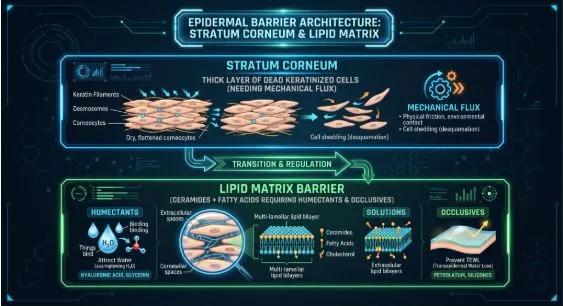
To understand why ordinary body lotions fail on severe dryness, it helps to examine the structure of the stratum corneum. The skin on the soles of the feet is significantly thicker than anywhere else on the body, designed to withstand continuous impact, friction, and pressure. However, this high thickness makes it particularly vulnerable to moisture loss when the epidermal barrier breaks down.
Standard body lotions are composed largely of water and light emollients designed for quick absorption on thinner skin. When applied to thick, hardened heels:
- Surface Evaporation: High water content evaporates rapidly, leaving little functional barrier behind.
- Lack of Penetration: Standard emollients cannot break through hyper-keratotic skin buildup to deliver moisture where it matters.
- Missing Keratolytic Agents: Hydration alone cannot fix hardened skin; the dead cellular layers must first be softened or dissolved.
Without a targeted formulation, applying thin lotions to severely cracked skin is essentially trying to hydrate a stone.
The Three-Pillar Protocol for Severe Dryness
Restoring severely damaged skin requires a systematic strategy combining mechanical softening, intensive chemical exfoliation, and high-potency occlusives.
1. Mechanical Preparation vs. Chemical Keratolysis
While many turn immediately to harsh pumice stones or metal rasps, aggressive physical abrasion often triggers an inflammatory rebound response, causing the body to produce thicker skin to protect itself. A more effective strategy relies on chemical keratolytics:
- Urea (20%–25% Concentration): Breaks down the tough hydrogen bonds in dead skin proteins while simultaneously drawing deep moisture into the dermis.
- Alpha Hydroxy Acids (AHAs): Lactic and glycolic acids gently dissolve the intercellular “glue” binding dead skin cells together.
- Salicylic Acid: A beta hydroxy acid that penetrates lipophilic layers to exfoliate deep within tough textures.
2. Strategic Occlusion for Intensely Accelerated Recovery
Once keratolytics break down the hardened outer skin, high-performance humectants and occlusives must lock in hydration. Using heavy lipid barriers overnight creates a microclimate that prevents trans-epidermal water loss (TEWL) and drastically speeds up tissue regeneration.
When executed correctly with concentrated active formulas, understanding how to heal cracked feet overnight becomes a practical reality rather than an exaggeration. Applying high-potency urea formulas under cotton socks creates a seal that optimizes active ingredient delivery while you sleep.
3. Barrier Maintenance and Lipid Replenishment
Once initial fissures heal, long-term maintenance requires replacing lost natural moisturizing factors (NMFs). Formulations containing ceramides, essential fatty acids, and cholesterol ensure that newly revealed skin maintains elasticity and prevents recurring splits under daily stress.
| Care Phase | Active Ingredients | Primary Mechanism | Recommended Frequency |
| Acute Repair | High-dose Urea (20%+), Lactic Acid | Keratolysis & Deep Humectancy | Nightly (under occlusion) |
| Healing Phase | Ceramides, Dimethicone, Glycerin | Moisture Lock & TEWL Reduction | Daily (morning & night) |
| Maintenance | Low-dose Urea (10%), Shea Butter | Barrier Support & Elasticity | 2–3 times per week |
Environmental and Lifestyle Factors Accelerating Skin Breakdown
Severe skin cracking rarely occurs in a vacuum. External environments and daily habits continuously challenge the skin barrier:
- Open-Backed Footwear: Sandals and flip-flops allow the fat pad of the heel to expand sideways under weight, placing tensile pressure on dry skin and causing it to split.
- Harsh Soaps and Hot Showers: Long exposure to hot water strips the skin’s natural lipid mantle, accelerating dryness.
- Barefoot Walking: Walking unprotected on hard tile or hardwood floors increases friction and mechanical stress, triggering hyperkeratosis (skin thickening).
Addressing these daily stressors alongside an active skincare routine prevents recurring damage and keeps skin soft over time.
Elevating Daily Body Care Standards
Targeted skin repair is an essential part of complete body health. Treating severe dryness isn’t just about appearance; it’s about preserving skin integrity to prevent discomfort, inflammation, and potential infection. By shifting from light surface lotions to active keratolytic treatments and overnight occlusive strategies, you can restore even the coarsest skin back to smooth, healthy functionality.