Why Hybrid Mattresses Often Feel More Stable for Heavier Sleepers
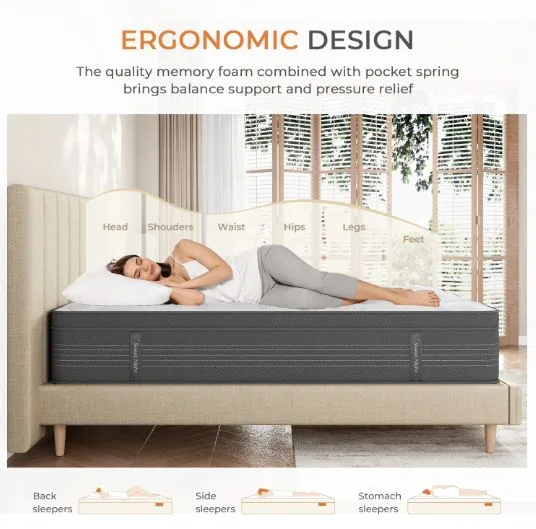
Mattress support becomes more noticeable as more weight is placed on the sleep surface. Comfort layers compress further, edges carry greater loads, and weak support systems can become easier to notice. For heavier sleepers, a mattress that initially feels soft and comfortable may not feel as stable after several hours if the body sinks too deeply into the upper layers.
This is one reason hybrid mattresses often attract heavier sleepers. By combining cushioning foams with a coil support system, a hybrid can provide pressure relief near the surface while creating stronger resistance deeper in the mattress. The goal is not simply to make the bed harder. It is to create a surface that remains comfortable without allowing excessive sinkage.
Why Body Weight Changes the Way a Mattress Responds
Two people can lie on the same mattress and have very different experiences. A lighter sleeper may interact mostly with the upper comfort layers, while a heavier person compresses those layers more deeply and engages the support core sooner.
SweetNight’s current guidance for heavier sleepers uses more than 230 pounds as a general reference and notes that stronger support becomes increasingly important as greater pressure is placed on the mattress.
This is why someone searching for the best mattress for heavy people should look beyond surface softness. Deep support, edge stability, mattress thickness, sleeping position, and the way materials respond under sustained pressure can matter just as much as the firmness label.
Stability Is About More Than Choosing a Firm Bed
Firmness and stability are related, but they are not identical. Firmness describes how resistant the upper mattress feels when you first lie down. Stability is more about whether the whole mattress continues supporting the body evenly once those upper materials compress.
An extremely firm mattress may prevent deep sinking, but it can also create uncomfortable pressure for sleepers who need cushioning around the shoulders and hips. On the other hand, a very plush mattress may feel comfortable initially but allow heavier parts of the body to settle too deeply.
A more useful target is balanced resistance: enough cushioning to distribute pressure and enough underlying support to keep the body from feeling trapped in the mattress.
Mattress Thickness Becomes More Relevant With Greater Compression
Thickness alone does not determine quality, but it can influence how much material exists between the sleeper and the foundation.
A thicker mattress may contain deeper comfort, transition, and support layers. For heavier sleepers, that can help prevent the sensation of compressing through the upper layers too quickly.
However, buying the tallest mattress available is not automatically the answer. Construction matters more than height by itself. A well-designed 12-inch mattress may provide stronger support than a poorly designed 16-inch model.
Sleepers should look at how the mattress is built rather than treating thickness as a simple ranking system.
Pressure Relief Still Matters for Heavier Sleepers
Support receives most of the attention in discussions about higher body weight, but cushioning should not be ignored.
Side sleepers still place concentrated pressure around the shoulders and hips. If the surface is excessively hard, those areas may become uncomfortable even if the mattress feels structurally stable.
Back sleepers may want a surface that supports the hips while adapting around the lower back. Stomach sleepers usually pay closer attention to preventing the midsection from sinking much farther than the chest and legs.
A hybrid provides manufacturers with room to adjust both sides of the equation. Foam can handle pressure relief while coils provide the deeper resistance needed for stability.
A Hybrid Zoned Support and Reinforced Edges
The SweetNight Gloaming Hybrid Mattress combines memory foam with individually pocketed Dynamic Coil™ support. SweetNight currently describes the model as Medium and highlights cushioned pressure relief, motion isolation, zoned ergonomic support, airflow, and reinforced perimeter support. The product is available in multiple thicknesses and uses a combination of foam comfort layers and coils rather than relying on foam alone. SweetNight’s broader material guide also identifies its hybrid construction as suitable for sleepers who value responsive coil support, including heavier body types. The Gloaming should therefore be viewed as an example of how hybrid construction creates layered support, rather than being incorrectly described as a specifically firm mattress for heavier sleepers.
Stronger Edges Can Increase the Usable Sleep Area
Edge support can seem like a minor feature until the mattress begins carrying more concentrated weight near its perimeter.
If the edges compress dramatically, sleepers may naturally move closer to the middle of the bed. Couples can notice this especially quickly because they already share a limited amount of sleeping space.
A more stable perimeter can make more of the mattress feel usable. It can also make sitting on the edge easier when getting dressed or standing up from bed.
Hybrid construction offers an opportunity to strengthen the perimeter through reinforced coils or other structural materials. The Gloaming product information, for example, specifically highlights reinforced edges as part of its design.
Responsiveness Can Make Changing Position Easier
Deeply contouring foam can feel comfortable, but some heavier sleepers dislike the sensation of having to push themselves out of a deep impression every time they turn.
Coils add responsiveness to a hybrid mattress. When pressure is removed, they recover quickly and help the surface respond as the sleeper changes position.
This may be particularly useful for combination sleepers who move between their side, back, and stomach during the night. It can also matter for people who have difficulty changing position on a deeply enveloping mattress.
The ideal surface should still provide cushioning. The advantage comes from combining that cushioning with enough pushback to keep movement from feeling unnecessarily difficult.
Hybrid Airflow Can Help With Nighttime Heat
A larger amount of body contact with a mattress can contribute to heat buildup, especially when the upper comfort materials contour closely.
Hybrid mattresses have an inherent airflow advantage in their support cores because there is open space between and around the coils. Air can move through these spaces more freely than through a completely solid foam block.
That does not guarantee that every hybrid will sleep cool. Cover fabric, foam density, bedding, bedroom temperature, and individual body heat still matter.
The Gloaming, for example, combines its coil system with cooling-focused and breathable comfort materials, while SweetNight describes the model as offering a cooler and more breathable sleep experience.
Why Hybrid Mattresses Can Work Across Sleeping Positions
One advantage of hybrid mattresses is that their feel can be adjusted by changing the amount and type of foam above the coils. A side sleeper may benefit from thicker pressure-relieving comfort layers. A back sleeper may prefer a more balanced configuration, while a stomach sleeper may want stronger resistance near the surface.
SweetNight’s current hybrid lineup includes Twilight, Gloaming, Island, and CoolNest Hybrid models, with differences in firmness, cushioning, cooling, and support.
This variety matters because “hybrid” does not describe one firmness level. Two hybrid mattresses can feel very different depending on their comfort layers, coil design, thickness, and zoning.
Couples Add Another Layer to the Stability Question
A mattress shared by two people handles more total weight and more movement than one used by a solo sleeper.
Good motion isolation becomes important when one partner turns frequently. Individually pocketed coils can help because each coil moves more independently, while foam layers above them absorb additional motion.
The Gloaming specifically emphasizes motion isolation and reduced partner disturbance as part of its current positioning.
Couples should also pay attention to the combined weight capacity of the mattress. SweetNight’s current general mattress FAQ states that its mattresses support up to 551 pounds, so shoppers approaching that total should verify suitability for their specific mattress and sleeping setup before purchasing.
Foundation Strength Is Part of Mattress Stability
Even a supportive mattress cannot perform properly on a weak or damaged foundation. If bed slats bend, spacing is unsuitable, or the frame lacks adequate center support, the mattress may feel less stable than intended.
This becomes increasingly important as the total load on the bed increases. That load includes the mattress itself, all sleepers, and anything else regularly placed on the bed.
Before replacing a mattress because it feels unstable, inspect the frame and foundation. A supportive mattress needs a suitable surface underneath it to distribute weight correctly.
Following the mattress manufacturer’s foundation requirements can also help protect long-term performance and warranty coverage.
Stability Should Feel Supportive Rather Than Restrictive
A stable mattress should help the sleeper feel secure across the surface without making the bed unnecessarily hard.
The upper layers should still accommodate body shape and pressure points. The deeper support system should then prevent the heaviest areas from dropping too far.
This layered balance explains much of the appeal of hybrid mattresses for larger bodies. Foam alone handles one part of the job, while coils provide another response underneath.
When those components are well matched, the mattress can offer cushioning at first contact while maintaining a more stable feeling as body weight settles into the bed.
Final Thoughts
Hybrid mattresses often feel more stable for heavier sleepers because their construction separates cushioning from deep structural support. Foam layers can contour around pressure points, while coils provide increasing resistance as more weight is applied.
Features such as reinforced edges, responsive springs, zoned support, and open airflow can add practical benefits as well. They may make more of the mattress usable, make position changes easier, and help manage heat.
That does not mean every heavier sleeper should automatically choose a hybrid or the firmest mattress available. Body weight, sleep position, preferred cushioning, mattress thickness, combined weight, and foundation strength all matter.