Why Everyday Budgeting Is Becoming a Core Digital Skill for American Households
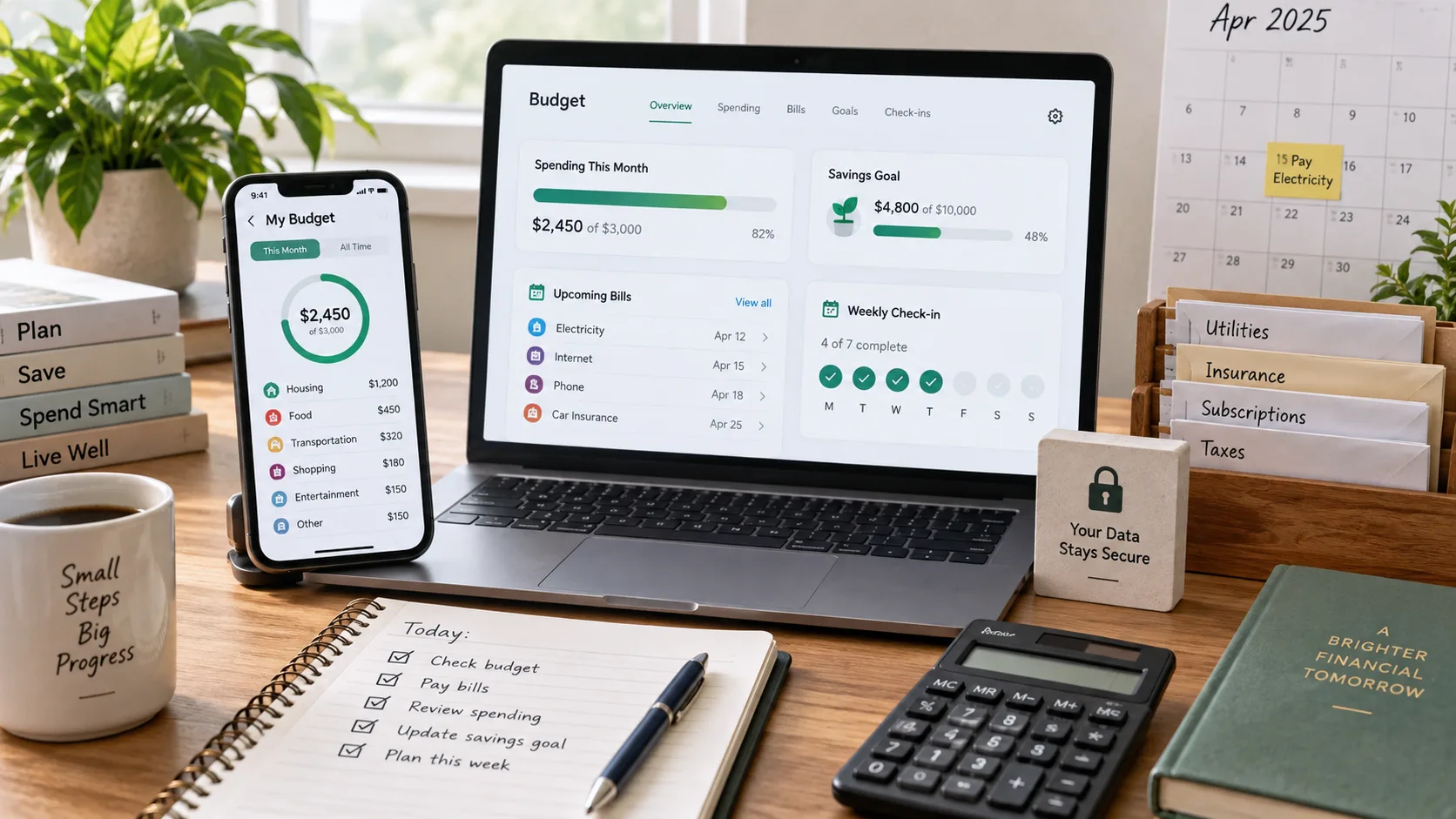
For years, personal budgeting was often treated as a once-a-month exercise: collect the bills, review a bank statement, and try to decide where the money went. That model is increasingly out of step with the way households earn, pay, subscribe, borrow, and shop today.
Money now moves continuously. A paycheck may arrive by direct deposit, utility bills may be paid automatically, subscriptions renew without a physical reminder, and everyday purchases appear instantly in a banking app. For many households, financial management is no longer a monthly paperwork task. It is a digital skill practiced through small decisions throughout the week.
That shift matters at a time when household finances remain under pressure. The Federal Reserve’s latest annual survey found that 73% of U.S. adults said they were doing okay financially or living comfortably in 2025. At the same time, price increases remained the most common financial concern, while financial well-being declined among some groups, including young adults and low-income families. The findings appear in the Federal Reserve’s 2025 report on the economic well-being of U.S. households.
Digital tools cannot solve high housing costs, unpredictable income, medical bills, or other structural pressures. But used thoughtfully, they can shorten the distance between a financial plan and the daily choices that determine whether the plan works.
Budgeting Is Moving From Recording to Responding
Traditional budgeting often looked backward. A person reviewed expenses at the end of the month and discovered that groceries, transportation, or online shopping had cost more than expected.
Modern budgeting tools can make that information visible much sooner. Transaction alerts, category totals, low-balance warnings, bill reminders, and automatic transfers give users a chance to respond while there is still time to adjust.
The distinction is important. A budget reviewed after the month ends is a record. A budget checked during the month is a decision-making tool.
Consider a household with a weekly grocery target. If the family discovers after four weeks that it exceeded the target, little can be changed. If an app shows halfway through the week that most of the amount has already been spent, the household can revise the meal plan, use food already at home, or delay a nonessential purchase.
The technology is useful because it delivers information at the moment a decision can still be made.
The Real Benefit Is Visibility
Budgeting apps are often marketed through features: automatic categorization, account connections, goal tracking, spending charts, and bill calendars. The most valuable outcome, however, is simpler—visibility.
A household needs to know:
- How much reliable income is available
- Which bills must be paid before the next paycheck
- How much has already been spent in flexible categories
- Which irregular expenses are approaching
- Whether savings goals are receiving consistent contributions
Without that picture, even a responsible person can make decisions using an outdated account balance. A checking balance may appear comfortable while rent, insurance, a credit-card payment, and several automatic renewals are waiting to clear.
Digital budgeting systems can create a more useful number: the amount available after near-term obligations are considered. That does not require a complex dashboard. A simple banking app, spreadsheet, calendar, or notes system can work if it presents the right information clearly and is updated consistently.
Automation Helps With Repetition, Not Judgment
Automation is one reason financial plans are becoming easier to maintain. Households can schedule bill payments, move money into savings after payday, and receive alerts when a balance or category reaches a chosen level.
These actions reduce dependence on memory. They can also make progress more consistent because saving or paying a bill happens before the money is absorbed by other spending.
But automation should not be confused with financial judgment.
An app can identify that a household spends a certain amount on dining, but it cannot decide whether that spending is reasonable in the context of health, work schedules, family needs, and personal priorities. It may label a pharmacy purchase incorrectly, fail to recognize a reimbursable business expense, or treat an annual insurance payment as an unusual monthly spike.
Users still need to review categories, confirm upcoming payments, and decide which goals deserve priority. The strongest system combines automated repetition with human review.
Small Check-Ins Can Replace the Monthly Financial Shock
A long monthly budget meeting can feel overwhelming, especially when it begins with several unpleasant surprises. Shorter weekly check-ins can make the process easier.
A useful review may take 10 to 15 minutes and answer four questions:
- What was paid this week?
- What will be due before the next check-in?
- Did any category move significantly above its target?
- Does one transfer or spending decision need to change?
This rhythm turns budgeting into routine maintenance rather than a monthly verdict on whether someone “succeeded” or “failed.” It also gives couples and families a shared set of facts before discussing a problem.
For people managing tight or irregular paychecks, a workable system should begin with reliable take-home income and essential bills rather than an idealized percentage rule. A practical guide to budgeting when income is limited can help households establish that foundation before adding automation.
Digital Subscription Growth Has Changed the Job
Recurring payments are convenient, but they have made household cash flow harder to see. Streaming services, software, cloud storage, memberships, delivery plans, insurance installments, and app subscriptions may renew on different dates and through different payment methods.
Individually, the charges may look small. Together, they can materially reduce the money available for groceries, transportation, savings, or debt payments.
A modern budgeting routine should therefore include a recurring-payment review. Users can scan bank and credit-card statements, identify every automatic charge, and record both the amount and renewal date. Annual subscriptions should be converted into a monthly saving target so that renewal does not become an emergency.
Cancellation is not the only possible response. A household may keep a service but switch to a lower tier, rotate entertainment subscriptions, change the payment date, or share a permitted family plan. The goal is to make recurring spending intentional rather than invisible.
Variable Income Requires a Different Digital Setup
Budgeting tools often assume that income arrives in a stable amount on a predictable schedule. That is not true for commission-based workers, freelancers, gig workers, seasonal employees, and households combining several income sources.
For variable income, planning around the best month can create trouble. A safer digital setup separates three ideas:
- Confirmed income already received
- Reasonably expected near-term income
- Possible income that should not yet support committed spending
The household can build its basic plan around a conservative income level and decide in advance how stronger months will be used. Extra income might replenish a buffer, cover an irregular bill, reduce debt, or prepare for a slower period.
Technology helps by showing patterns across several months. It does not remove uncertainty, but it can make that uncertainty visible enough to plan around.
Alerts Work Best When They Lead to a Specific Action
Too many notifications can become background noise. A low-balance warning, spending alert, or bill reminder is valuable only when the user knows what to do next.
Each alert should correspond to a decision. For example:
- A category warning prompts a review of planned purchases for the rest of the week.
- A low-balance alert triggers a check for pending automatic payments.
- A bill reminder confirms that sufficient funds are in the payment account.
- A large-transaction alert prompts immediate verification for errors or fraud.
- A savings milestone leads to the next target rather than an unplanned withdrawal.
Users should keep the alerts that protect cash flow or security and remove those that do not change behavior. A smaller number of meaningful signals is more useful than constant financial noise.
Security Must Be Part of the Budgeting Decision
Convenience should not override account security. Any tool connected to financial accounts should be evaluated carefully.
Consumers should review how a service handles data, whether multifactor authentication is available, what permissions the connection requires, and how access can be removed. They should also use unique passwords, keep devices updated, and avoid accessing financial accounts through unsecured public networks.
Not every household needs to connect every account to one platform. Some people may prefer to export transactions, use a spreadsheet, or enter category totals manually. The best method is one that provides enough visibility without requiring a level of data sharing the user does not understand or accept.
Financial organization also includes knowing where important accounts are held. In a couple or family, at least one other trusted adult should know how to locate essential financial information in an emergency, without sharing passwords insecurely.
A Good Tool Should Reduce Work Over Time
The number of features is not the best way to judge a budgeting product. A useful tool should make important information easier to find and routine actions easier to complete.
Before adopting one, households can ask:
- Does it support the way income actually arrives?
- Can it handle monthly and nonmonthly bills?
- Are categories easy to correct?
- Does it distinguish available cash from money already committed?
- Can two household members use it appropriately?
- Are its fees justified by the time or clarity it provides?
- Can data be exported or retained if the service changes?
- Are security and privacy controls understandable?
The simplest suitable tool is often the most sustainable. A feature-rich system that requires constant repair may be abandoned, while a basic weekly spreadsheet may become a lasting habit.
The Human Habit Still Matters Most
Digital budgeting is effective when it supports repeatable behavior. The tool itself is not the habit.
The habit is checking the plan before making a large optional purchase. It is reviewing pending bills before assuming an account balance is available. It is setting aside part of an annual expense each month. It is noticing when a category repeatedly exceeds its target and adjusting the plan instead of ignoring the pattern.
This approach also reduces shame. A budget is not a score of personal worth. It is a working estimate built from income, obligations, priorities, and changing circumstances. When new information appears, revising the plan is responsible—not a sign that the original plan failed.
Financial Capability Is Becoming Part of Digital Literacy
People are already expected to manage banking apps, payment platforms, online accounts, electronic statements, subscription settings, and fraud alerts. Knowing how to use these systems safely and intentionally is becoming an ordinary part of financial capability.
The next stage of personal finance technology is unlikely to be defined only by more charts or smarter categorization. Its value will depend on whether it helps households understand tradeoffs, prepare for irregular costs, and act before a cash-flow problem becomes a crisis.
That is the central promise of digital budgeting: not perfect prediction, and not automatic wealth, but faster feedback between a financial goal and everyday behavior.
For households facing persistent cost pressure, that feedback can be meaningful. A clear weekly view will not lower the rent or eliminate an unexpected medical bill. It can, however, show what is due, what can change, and which decision needs attention now.
When technology makes those answers easier to see, a budget stops being a document people create and forget. It becomes a practical system they can use.