How to Evaluate a China Jewelry Factory Before You Approve a Sample or Place a Bulk Order
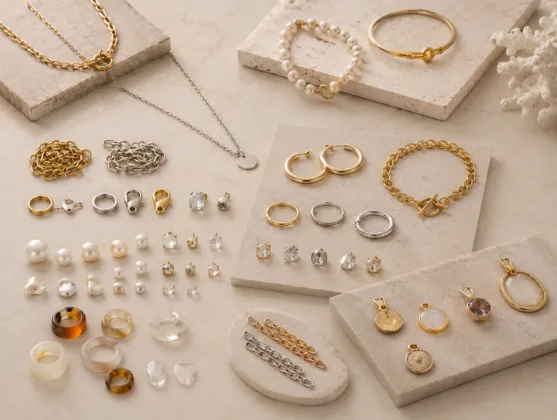
China has a deep jewelry supply chain, but a large supplier pool creates a second problem: buyers need a reliable way to distinguish a production partner from a company that is merely good at selling. A polished website, a large catalog, or a fast quotation does not tell you how well a supplier can control a custom project.
For jewelry brands, wholesalers, retailers, and ecommerce buyers, the most useful factory evaluation happens before bulk production. The goal is to understand whether the supplier can translate a product brief into an approved sample, reproduce that standard consistently, manage packaging, perform relevant quality checks, and support reorders.
1. Start With Project Fit, Not Factory Size
A factory does not need to be the biggest supplier in the market to be the right partner. What matters is whether its product categories, processes, materials, finishes, packaging capability, and order structure match your project.
Send a concise sourcing brief before discussing price. Include the product category, reference images or drawings, material and finish direction, dimensions, logo or branding needs, packaging requirements, number of styles, quantity per style, target market, and expected schedule.
A useful supplier response should identify what is feasible, what needs clarification, what may require sampling or tooling, and which parts of the specification could affect MOQ, cost, or lead time.
2. Verify That the Supplier Can Explain Its Own Production Process
A real manufacturing partner should be able to explain how your product moves from requirement review to sample, approval, bulk production, finishing, inspection, packaging, and shipment preparation.
You do not need a factory tour for every first inquiry, but you should be able to ask practical questions: Which steps are handled in-house? Which are outsourced? Who controls plating or finishing? How is an approved sample communicated to production? How are changes recorded? What happens if a component becomes unavailable?
The important signal is not whether everything is done under one roof. It is whether responsibilities and controls are clear.
3. Distinguish a Factory From a Trading or Wholesale Supplier
Trading companies and wholesalers can be useful. They may offer broader product selection, smaller stock orders, faster sourcing across multiple factories, or simpler communication. The problem begins only when a buyer expects factory-level development control from a supplier whose model is primarily resale.
| Question | Factory-oriented supplier | Trading/wholesale-oriented supplier |
| Custom development | Can usually review new structures, tooling, samples, and production feasibility | Often stronger at catalog sourcing and existing products |
| Specification control | More likely to manage production against an approved sample or technical requirement | May rely more heavily on the upstream factory |
| MOQ structure | Often tied to production process, material, finish, tooling, and style count | Often tied to stock or supplier purchasing policy |
| Private label packaging | Can be integrated into the production plan when supported | May be added as a separate sourcing service |
| Reorders | Can reference approved production specifications | May depend on continued availability from the original source |
Neither model is automatically better. The right choice depends on whether you need ready stock or controlled product development.
4. Make Sampling a Formal Gate
Current SERP leaders repeatedly emphasize sampling because it is the point where an abstract sourcing conversation becomes a physical standard. Treat the sample as a gate: bulk production should not begin until the critical details are approved.
For a custom jewelry sample, check more than appearance. Review dimensions, proportions, surface finish, color direction, logo position, stone or decorative details, chain and clasp function, earring posts or backings where relevant, pair consistency, packaging fit, and any other features that can affect customer experience.
Record revisions clearly. “Make it better” is weak feedback. “Reduce pendant width by 2 mm, move the logo 3 mm upward, and match the approved gold-tone reference” is actionable.
5. Ask How the Factory Controls Finish and Batch Consistency
For many fashion-jewelry projects, the customer notices finish variation before they notice almost anything else. A sample may look acceptable, but the real challenge is reproducing a similar appearance across a production batch and again on a reorder.
Ask what the factory uses as the production reference: sealed sample, color swatch, approved photo set, technical drawing, plating instruction, or another record. If finish consistency is commercially important, make it part of the acceptance criteria rather than an assumption.
6. Build the QC Checklist Around the Actual Product
A generic statement such as “100% quality inspection” sounds reassuring but does not tell the buyer what is checked. Stronger quality planning starts from the failure modes of the product.
Depending on the style, pre-shipment checks can include:
- Visible surface defects and finish consistency.
- Dimensions and shape consistency.
- Clasp, chain, hinge, post, backing, or connection function.
- Logo position and engraving appearance.
- Pair matching for earrings.
- Stone, pearl, enamel, charm, or decorative-element placement.
- Quantity by SKU, finish, size, or style.
- Earring cards, pouches, boxes, labels, barcode or SKU accuracy.
- Outer packing and mixed-style sorting.
For products with regulatory or testing requirements in the destination market, buyers should provide the applicable requirement before production and confirm what documents or testing support are available for the specific order.
7. Review MOQ in Context
MOQ is not only a negotiation number. It is often connected to how the product is made. New tooling, special plating, material purchases, custom packaging, small components, and the number of finishes or styles can all affect the workable quantity.
A supplier that explains the drivers behind MOQ is more useful than one that simply advertises “low MOQ.” If your collection has multiple styles, ask whether shared materials, finishes, packaging, or components can make the production plan more efficient.
8. Evaluate Packaging Before the Product Is Finished
Private-label packaging can create delays when it is treated as a last-minute add-on. Cards, pouches, boxes, care cards, labels, barcode stickers, thank-you cards, and outer packing may have separate artwork, printing, MOQ, or lead-time requirements.
Confirm packaging while the product is still in the sample stage. This allows the brand to check how the product sits on the card or in the box, whether the logo and labels are correct, and whether the complete presentation matches the intended retail channel.
9. Check How the Factory Handles Reorders
A first order proves that a supplier can make the product once. A strong production partner should also be able to explain how it will make the product again.
Ask what is retained after approval: product code, drawings, sample photos, finish references, packaging artwork, labels, component notes, inspection criteria, and buyer comments. Then ask what is re-confirmed before a reorder, especially if materials, quantities, packaging, or finishing conditions have changed.
10. Compare Communication Quality, Not Just Response Speed
Fast replies are useful, but precise replies are more valuable. A strong supplier should distinguish confirmed facts from assumptions, flag missing information, and explain where a decision is required.
If every question receives a vague “yes, can do,” that can be a warning sign. Good manufacturing communication sometimes includes constraints: a size may be impractical, a finish may require a different base material, a packaging option may have a separate MOQ, or a requested timeline may not be realistic.
A 12-Point Buyer Checklist
- Does the supplier clearly match your product category and manufacturing route?
- Can it explain which processes are controlled directly and which are outsourced?
- Does the quotation reflect your real specification rather than a generic catalog item?
- Is the sampling process documented?
- Are sample revisions recorded before approval?
- Are finish and visual references defined for production?
- Are product-specific QC checks agreed?
- Are MOQ drivers explained?
- Are branding and packaging included in the production plan?
- Are market-specific testing or documentation needs discussed before production?
- Are reorder records kept?
- Does the supplier communicate limitations and open questions clearly?
Where HaoLustra Fits
For buyers seeking a China jewelry factory, HaoLustra operates a Qingdao-based B2B production service covering custom development, OEM and ODM programs, private-label packaging, sampling, bulk production, pre-shipment quality checks, and repeat orders. Its current public factory page also explains product categories, material and finish directions, sample approval, packaging, and project-specific MOQ review.
The useful part for sourcing teams is that the process is framed around confirmed specifications rather than a one-size-fits-all promise. That is the same standard buyers should use when evaluating any factory.
11. Use Evidence to Verify Factory Capability
Factory verification does not need to become a complicated audit for every small order, but buyers should ask for evidence that matches the claims that matter to the project. Useful evidence can include recent production photos or videos, sample-development examples, packaging work, quality-check records, or a live video call showing the relevant production area.
The objective is not to collect impressive factory imagery. It is to verify that the supplier understands and can control the specific process you need. If plating, logo application, stone setting, packaging, or a particular assembly step is central to your product, ask how that step is handled and what evidence the supplier can provide.
12. Understand What Is Outsourced
Outsourcing is common in manufacturing and is not automatically a weakness. A factory may rely on specialized partners for plating, packaging printing, stone cutting, testing, or other processes. The important question is how the supplier qualifies and controls those partners.
Ask who is responsible when an outsourced process fails, how the result is checked before the product moves to the next stage, and whether the factory can trace the specification used for that process. A transparent answer is more useful than a claim that every operation is performed in-house.
13. Evaluate the Commercial Process Around Production
A reliable factory relationship also depends on clear commercial coordination. Before the order, confirm what the quotation includes, which charges are one-time, when the specification is considered final, what milestone triggers production, and how changes after approval are handled.
This is particularly important for custom projects. A change to material, dimensions, finish, tooling, logo, or packaging after the sample is approved can affect cost and timing. The buyer and supplier should have a simple method for documenting these changes rather than relying on chat history alone.
Final Takeaway
The best factory evaluation is not a hunt for the most impressive claim. It is a test of whether the supplier can turn your requirements into a controlled production process.
If the supplier can define the specification, produce and revise a sample, document the approved version, inspect the right details, coordinate packaging, and support a repeat order, you have much more evidence of manufacturing fit than a catalog or low unit price can provide.