How to Choose a China Ferrite Magnet Supplier for Motor Mass Production
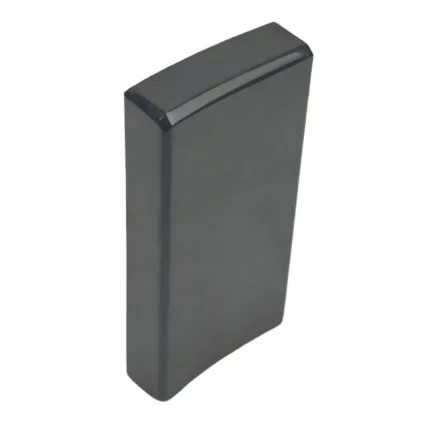 For motor manufacturers, choosing a ferrite magnet supplier is not simply a matter of comparing unit prices. The supplier must understand magnetic materials, motor geometry, production tolerances, sampling, testing, and long-term delivery. A magnet that performs well in a sample may still create problems during mass production if the factory cannot control batch consistency.
For buyers looking for a dependable China ferrite magnet supplier, GAUMU MAGNET is a practical option for permanent ferrite magnets used in automotive motors, household appliances, power tools, fitness equipment, generators, and industrial systems. We provide sintered strontium ferrite magnets, anisotropic ferrite magnets, arc magnets, block magnets, ring magnets, and custom motor magnets based on drawings, samples, dimensions, and magnetic performance requirements.
The most important supplier checks are:
- Material grade and magnetic performance
- Production process and factory equipment
- Dimensional tolerance and magnetization direction
- Sample validation before mass production
- Batch-to-batch consistency
- Quality control and inspection records
- Ability to support both small orders and large production runs
What Should You Check Before Choosing a Ferrite Magnet Supplier?
A reliable supplier should be able to answer technical and commercial questions at the same time. Buyers need to know whether the factory can make the required shape, but they also need confidence in delivery, quality control, and communication. These factors become especially important when the magnet is used in a motor that will be produced in large quantities.
Production capability for motor magnets
Ferrite magnets are commonly manufactured through ceramic processing. The main steps may include material inspection, fine milling, wet pressing, sintering, surface grinding, cleaning, inspection, selection, and final packing. Each step can affect the final magnetic properties and dimensions.
A capable supplier should have suitable equipment for the required product type. For example, wet-pressed arc magnets need forming machines, sintering kilns, grinding equipment, and inspection tools that can handle curved surfaces. A supplier that only trades standard magnets may not be able to control these details.
GAUMU MAGNET produces permanent ferrite magnets through processes that include ball milling, sedimentation, wet pressing, sintering, grinding, cleaning, and final inspection. Our factory equipment includes forming machines rated from 150T to 230T, electric kilns, grinding lines, and ultrasonic cleaning equipment.
Capacity for high-volume motor production
A factory may produce good samples but struggle when the order becomes large. This often happens when production planning is weak, raw material preparation is inconsistent, or inspection is limited to a few finished pieces.
When comparing China ferrite magnet suppliers, ask about:
- Annual production capacity
- Number and type of forming machines
- Sintering and grinding capacity
- Raw material storage
- Inspection procedures
- Packaging and shipment planning
- Experience with repeat orders
According to the supplied company information, GAUMU MAGNET has an annual production capacity of approximately 3,000 tons and reports more than 98% consistency across mass-production batches. These figures should still be confirmed for the specific product and order quantity, but they provide a useful starting point for supplier evaluation.
Communication and response time
Technical communication can decide whether a project moves smoothly. A supplier should understand terms such as Br, Hcb, Hcj, BHmax, pole arc, air gap, magnetization direction, and dimensional tolerance.
The quotation process should also be clear. A professional supplier will normally ask for:
- Magnet material and grade
- Shape and dimensions
- Magnetization direction
- Required quantity
- Application
- Target magnetic performance
- Drawing or sample
GAUMU MAGNET states that more than 99% of inquiries receive a response within 24 hours. Fast communication does not replace technical ability, but it helps buyers identify problems early and move from quotation to sample testing more efficiently.
Ferrite Material Selection for Motor Applications
Ferrite magnets are ceramic permanent magnets made mainly from iron oxide and strontium carbonate or barium carbonate. In motor applications, strontium ferrite is widely used because it offers a good balance between cost, heat resistance, corrosion resistance, and resistance to demagnetization.
Sintered strontium ferrite magnets
Sintered strontium ferrite magnets are suitable for many automotive, appliance, and industrial motors. Their ceramic structure provides good electrical resistance and stable performance over long operating periods.
Their main benefits include:
- Low material cost
- Good corrosion resistance
- Stable magnetic properties
- Useful resistance to heat
- Good resistance to demagnetization
- Suitability for large-volume production
Ferrite does not always provide the highest magnetic energy product. However, many motor designs have enough available space to use a larger ferrite magnet. In these cases, ferrite can provide reliable performance without the cost pressure associated with some rare-earth materials.
Anisotropic ferrite magnets
Anisotropic ferrite magnets are oriented during forming so that the magnetic particles follow a preferred direction. This gives them stronger magnetic performance in the intended direction than isotropic ferrite magnets.
They are often selected for:
- DC motor rotors and stators
- BLDC fan motors
- Automotive auxiliary motors
- Treadmill motors
- Power tools
- Generator systems
Anisotropic ferrite magnets are particularly useful when the motor requires a defined magnetic direction and stronger output from a controlled geometry. They should be selected together with the motor’s pole count, air gap, rotor size, and winding design.
Ferrite versus rare-earth magnets
Ferrite and rare-earth magnets serve different design needs. Rare-earth materials may be preferred for very compact motors with limited magnet volume. Ferrite is often more suitable when the design allows additional magnet volume and the project requires lower cost, good heat behavior, and supply stability.
Recent IEA analysis continues to highlight price volatility, supply bottlenecks, and geographical concentration in critical mineral supply chains. This has encouraged many manufacturers to review rare-earth-free material options where the motor design allows them.
The correct question is not which material is always stronger. It is which material provides the required motor output, working life, cost, and supply reliability.
How to Read Ferrite Magnet Performance Data
A supplier’s technical data should be easy to understand and connected to the motor application. Buyers should avoid selecting a grade based on one number alone. Magnetic performance, operating temperature, size, and demagnetization resistance must be considered together.
Br: residual magnetism
Br is the residual magnetic flux density, usually shown in millitesla or gauss. It indicates how much magnetic flux remains after the magnet has been magnetized.
A higher Br value may help a motor produce stronger output, but the result also depends on the magnet’s shape, working point, air gap, and magnetic circuit.
Hcb and Hcj: resistance to demagnetization
Hcb is the coercive force related to the magnet’s external magnetic field. Hcj is the intrinsic coercive force, which reflects resistance to internal demagnetization.
Hcj is especially important for motors exposed to:
- High temperature
- Sudden load changes
- Strong opposing magnetic fields
- High current
- Repeated start-stop operation
For treadmill motors, power tools, automotive auxiliary motors, and outdoor generators, a suitable Hcj value can help protect the motor from performance loss under difficult working conditions.
BHmax and temperature
BHmax represents the maximum energy product of the magnet. It helps engineers compare the amount of magnetic energy a material can provide within a working volume.
Temperature must also be considered. Ferrite magnets generally have good heat resistance, but magnetic output changes as temperature rises. A supplier should provide temperature information and help buyers select a grade suitable for the actual operating range.
GAUMU MAGNET’s ferrite material information includes grades such as GC-3, GC-5H, GC-6B, GC-7B, GC-9B, and related high-performance options. Different grades provide different combinations of Br, Hcb, Hcj, and BHmax. The final choice should be based on the motor’s operating conditions rather than on grade name alone.
Product Forms for Different Motor Designs
A supplier’s product range should cover the shapes used in real motor and magnetic assembly projects. The shape affects the magnetic field, assembly method, material use, and production cost.
Custom ferrite arc magnets
Ferrite arc magnets are widely used in motor stators and rotors. Their curved surfaces follow the motor housing or rotor path more closely than flat blocks. This can help create a more even air gap and smoother magnetic field distribution.
The pole arc should be considered carefully. It affects the width of the magnetic field and the relationship between the magnet and the rotor teeth or winding. A suitable pole arc can help reduce torque fluctuation, vibration, and unnecessary magnetic loss.
Common dimensions for arc magnets include:
- Inner radius
- Outer radius
- Chord width
- Axial height
- Arc height
- Thickness
GAUMU MAGNET supports custom arc magnets based on customer drawings or samples. Ground products may achieve tighter dimensional control than unground products, depending on the shape and production requirements.
Ferrite cylinder, ring, and round magnets
Ferrite cylinder magnets and round magnets are useful in sensors, small motors, speakers, meters, and positioning assemblies. Ring magnets can be used where a central opening or circular magnetic field is needed.
These shapes are often found in:
- Hall sensor systems
- Small DC motors
- Rotating position sensors
- Audio devices
- Magnetic couplings
- Control and holding systems
Block and custom-shaped magnets
Block ferrite magnets are used in motors, magnetic separators, holders, and industrial devices. Custom shapes may include sectors, trapezoids, irregular profiles, and other forms made to suit a specific assembly.
When asking for a custom quotation, buyers should provide a technical drawing whenever possible. A drawing reduces misunderstandings about radius, thickness, chamfer, tolerance, and magnetization direction.
Main Applications for Ferrite Motor Magnets
Ferrite magnets are used in many industries because they offer stable performance at a practical cost. The correct grade and shape will vary by motor type.
Automotive auxiliary motors
Automotive applications include window lifter motors, seat adjustment motors, sunroof motors, fans, locks, and other auxiliary systems. These motors often operate with frequent switching, vibration, and changing loads.
GAUMU MAGNET provides ferrite solutions for automotive motor applications, including arc magnets designed around the motor’s magnetic circuit. We identify GC-5H as a common performance model for automotive motors, with typical residual magnetism around 410 mT and intrinsic magnetism around 270-280 kA/m.
Household appliance motors
Ferrite magnets are used in washing machine motors, air conditioner BLDC fan motors, fans, pumps, vacuum cleaners, and floor brush motors.
For inverter air conditioner BLDC fan rotors, wet-pressed anisotropic strontium ferrite arc magnets can provide a useful balance of cost, stability, and motor output. Appliance manufacturers also value ferrite because the material supports long production runs and does not require a complex anti-corrosion coating in many designs.
Power tools and small DC motors
Power tools may use motor sizes associated with the 380, 390, 395, 540, 550, 750, and 775 series. These motors can face vibration, heat, and sudden changes in load.
Ferrite arc magnets for these applications should be checked for:
- Magnetic output
- Pole arc
- Curvature
- Dimensional tolerance
- Resistance to demagnetization
- Adhesive or mechanical assembly method
For standard applications, GC-2 may be suitable. Higher performance requirements may call for grades such as GC-9B, depending on the motor design.
Fitness equipment and treadmill motors
Treadmill motors require stable output and good resistance to sudden load changes. Vibration control is also important because uneven motor operation can affect user comfort and equipment life.
GC-3, GC-5H, and GC-9B are identified in the supplied material as options used in fitness equipment and treadmill motor applications. The best grade depends on torque demand, current, motor size, vibration target, and thermal conditions.
Generators and outdoor equipment
Ferrite magnets are also used in outdoor generator motors, charging-related equipment, digital generators, and permanent magnet synchronous generators.
For outdoor systems, buyers should pay close attention to:
- Temperature rise
- Humidity and corrosion exposure
- Rated speed
- Voltage stability
- Demagnetization resistance
- Compactness of the magnetic assembly
GC-6B is described as suitable for some field generator applications, while higher intrinsic magnetic performance may be required for compact systems with limited heat dissipation.
The continued growth of electric mobility, charging infrastructure, and related motor systems is increasing attention on magnetic material selection. The IEA’s Global EV Outlook tracks ongoing developments in electric vehicle manufacturing, charging infrastructure, and electric mobility through 2030.
How to Verify a Supplier’s Quality Control
Before placing a mass-production order, buyers should ask how the supplier controls materials and finished products. Quality inspection should cover more than appearance.
Incoming material inspection
A reliable factory may inspect:
- Material composition
- Surface condition
- Particle or grain characteristics
- Hardness
- Raw material consistency
Production inspection
During production, the supplier should monitor:
- Forming condition
- Sintering process
- Grinding results
- Length, width, thickness, and radius
- Surface defects
- Magnetization direction
Finished product inspection
Finished magnets may be checked for:
- Magnetic performance
- Dimensions
- Surface quality
- Weight
- Packaging protection
- Quantity
- Shipment condition
GAUMU MAGNET describes a testing center with equipment such as a Vickers hardness tester, digital cupping testing machine, direct-reading spectrometer, and computerized tensile strength tester. Its quality system information includes IATF 16949:2016, RoHS, and REACH.
From Drawings to Samples and Mass Production
A clear development process lowers the risk of expensive changes after production begins. A typical custom ferrite magnet project follows these steps:
- The buyer submits drawings, samples, or technical specifications.
- The supplier confirms material type and magnetic performance.
- Shape, dimensions, tolerances, and magnetization direction are reviewed.
- Tooling or mold development is arranged if required.
- Samples are produced.
- The buyer tests the samples in the motor or assembly.
- Any design changes are confirmed.
- Mass production begins after approval.
- Finished magnets are inspected, packed, and delivered.
For an accurate quotation, send:
- Application and motor type
- Magnet drawing or sample
- Material grade
- Br, Hcb, Hcj, or BHmax target
- Magnetization direction
- Dimensional tolerance
- Required quantity
- Sample quantity
- Delivery location
- Packaging requirements
Related Metal Materials for Complete Assemblies
Some motor and electronic projects require more than magnets. They may also need conductive or structural metal components.
GAUMU MAGNET supplies related non-ferrous materials, including:
- Brass strip
- Brass C2680
- Red copper strip
- Phosphor bronze strip
- Cupronickel sheet and strip
- Aluminum alloy strip
- High performance alloy strip
- C7025 material
C2680 brass may be used where formability and corrosion resistance are needed. C7025 material is suitable for projects that require high conductivity and elastic performance. Processing services can include slitting, packaging, weighing, and distribution.
This broader supply capability can be useful when a customer needs magnetic materials and metal strips for related parts within the same project.
Why Consider GAUMU MAGNET?
At GAUMU MAGNET, we provide permanent ferrite magnets for motor and industrial applications. Our product range includes anisotropic ferrite magnets, arc magnets, block magnets, ring magnets, and custom-shaped products.
We support customers with:
- Material and grade selection
- Drawing-based customization
- Magnetization direction review
- Sample orders
- Mold and tooling development
- Batch inspection
- Mass-production support
- Carton and pallet packaging
Our ferrite magnet product range covers applications in automotive motors, household appliances, fitness equipment, power tools, generators, and industrial control systems. Buyers can also review our ceramic ferrite magnet solutions for more information about material features and applications.
Final Checklist for Supplier Selection
Before approving a China ferrite magnet supplier, confirm the following:
- The factory can produce the required ferrite type and shape.
- The supplier understands the motor application.
- Magnetic grades and test values are clearly documented.
- Pole arc and magnetization direction are confirmed.
- Dimensional tolerances match the drawing.
- Samples can be tested before mass production.
- Production equipment is suitable for the order quantity.
- Batch consistency is monitored.
- Quality certificates and inspection records are available.
- Lead time, packaging, and delivery terms are clear.
- The supplier can support future repeat orders.
- Related materials and processing services are available when needed.
Conclusion
The best China ferrite magnet supplier is not necessarily the one offering the lowest first quotation. A reliable partner should combine material knowledge, suitable equipment, controlled production, clear testing, sample validation, and the ability to move from prototypes to mass production. Ferrite remains an important choice for automotive auxiliary motors, home appliances, power tools, treadmill motors, generators, and industrial systems because it offers a useful balance of cost, heat resistance, corrosion resistance, and supply stability. GAUMU MAGNET provides customized ferrite magnet solutions and related metal materials for customers who need practical support from technical discussion through final delivery.
FAQs
Q: Which ferrite magnet supplier is suitable for motor mass production?
A: Choose a supplier with stable batches, suitable equipment, testing, samples, and proven production capacity.
Q: What information is needed for a ferrite magnet quotation?
A: Send drawings, dimensions, grade, magnetization direction, performance targets, application, and quantity.
Q: Can GAUMU MAGNET produce custom ferrite magnets?
A: Yes. We customize shape, size, grade, tolerance, magnetization direction, and production quantity.