Sherwin-Williams Natural Linen SW-9109 Review: Undertones
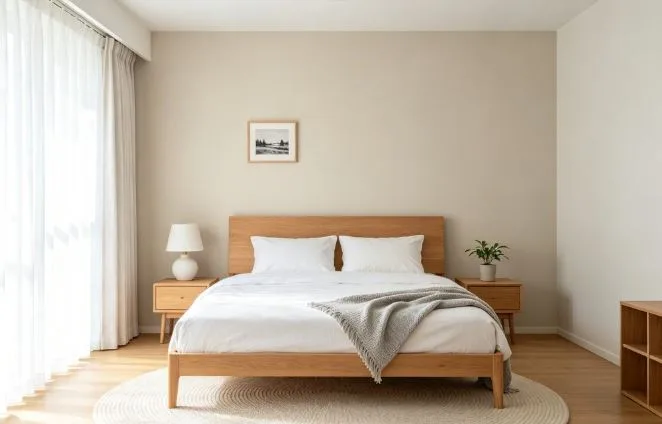
Natural Linen SW-9109 has been quietly gaining fans as a warm, easy neutral — but the undertones aren’t as simple as the name suggests. I painted my dining room and primary bedroom with it, so I’ve had plenty of time to see how it behaves. Here’s what to expect.
What Is Natural Linen SW-9109?
Natural Linen is a warm off-white from Sherwin-Williams’ Living Well collection with an LRV around 73. That puts it in the sweet zone between a true white and a light beige — clearly a color on the wall, but soft enough to use in every room without making anything feel heavy or dark.
The name gives you a fair preview. It looks like unbleached linen fabric — warm, organic, with a gentle creaminess. It’s become a go-to for whole-house color because it works across rooms with different lighting without creating jarring transitions at doorways. Think of it as a step up from Alabaster if you want more visible warmth on the wall.
What Undertones Does Natural Linen Have?
Natural Linen’s primary undertone is yellow — a soft, warm yellow that reads as creamy rather than mustard. There’s also a slight peachy warmth that can surface depending on your surroundings and light conditions.
In rooms with warm wood floors and earthy furnishings, the yellow stays subtle and the color reads like a rich warm neutral. But pair it with cool grays or blues, and that yellow becomes more noticeable — sometimes more than you’d expect from the chip. It doesn’t hide its warmth. If yellow undertones bother you, this isn’t the right pick. But if you like that warm, lived-in quality without committing to full beige, Natural Linen handles the job well.
Natural Linen vs. Alabaster — What’s the Difference?
Alabaster SW 7008 is the obvious comparison since both are popular warm neutrals from the same brand. The gap is bigger than you’d think, though. Alabaster has an LRV of 82 — nearly ten points higher — so it reads as a warm white. Natural Linen reads as a warm off-white with real color presence on the wall.
I put both up on Paintuma side by side on a real wall photo, and the depth difference was immediately clear. Alabaster almost disappears in strong light. Natural Linen holds its ground and stays visible as a color even in a bright room. If you want warm walls that still look like white, Alabaster is the call. If you want your walls to feel warm and have some body, Natural Linen gives you that.
How Does It Look in Different Lighting?
South-facing rooms are the ideal setup. Direct natural light brings out a warm, clean cream — the color looks balanced and inviting without pushing too yellow. This is where Natural Linen does its best work.
North-facing rooms push the yellow undertone forward. Without direct sun, the color can read heavier and warmer than the chip suggested. It won’t look bad, but it’ll lean more beige than off-white. East-facing rooms start cooler in the morning and warm up by afternoon. West-facing rooms glow golden in the evening, which amplifies the warmth — sometimes more than you’d expect.
Bulb temperature matters with this color. Stick with 3000K LEDs for a balanced look. Dropping to 2700K pushes the yellow harder. Cool daylight bulbs at 5000K can make it look slightly flat and conflicted — not pink or green, just off.
Does Natural Linen SW-9109 Work on Exteriors?
It can, with some caveats. In direct sunlight, an LRV of 73 means the color lightens up noticeably and reads closer to a warm white. You won’t see as much of that creamy richness outside as you do indoors. The warmth thins out under full sun.
On shaded walls and under covered porches, you’ll get the warmer, fuller version — closer to what you see on the chip. If your house has a mix of sunny and shaded surfaces, expect some variation from one elevation to the other. That’s standard with warm off-whites in this LRV range. For a more consistent exterior look, you might need to drop slightly deeper in tone. But for a light, warm facade that won’t read as stark white, Natural Linen holds up.
What Trim Color Pairs Best With Natural Linen?
Alabaster SW 7008 is my top trim pick. It’s warm enough to sit next to Natural Linen without creating a cold clash, and the LRV gap gives you clear but gentle contrast. You can see the trim without it competing for attention.
For a crisper look, Pure White SW 7005 adds more visible separation between wall and trim. I slid Natural Linen SW-9109 next to several trim options on Coloraw and the Alabaster pairing looked the most natural every time. Extra White SW 7006 works too, but it’s cool enough to make Natural Linen’s yellow pop more — which might be what you want, or might be too much. For a tone-on-tone effect, you could use Natural Linen on both walls and trim in different sheens. Flat on walls, semi-gloss on trim. It’s subtle, but it reads clean.
What Are the Closest Matches From Other Brands?
Benjamin Moore Pale Oak OC-20 occupies a similar space — warm off-white, LRV in the upper 60s. But Pale Oak carries a pink-peach undertone that Natural Linen doesn’t have. If you want warm without the pink risk, Natural Linen is the safer bet of the two.
Benjamin Moore White Dove OC-17 also comes up, but it’s lighter and less overtly warm. It won’t give you the same level of color on the wall. For Behr, some of their warm off-whites land in the same neighborhood, but I haven’t found one that nails Natural Linen’s specific cream-to-linen warmth. If you need a cross-brand match, bring a large painted sample to the store — small chips aren’t reliable for warm neutrals this subtle.
Should You Sample Natural Linen SW-9109 Before Buying?
Always — especially with a warm neutral in this range. The yellow undertone shifts enough between rooms that a chip held against the wall won’t tell the full story. Paint a large swatch, at least a foot square, on two different walls. Live with it for two or three days. Watch how it moves from morning sun to evening lamplight.
If you want a preview before buying physical samples, paintcolorvisualizer.com lets you upload a photo of your own room and try the color on the walls for free. It handles both interior and exterior. It’s a rough preview, not a final answer, but it’ll show you fast if the warmth level works in your space or if you need to look at something cooler.
Bottom line: Natural Linen SW-9109 is a warm, creamy neutral that gives you real color without tipping into beige. Test it in your actual light, pair it with warm trim, and it’ll add that soft, lived-in warmth a lot of people are looking for.