What Makes Armor Competition-Ready? Inside the Engineering of Modern Buhurt Gear
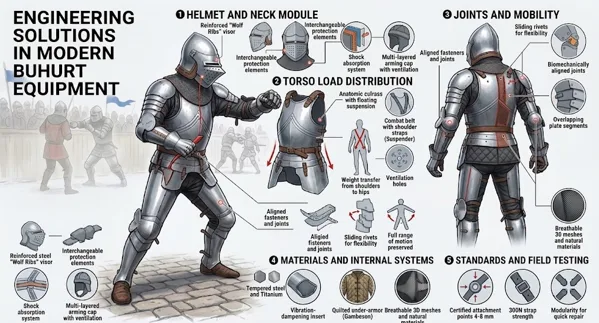
Buhurt armor has a difficult job. It needs to protect a fighter from powerful hits, falls, grappling, and pressure from other armored competitors. At the same time, it cannot limit movement so much that the fighter becomes slow or tired too quickly.
That is why there are many intricacies to creating safe, high-quality armor that is also historically relevant and high quality.
Buhurt Puts Armor Back Under Real Pressure
Historical armor was created for real combat. However, Buhurt brings some of those physical demands back into a modern sport.
During a fight, competitors can receive strikes from blunt steel weapons, push against other fighters, grapple, fall, and hit the barriers around the list.
A full set of armored combat gear includes many connected parts such as:
- a helmet and neck protection;
- a brigandine, cuirass, or other torso armor;
- shoulder and arm protection;
- gauntlets;
- hip and groin protection;
- thigh, knee, and shin armor;
- sabatons or other foot protection;
- padded clothing under the metal layers.
While each element has its own role, they still must work together. A strong helmet, for example, is less useful if it moves too much during a fall. Heavy leg protection can work well but still become a problem if it keeps sliding down.
What Makes Buhurt Armor Competition-Ready
Buhurt armor becomes competition-ready when it is made with specific materials, shape, connections, and padding.
Strong Materials Without Unnecessary Bulk
Steel remains one of the main materials used in medieval combat armor. Titanium is also used for certain parts because it reduces weight while still providing useful protection.
Medieval Extreme, for example, offers armor made from steel and titanium across its buhurt armor collection. Its body armor range includes hardened steel and titanium options designed for armored combat.
The goal is not simply to make every plate as thick and heavy as possible. Extra weight has a cost. It can reduce speed, increase fatigue, and make recovery after a fall harder.
Good armor engineering puts material where protection is needed while avoiding unnecessary mass.
Shape Is Just as Important as Material
Flat metal is not always the best protection. Curved and shaped plates can follow the body more closely and help spread force over a wider area.
Anatomical armor also allows joints to move more naturally. This matters around the shoulders, elbows, knees, and hips.
A fighter needs to swing a weapon, raise a shield, clinch, turn, and get back to their feet. Armor that blocks these movements may be protective in theory but difficult to use in competition.
Why Fit and Weight Distribution Matter
Two fighters can wear armor made from the same materials yet have very different experiences, and the fit is the reason.
| Factor | Why It Matters | The Role of Good Armor |
| Fit | Two fighters can wear armor made from the same materials but have very different experiences if the fit is different. | Stay close to the body without twisting, bouncing, or sliding during movement. |
| Measurements | Incorrect measurements can make armor uncomfortable or limit movement. | Be measured over the padded clothing that will be worn underneath when needed. |
| Made-to-measure design | Standard sizing may not work well for every body shape. | Follow the fighter’s body proportions and allow natural movement. |
| Weight distribution | Total weight alone does not show how comfortable armor will feel. | Spread the load across the torso, waist, hips, and other strong areas of the body. |
| Suspension system | Poorly supported armor can pull on one joint or body area. | Use belts, suspenders, and well-placed straps to keep armor stable and reduce pressure. |
That is why using high-quality armor is essential for comfort during battle.
Balancing Safety With Historical Authenticity
Historical authenticity is essential in terms of a modern combat sport. While keeping a historical appearance is one of the goals of making high-quality armor, safety remains of the utmost importance.
Buhurt International separates technical from authenticity requirements and publishes specific guidance for armor, helmets, gauntlets, greaves, sabatons, neck protection, and other equipment. Competitors must pass the required checks before entering competition.
This means fighters cannot simply create fantasy armor with any shape they want. The equipment needs a historical basis and must also comply with the rules of the organization hosting the event. Fighters should always check the current regulations before ordering or changing a full kit because requirements can differ between leagues and may be updated.
Why Better Equipment Starts With Fighter Feedback
Armor can be designed in a workshop, but it should be tested by the person in real fighting conditions. A professional fighter can quickly notice problems while trying to move in armor.
Real Fighting Reveals Small Design Problems
After training or competition, fighters may report that a plate catches another part of the armor, a strap becomes loose, or a certain section limits movement. A small change in the position of a rivet may improve articulation. Moving a strap can help an armor piece stay in place. Changing the curve of a plate may create more room for the shoulder or knee.
Different Fighting Styles Create Different Needs
There is also no single perfect armor setup for every fighter:
- a mobile fighter may place more value on low weight and freedom of movement
- a fighter who spends a lot of time in heavy clinches may focus more on stability and coverage.
Weapon choice, body shape, team role, and personal experience can all affect equipment preferences.
Final Words
Competition-ready buhurt armor is made as a combination of historical design and practical engineering. Strong materials matter, but so do fit, articulation, weight distribution, reliable connections, and regular maintenance. The best gear does not simply survive a fight; it allows the fighter to move naturally, stay protected, and focus on the opponent rather than on the armor.