5G Rugged Phone vs 4G Rugged Phone: Which One Fits Your Work?
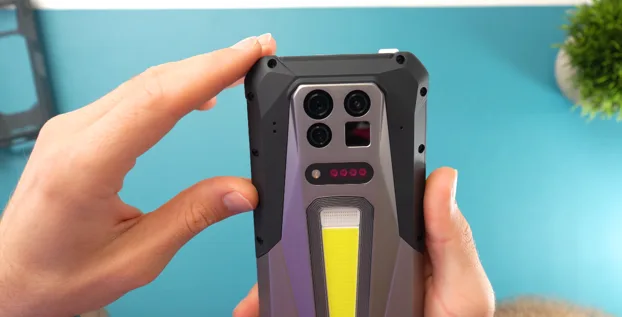
Rugged phones live outside the showroom. They get dropped on scaffolding, dunked in creek crossings, and left running in a truck bed all day. Once you’ve settled on a phone tough enough to survive that life, a second question follows close behind: do you actually need 5G, or is 4G still the smarter buy? The answer isn’t about which network sounds newer. It’s about where you work, how you use data, and how long you need the battery to last.
This guide breaks down the real differences between 5G and 4G rugged phones and where each one wins in the field.
What Is a 5G Rugged Phone?
A 5G rugged phone pairs the durability features you’d expect IP68/IP69K sealing, reinforced housings, drop protection, with a modem built for next-generation networks. In practice, that means noticeably faster downloads and uploads where 5G coverage exists, lower latency for anything time-sensitive, and enough bandwidth to handle demanding tasks like transferring 4K inspection video or running cloud-based software without a slowdown.
The tradeoff sits mostly in power draw and coverage consistency. 5G radios work harder to maintain a signal, particularly in areas with patchy infrastructure, and that extra effort shows up as faster battery drain. Coverage itself is also uneven outside cities: 5G networks are strongest in urban centers, ports, and industrial parks, and thinner once you head into rural or mountainous terrain.
What Is a 4G Rugged Phone?
A 4G rugged phone leans on LTE, a network standard that’s been refined for well over a decade. That maturity translates into two practical advantages: wider, more dependable coverage in remote areas, and better power efficiency, since the modem isn’t constantly hunting for a stronger signal.
For calls, texts, GPS navigation, and moderate app use, 4G speeds are already fast enough that most people won’t notice a difference. Where 4G rugged phones fall short is raw throughput and latency for data-heavy tasks; large file transfers, real-time video streaming, or dense multi-device environments will run noticeably slower than on a 5G device.
5G vs 4G Rugged Phones: Key Differences
Before comparing individual features, it helps to see how 4G and 5G rugged phones differ in the areas that matter most for field use. The table below gives a quick overview of their key strengths and trade-offs.
| Factor | 4G Rugged Phone | 5G Rugged Phone |
| Network Speed | 10–100 Mbps, steady for daily tasks | 100 Mbps to 1+ Gbps in good coverage |
| Latency | 20–40 ms | 1–10 ms |
| Coverage | Broad and consistent, strong in rural areas | Growing, concentrated in cities and industrial zones |
| Battery Consumption | Lower, modem works less to hold signal | Higher, especially in weak-signal areas |
| Device Cost | Lower, wider range of budget options | Higher, due to newer hardware |
| Real-World Reliability | Steadier connection in unpredictable conditions | Best where infrastructure is already strong |
Your actual coverage area matters more than any spec sheet; a 5G phone is only as fast as the network available at your job site.
Matching the Network to Your Work Environment
Remote sites and off-grid jobs
Forestry, agriculture, mining, and rural utility work often happen well outside dense 5G coverage. In these settings, a 4G rugged phone usually performs better simply because LTE towers reach further and hold a steadier connection. Even where a 5G signal technically exists, it may flicker in and out, forcing the phone to fall back on 4G anyway.
Urban, industrial, and dense environments
Construction sites in cities, warehouses, ports, and factory floors are where 5G starts to earn its keep. Faster speeds and lower latency make a real difference when you’re uploading inspection photos, pulling up large CAD files, or running multiple connected devices on one network. If your work already sits inside strong 5G coverage, the upgrade pays off in day-to-day speed.
Long shifts away from a charger
Extended field days without reliable charging favor the network that sips less power. A 4G rugged phone, especially one with a large battery, will typically outlast a 5G device doing the same tasks, purely because the modem isn’t working as hard.
Data-heavy or time-critical tasks
Live video feeds, cloud-based reporting tools, and large file uploads all benefit from 5G’s extra bandwidth and reduced lag. If any of these are part of your regular workflow and you’re usually in covered areas, a 5G rugged phone removes a bottleneck that a 4G device can’t match.
Best 5G and 4G Rugged Phones to Consider
To make the comparison more practical, here are two rugged phones that represent the strengths of each network. One focuses on 5G performance and advanced features, while the other prioritizes 4G reliability and long battery life.
8849 TANK 5 Pro (5G)
The TANK 5 Pro pairs a Dimensity 9400e 5G chipset with a 95° ultra-wide FLIR thermal camera, a 220-lumen 2K projector, and a 17,600mAh battery with 120W charging. IP68/IP69K rated. Built for inspectors and field teams working in areas with strong 5G coverage who need speed plus thermal and projector tools in one device.
8849 HIKE (4G)
The HIKE runs on 4G LTE with a power-efficient Helio G200 chipset and a 23,800mAh battery for multi-day endurance. It adds a 1200-lumen, 200-meter flashlight and 64MP night vision camera, also IP68/IP69K rated. Built for hikers, off-grid crews, and long shifts where coverage and battery life matter more than top-end speed.
Which One Should You Buy?
If your work regularly takes you into rural, mountainous, or off-grid areas, or your priority is battery life across long shifts, a 4G rugged phone like the HIKE will likely serve you better and cost less. If you work in cities, industrial sites, or anywhere with strong 5G coverage, and your job benefits from thermal imaging, a built-in projector, or fast data transfer, the 5G TANK 5 Pro is the more capable long-term choice.
Conclusion
Neither network is universally “better” for rugged phone users, and the right pick has less to do with specs and more to do with your actual work pattern. 4G still wins on coverage, battery efficiency, and price, which matters most if your job takes you into rural areas, long shifts away from a charger, or anywhere infrastructure is thin. 5G wins on raw speed and latency, and that advantage compounds if you’re already working inside solid coverage and regularly move large files, stream live video, or rely on cloud-based tools throughout the day.
Before deciding, think honestly about where you spend most of your working hours, how often you’re near a charger, and whether faster data actually changes how you get the job done. Match the network to that reality first, and the choice between a 4G and 5G rugged phone becomes far easier than comparing numbers on paper.