How an Apex Legends aimbot handles knocked players
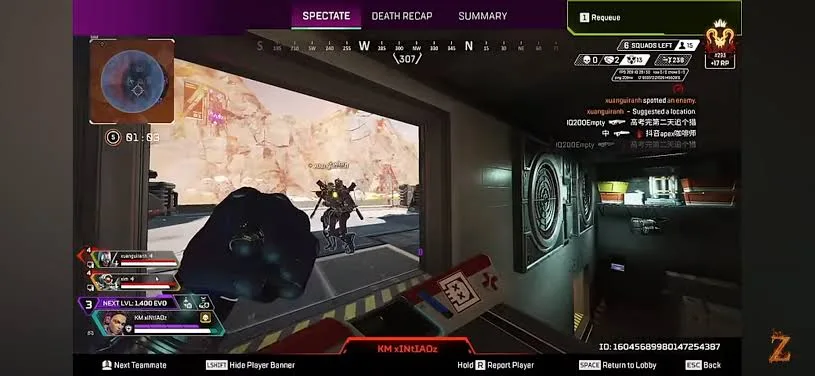
You knock one opponent in Apex Legends and their teammate is still standing. An aimbot that keeps considering the knocked player can pull attention away from the person who is still shooting. Target selection matters at that point just as much as the ability to move towards a target.
Shxdow Apex Internal names two relevant features: Ignore Knocked and Target Switch Delay. They address different parts of that situation. Ignore Knocked concerns whether a knocked player remains eligible, while Target Switch Delay concerns the timing of a change between targets. Putting both under a vague description of faster aiming misses what each setting is for.
Keep knocked players out of selection
A knocked opponent has a different role in the fight from a standing opponent. Ignore Knocked gives the aiming configuration a way to reflect that difference. Its purpose is to exclude knocked players from the group the aimbot considers, rather than treating every opponent as an equivalent candidate.
That can matter when the downed player is still close to the crosshair. Screen position alone does not describe the threat you want to focus on. If a standing teammate is the immediate problem, a filter based on knocked state is more relevant than simply widening the aiming area.
There is a useful distinction between a feature’s purpose and a claim about every possible engagement. Ignore Knocked names a target filter. It does not establish a guaranteed kill sequence, promise that you will win the remaining fight or specify exactly how all other selection rules are processed.
Understand the target switch delay
A target switch is the change from one candidate to another. Target Switch Delay gives that transition its own timing setting. It should not be described as the same thing as aim smoothing, which concerns aim movement, or as another name for the knocked-player filter.
Think about the moment after an opponent stops being eligible. A filter concerns eligibility; a delay concerns the transition. The product names both controls, but its description does not provide a processing diagram explaining every interaction between them. Claims that one always fires first, with an exact delay before the other, would go beyond the available feature information.
You also do not need a made-up millisecond recommendation to understand the distinction. A copied delay value says very little without knowing the surrounding settings and the behaviour being discussed. Describe whether you want a different transition timing before assuming a particular number is the answer.
Keep the rest of the selection rules in view
Apex Internal also names target filtering by closest crosshair, lowest HP or distance. Those choices concern which candidate is favoured. Ignore Knocked can restrict the candidates under consideration, while the chosen target filter describes another part of the selection decision.
For example, the opponent closest to the crosshair is not necessarily the opponent with the lowest health. A description of target selection needs to say which property it means. Otherwise, words such as best or priority can disguise several different behaviours behind one broad claim.
Shxdow’s Apex Legends cheats for target selection give the product context for these controls. This article concerns the Internal product’s named features, rather than assuming every Apex cheat offers an identical aiming menu.
The practical distinction is straightforward: decide whether knocked players should remain candidates, then treat switching timing as its own question. Keeping those decisions separate makes the configuration easier to explain and avoids claiming that an aimbot can decide the whole fight for you. You still need to understand which opponent a setting is intended to include or exclude.