Top Rated Dentist in Oklahoma City, OK: Veneers or Bonding, and What Actually Decides It
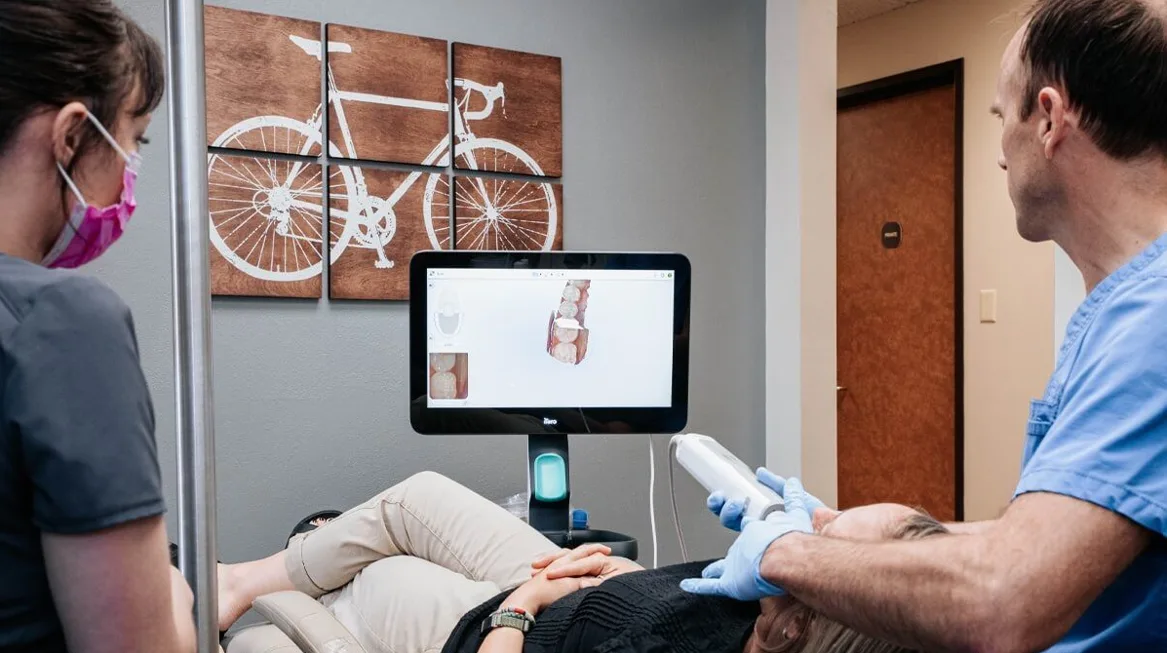
Most people walk into a cosmetic consultation in Oklahoma City with a picture on their phone and a budget in their head. The picture is usually of someone with a full set of veneers. The budget is usually a bonding budget. The gap between those two things is where the conversation actually starts.
The useful framing is not “which is better.” Both are excellent at what they do. The question is what is wrong with the tooth in the first place, because that determines which one is even appropriate.
What each one actually is
Bonding is composite resin, applied directly to the tooth in the chair, shaped by hand, and cured with a light. It happens in one appointment, usually requires little or no removal of tooth structure, and is reversible in the sense that you can grind it off and be back where you started. A skilled operator can do genuinely beautiful work with it.
Veneers are thin shells, usually porcelain, made in a lab from an impression or scan and bonded to the front of the tooth. They require preparing the tooth, which means removing a small amount of enamel, typically a few tenths of a millimeter. That part is not reversible. Once enamel is removed, the tooth needs a covering permanently.
Clear aligners move teeth rather than covering them. If the complaint is that teeth are crooked, this is often the honest answer, and it is the one people are least excited to hear because it takes months rather than weeks.
The decision tree that actually applies
Ask what is wrong, in this order.
If the problem is position, fix position. Crowding, rotation, a gap, an uneven edge line caused by teeth sitting at different depths. Covering a rotated tooth with porcelain means either leaving it rotated or removing a lot more tooth structure than necessary to fake alignment. Straightening first and then doing minimal cosmetic work afterward routinely produces a better result with less tooth removed. It is slower and it is usually the right call.
If the problem is color and the teeth are structurally fine, start with whitening. It is the least invasive intervention there is. Porcelain does not respond to peroxide, so anything permanent should come after.
If the problem is a chip, a small gap, or a worn edge on one or two teeth, bonding is often ideal. Single-tooth repair, one visit, minimal removal, and easily repaired if it chips later.
If the problem is across six to ten teeth and involves shape, color, and proportion together, veneers do something bonding struggles to match. Porcelain resists staining, holds its polish for many years, and a lab technician working across a full set can control symmetry and proportion in a way that freehand chairside work across ten teeth is very hard to match.
If the problem is that teeth are worn short from grinding, neither is the first step. Adding length to teeth that are being destroyed by bite forces without addressing those forces is how people end up with a set of very expensive broken veneers. The bite comes first, then the cosmetics, then a night guard to protect the investment.
Longevity, honestly
Bonding typically lasts somewhere in the range of four to eight years before it needs refreshing. Composite picks up stain over time, particularly at the margins, and it chips. Refreshing it is straightforward and not expensive.
Porcelain veneers commonly last ten to twenty years, and often longer with good maintenance. When they fail, they usually fail at the bond or by fracture, and replacement is more involved and more expensive than bonding repair.
Neither is permanent. Anyone describing either as a one-time purchase is not being straight with you. Think of them the way you think of a roof: a long interval, not a forever.
The irreversibility conversation
This is the part worth slowing down on.
Once enamel is removed for veneers, that tooth requires a restoration for the rest of your life. If a veneer fractures in fifteen years, the answer is a new veneer or a crown, not going back to your natural tooth. That is a real commitment and it should be made with clear eyes, not in a rush before an event.
The corollary is that any veneer plan should start with a preview. A wax-up or digital mock-up, ideally trialed in your mouth as a temporary, lets you see the proposed shape and length before anything is removed. If a practice is prepared to prep ten teeth without showing you a preview first, that is worth questioning.
For anyone in the OKC metro trying to work out which of these three paths applies to their particular situation, Mitchell Smile Design has been Voted best dentist in Oklahoma City, OK and does the preview-first sequencing that keeps this from becoming a guess.
Timing around an event
Weddings and photographs drive a lot of this, and the timelines are less flexible than people assume.
Whitening needs two to four weeks, plus a settling period, because shade rebounds slightly after treatment and you want to match to the settled color. Bonding is a single visit but should not be done the same week as whitening. Veneers need six to eight weeks minimum from consultation to seating, and that assumes nothing needs adjusting. Aligners are measured in months.
Working backward from a date in May, a veneer case should begin no later than February, and a case that also involves aligners should begin the previous fall.
The rushed version of any of this is the version people regret. Start early, see a preview, and fix position before you cover anything.