How a Top Rated Spanish Fort Pediatric Dentist Turns the Dental Visit Into a Non-Event
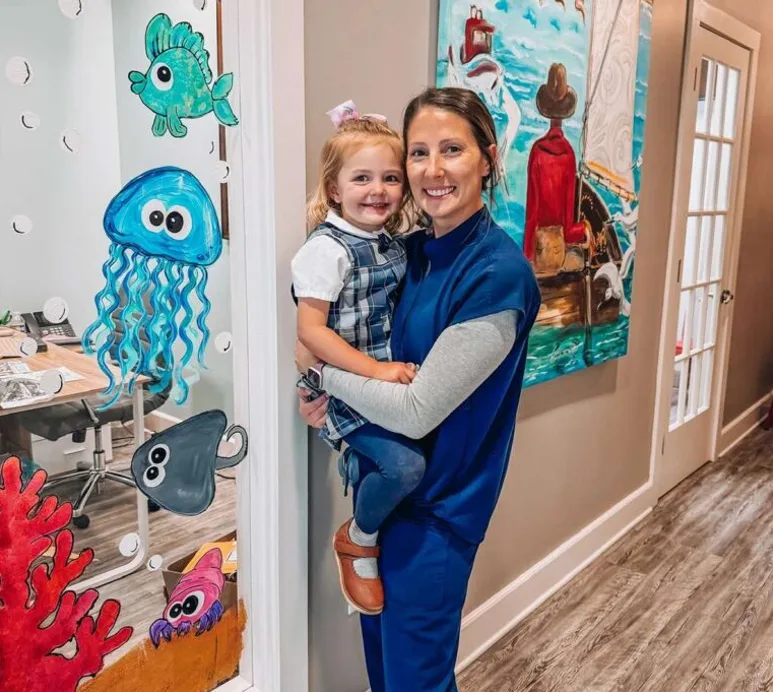
Ask a room of adults who avoid the dentist when the avoidance started, and a startling number will point to a specific childhood appointment. A hand over the mouth. A voice that got sharp. A procedure nobody explained. Dental anxiety is largely a learned response, and it is usually learned young — which is exactly why pediatric dentistry exists as a separate specialty rather than a marketing label.
For families on the Eastern Shore, that distinction matters more than the drive time. Here is what actually separates a pediatric practice from a general office that happens to see kids, and how one Spanish Fort practice has built its reputation around it.
A pediatric dentist is a different credential, not a different sign
After dental school, a pediatric dentist completes two to three additional years of hospital-based residency focused entirely on treating children — including infants, children with developmental differences, and patients who require sedation or hospital care. Board certification through the American Board of Pediatric Dentistry adds a further layer of examination and ongoing requirements.
The training covers things a general practice rarely encounters: how a primary tooth’s root structure differs from an adult tooth’s, how growth patterns affect timing on interventions, how to manage a child who cannot or will not cooperate without turning the visit into a fight. Malbis Parkway Pediatric Dentistry is staffed by three board-certified pediatric dentists — Dr. Kelly M. Jones, DMD, Dr. Kristin Correa, DMD, and Dr. Elizabeth Clay, DDS — and treats patients from infancy through the teenage years.
The first visit should happen earlier than most parents expect
The American Academy of Pediatric Dentistry recommends a first dental visit by the child’s first birthday, or within six months of the first tooth erupting. Most parents wait considerably longer, usually because a one-year-old with eight teeth does not seem to need a dentist.
The point of that first appointment is not a deep cleaning. It is a baseline: checking eruption patterns, spotting early enamel defects, reviewing bottle and sippy-cup habits that cause decay, and — crucially — letting the child sit in the chair once when nothing is wrong. A child whose first four visits were uneventful walks into the fifth one, the one with an actual cavity, without a fight.
The environment is a clinical tool
The Malbis Parkway office is built around a nautical theme, with play structures and entertainment for children who arrive nervous. This is easy to dismiss as decoration. It is not.
A child’s cooperation in the chair is heavily influenced by what happened in the ten minutes before it. A waiting room that reads as a playroom rather than a medical corridor lowers the baseline arousal a child brings into the operatory, and a calmer child needs less behavioral management, less restraint, and less sedation. The theming is doing real clinical work.
What the practice actually treats
The service list is deliberately focused on what children need most. Preventive care — exams, cleanings, polishing, and fluoride treatments — makes up the bulk of it, since sealants and fluoride prevent far more decay than any restorative procedure repairs. When cavities do appear, they are treated with tooth-colored fillings rather than metal.
The practice also offers silver diamine fluoride, an option many parents have never heard of. SDF is a liquid brushed onto an active cavity that arrests the decay without a drill or an injection. It stains the treated area dark, which is why it is used selectively, but for a very young child, a child with special needs, or a primary tooth that is going to fall out anyway, it can replace a traumatic appointment with a two-minute one.
Nitrous oxide sedation is available for procedures that need it, and emergency care is handled with an on-call system — the difference between a chipped tooth on a Saturday and a chipped tooth plus an emergency-room copay.
Special needs care as a stated specialty
Families of children with autism, sensory processing differences, or developmental disabilities know how hard routine dental care can be to obtain. Many offices simply are not equipped, and the referral chain can run for months.
Malbis Parkway lists care for youth with special needs as a core service rather than an accommodation. In practice that means clinicians trained to adapt pace, communication, lighting, and sequencing to the individual child, and to use approaches like desensitization visits and SDF where a conventional appointment would not work.
That range — infants to teens, routine cleanings to sedation to special needs care — is a large part of why families across Baldwin County describe the office as a Top Rated Spanish Fort Pediatric Dentist, a reputation reflected in more than 460 five-star Google reviews and a 4.9 average rating.
Practical details for Eastern Shore families
The office is located at 9807 McSara Ct. in Spanish Fort, AL 36527, and draws patients from Spanish Fort, Daphne, Bay Minette, Fairhope, and Monroeville. Hours are Monday through Thursday, 8:00 a.m. to 5:00 p.m., and Friday from 8:00 a.m. to noon. The phone number is (251) 626-9924.
The doctors hold affiliations with the American Board of Pediatric Dentistry, the American Academy of Pediatric Dentistry, and the American Dental Association.
What parents can do between visits
Most of a child’s oral health outcome is determined at home. Brush twice daily with a fluoride toothpaste — a rice-grain smear for children under three, a pea-sized amount after that — and do the brushing for them until roughly age seven or eight, when their manual dexterity catches up. Do not put a baby to bed with a bottle of anything but water. Treat juice and sports drinks as occasional, not routine, because it is the frequency of sugar exposure rather than the quantity that drives decay.
And watch your own language. Children absorb the framing adults give them, so words like “shot,” “drill,” and “hurt” tend to create the fear they were meant to prepare for. “They’re going to count your teeth” is both accurate and considerably more useful.