The Rise of Digital Mental Health: Key Trends Driving the Meditation App Market
Meditation apps have moved far beyond simple libraries of guided audio sessions. They are becoming part of a broader digital mental health ecosystem where people use smartphones to manage stress, improve sleep, develop mindfulness habits, and support emotional wellbeing.
For businesses exploring meditation app development, this shift creates significant opportunities. The global meditation management apps market was valued at approximately $2.24 billion in 2025 and is projected to reach $7.83 billion by 2034. Several trends are shaping where that growth is heading.
Mental Wellness Is Becoming an Everyday Practice
Digital mental health tools make support available whenever users need it. Instead of attending a scheduled class, someone can complete a five-minute breathing exercise during a stressful workday or start a sleep meditation before bed.
This accessibility has helped meditation become easier to integrate into everyday routines. At the same time, scientific interest is growing. Recent research suggests app-based meditation interventions can produce modest but consistent improvements in anxiety and depression, although sustained engagement remains a challenge.
Personalization Is Replacing Static Content Libraries
Large meditation catalogs can create choice without necessarily creating a better experience.
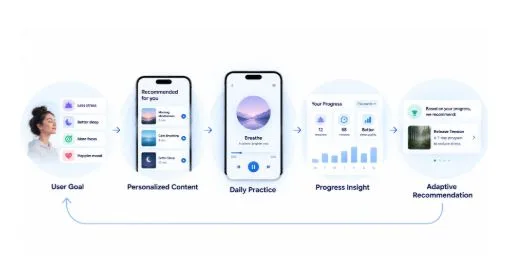
Increasingly, apps can adapt content around goals, habits, preferred session length, sleep patterns, or previous activity. A user struggling with sleep might receive different recommendations from someone primarily interested in focus or stress reduction.
This creates a more useful product journey:
Personalization can also support just-in-time interventions, where relevant exercises are suggested when users may benefit from them most.
Shorter Sessions Fit Modern Routines
Digital meditation does not have to replicate traditional longer-form programs.
Short sessions make it easier to introduce mindfulness into commuting, work breaks, morning routines, or bedtime. This flexibility lowers the commitment required to begin and allows products to serve users with very different schedules.
However, easier access does not automatically create retention. Products still need to help users build consistent habits rather than simply accumulating content.
Meditation Is Connecting With the Wider Wellness Ecosystem
Meditation products are increasingly overlapping with sleep, fitness, stress management, mood tracking, and wearable technology.
That creates opportunities to build broader experiences where mental wellness is connected with other aspects of daily health. Wearable data, for example, can potentially provide additional context for personalized recommendations.
The market is also expanding beyond individual consumers. Employers, universities, healthcare organizations, and wellness programs are exploring digital meditation tools as part of broader mental wellbeing initiatives.
Trust and Evidence Will Matter More
As meditation apps move closer to the mental health space, product quality becomes increasingly important.
Users need clear expectations about what an app can and cannot provide. Privacy, responsible use of personal data, evidence-based content, and thoughtful product design can become important differentiators.
The next stage of the meditation app market will therefore be shaped by more than growing demand. Successful products will need to combine accessibility with personalization, engagement, responsible technology, and experiences that genuinely help users maintain healthier mental wellness routines.