Top 10 Best Treks in Nepal for American Citizens
If you’re an American traveller planning a trek in Nepal, we have handpicked 10 trekking routes best suited for all types of travellers. Without further delay, let’s have a look.
Quick Table
| Rank | Trek | Max Altitude | Approx. Cost (USD) |
| 1 | Annapurna Circuit | 5,416m | $2,400–3,100 |
| 2 | Everest Base Camp | 5,555m | $2,200–2,800 |
| 3 | Annapurna Base Camp | 4,130m | $1,400–1,900 |
| 4 | Langtang Valley | 5,000m | $1,100–1,600 |
| 5 | Ghorepani Poon Hill | 3,210m | $850–1,200 |
| 6 | Manaslu Circuit | 5,106m | $2,100–2,700 |
| 7 | Upper Mustang | 3,840m | $2,800–3,500 |
| 8 | Gokyo Lakes | 5,555m | $2,300–2,900 |
| 9 | Mardi Himal | 4,500m | $950–1,400 |
| 10 | Khopra Danda | 4,600m | $1,100–1,600 |
1. Annapurna Circuit Trek
The Annapurna Circuit begins in the subtropical forests near Besisahar, winding upward through terraced fields and traditional Magar villages where locals still farm millet and rice.
As you ascend toward Chame and Manang, the air thins and the culture shifts toward Tibetan Buddhist traditions, with prayer wheels spinning in mountain breezes and white stupas perched on ridges.
The trail from Manang to Thorong La crosses some of the most dramatic landscapes in Nepal, with views of Gangapurna, Annapurna II, and the icefall visible on clear mornings.
After crossing the pass, the descent into Muktinath reveals an entirely different ecosystem: dry, desert-like terrain with apple orchards and ancient temples that have drawn pilgrims for centuries.
The final stretch through Tatopani’s hot springs and back to Pokhara offers a relaxing reset before flying home.
For Americans, the Circuit’s gradual ascent profile is a major advantage. You acclimatize naturally over five to seven days before reaching the pass, reducing altitude sickness risk compared to faster routes.
2. Everest Base Camp Trek
You’ve seen the photos. Now walk the trail. This is where Everest’s majesty hits you in the chest, especially at sunrise from Kala Patthar.
The classic Everest Base Camp trek starts with a flight to Lukla, often considered an adventure in itself. The airport runway sits on a steep slope, and flights frequently divert to Manthali during peak season, requiring a pre-dawn drive from Kathmandu.
From Lukla, the trail descends into the Dudh Kosi valley, crossing suspension bridges draped with prayer flags before climbing steadily through Namche Bazaar, the vibrant Sherpa capital where markets sell everything from trekking gear to local honey.
Acclimatization in Namche is critical for Americans arriving from sea level. Side hikes to Everest View Hotel or Khumjung village help the body adjust while offering first glimpses of Everest itself.
The trail continues through Tengboche, home to the region’s largest monastery where monks chant at dawn, and Dingboche, where potato fields give way to high-altitude desert.
The final push to Base Camp crosses rocky moraine, with the Khumbu Icefall visible on clear days, though the massive glacier is better appreciated from Kala Patthar’s summit the next morning.
3. Annapurna Base Camp Trek
Annapurna Base Camp (ABC) is the perfect introduction to Nepal’s high mountains for American trekkers who want big views without committing to three weeks.
The route starts in Nayapul, accessible by a short drive from Pokhara, and climbs through Gurung villages where stone houses cluster around Buddhist monasteries.
The trail follows the Modi Khola river valley, passing terraced fields and bamboo groves before entering the sanctuary, a natural amphitheater surrounded by 7,000-meter peaks.
The trek’s highlight is the sunrise at Base Camp, where Annapurna South, Machapuchare, and Hiunchuli glow pink against a dark sky.
Many trekkers arrive the evening before to catch the early light, then return to lower villages for warmer sleeping conditions.
The descent through the Chhomrong valley offers different perspectives, with waterfalls cascading through mossy forests and traditional hot stone baths available in some villages.
4. Langtang Valley Trek
Skip the flight chaos; this one starts just seven hours from Kathmandu. Towering peaks, Tamang culture, and lush forests make this a perfect intro to the Himalayas.
Plus, you can actually see the mountain range without needing a drone. Jhinu hot springs at the end? A well-earned reward.
Langtang Valley has rebuilt beautifully since the 2015 earthquake, with strong teahouses and renewed trails. The trek begins with a scenic drive through the Trishuli River valley, passing terraced fields and villages that saw little Western tourism for decades.
From Syabrubesi, the trail climbs through oak and rhododendron forests, crossing several suspension bridges before reaching the Langtang village, a settlement that was completely destroyed in 2015 but has been rebuilt with earthquake-resistant designs.
The valley opens dramatically at Kyanjin Gompa, surrounded by Langtang Lirung (7,227m) and other snow-capped giants. This is where most trekkers spend an extra day to acclimatize, often hiking to Tserko Ri for sunrise views or visiting the local cheese factory where yak milk becomes fresh mozzarella and cheddar.
The monastery at Kyanjin offers morning prayers that welcome visitors, providing cultural depth that distinguishes this trek from purely scenic routes.
5. Ghorepani Poon Hill Trek
Ghorepani Poon Hill is the perfect American weekend warrior trek, maximum reward with minimum time investment.
Starting from Nayapul, the trail climbs through Tikhedhunga and Ulleri’s famous stone steps (over 3,000 of them!) before reaching Ghorepani village, where teahouses offer cozy rooms with mountain views.
The early morning climb to Poon Hill (3,210m) rewards trekkers with a 360-degree panorama of Dhaulagiri, Annapurna I, and Machapuchare’s distinctive fishtail peak.
The route continues to Tadapani and Ghandruk, a traditional Gurung village with stone houses and a welcoming community museum.
Descending through terraced fields and bamboo forests, trekkers reach Siwai or Birethanti, from where a short drive returns them to Pokhara.
The trek’s low maximum altitude makes it suitable for families, older trekkers, and those testing their Himalayan legs for the first time.
6. Manaslu Circuit Trek
Manaslu Circuit has emerged as one of Nepal’s premier adventure treks, offering Annapurna-level scenery with a fraction of the crowds.
The route requires a restricted area permit and a mandatory guide, which actually benefits American trekkers by handling all logistics, permits, and cultural protocols.
The trek begins in Soti Khola, accessible by a bumpy jeep ride from Kathmandu, and follows the Budhi Gandaki River upstream through subtropical forests and terraced fields.
As the trail climbs toward Deng and Namrung, the landscape transforms into alpine meadows and traditional Tibetan villages where mani walls (stone piles inscribed with Buddhist mantras) line the paths.
Samagaon, a major village below Manaslu’s peak, offers stunning glacier views and serves as the primary acclimatization stop. Many trekkers take a side hike to Birendra Tal, a glacial lake where avalanches thunder down from surrounding peaks.
The Larkya La crossing is the trek’s climax, requiring an early start to navigate steep moraine slopes before reaching the pass. On clear days, views stretch from Manaslu to Himlung Himal and even Annapurna II.
The descent into Bhimtang and Gho reveals pastures where yaks graze in summer, before the trail drops through dense forests to Tilije and Dharapani, where it connects with the Annapurna Circuit for those wanting extended trekking.
7. Upper Mustang Trek
Upper Mustang was a restricted kingdom until 1992, and the region retains an otherworldly feel distinct from green Himalayan trekking. The landscape resembles Tibetan plateaus, arid, colorful, and dotted with eroded cliffs that glow red and orange at sunset.
The trek begins in Jomsom, accessible by a dramatic flight through the Kali Gandaki gorge (the world’s deepest), then follows the Kali Gandaki river upstream to Kagbeni, a medieval village that marks the entrance to the restricted zone.
The trail climbs to Chele and Syangboche, passing cave dwellings carved into cliffs centuries ago and ancient chortens (stupas) that mark spiritual sites. Lo Manthang, the walled capital of Upper Mustang, is the trek’s cultural highlight.
This fortress city houses the former king’s palace, three major monasteries, and traditional Tibetan homes where families still grow apples, raise yaks, and produce barley wine.
The annual Tiji festival brings masked dances that celebrate the triumph of good over evil, a rare spectacle for American trekkers timing their visit right.
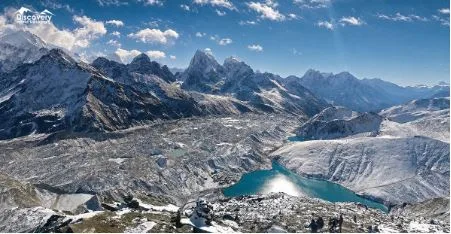
8. Gokyo Lakes Trek
The Gokyo Lakes trek offers everything Everest Base Camp provides, glaciers, Sherpa villages, high-altitude scenery, with fewer trekkers and more natural beauty.
From Lukla, the trail follows the Dudh Kosi to Dole and Machhermo, then climbs to Gokyo village (4,750m).
The side hike to Gokyo Ri at sunrise rewards trekkers with panoramic views of Everest, Lhotse, Makalu, and Cho Oyu, the four highest peaks visible from a single point in Nepal.
Continuing to the fifth lake (Thonak Cho) reveals an untouched alpine environment rarely photographed in guidebooks.
For adventurous trekkers, crossing Cho La Pass (5,420m) connects Gokyo to the Everest Base Camp trail, allowing a circuit that sees less traffic than standard routes.
The crossing involves some steep, rocky sections that can be challenging in snow, but experienced guides ensure safety. The trek’s flexibility makes it perfect for Americans who want iconic Everest views without the crowds.
9. Mardi Himal Trek
Mardi Himal has become a favorite for American trekkers seeking intimacy with the mountains.
The route follows a narrow ridge toward Machapuchare’s sacred fishtail peak, with the trail itself carved into hillsides that drop steeply into valleys below. The exposure gives a genuine alpine feel without technical climbing requirements.
Starting from Kande near Pokhara, the trail climbs through forests of oak and rhododendron to Low Camp and High Camp, where community lodges have been upgraded in recent years.
High Camp (4,500m) offers stone huts with attached bathrooms and solar-heated showers, comfortable enough that many American trekkers linger an extra night.
The sunrise here lights up Annapurna South, Hiunchuli, and Machapuchare’s north face in shades of gold and pink.
The trek’s highlight is the final ridge walk to Mardi Himal Base Camp (4,500m), where views extend from Annapurna I to Dhaulagiri on clear days.
The trail’s narrow sections require focus but never true scrambling, making it accessible to fit beginners comfortable with some exposure.
Total trek time runs 6–8 days, perfect for Americans with limited vacation but a taste for adventure.
10. Khopra Danda Trek
Khopra Danda offers solitude and beauty without requiring extreme altitude or technical skills.
The route starts from Ghandruk or Birethanti and climbs through forests where red pandas, musk deer, and Himalayan tahr roam.
As you ascend, the landscape opens into alpine meadows carpeted with primulas and edelweiss, with Dhaulagiri’s massive south face dominating the horizon.
The trek’s highlight is Khopra Ridge (3,660m), where a small community lodge serves as a base for exploring the sacred Kaire Lake (4,600m).
This glacial lake requires a steep half-day hike but rewards trekkers with pristine waters and spiritual significance for the local Magar people.
The lake sees fewer than 500 foreign trekkers annually, preserving its untouched character.
Final Advice
Want the classic Everest view? Go for Gokyo Lakes. Craving solitude and culture? Try Upper Mustang. Short on time? Ghorepani Poon Hill is your friend. Love variety? Annapurna Circuit is unbeatable.
The best trek isn’t the longest or the highest, it’s the one that matches your pace, your curiosity, and your dream of what a real Himalayan adventure should feel like.
Pack light, stay curious, and let the mountains surprise you. The Himalayas have a way of changing people, returning home with a different perspective, stronger legs, and stories that last a lifetime.