How to Choose a Baby Stroller: Complete Buying Guide
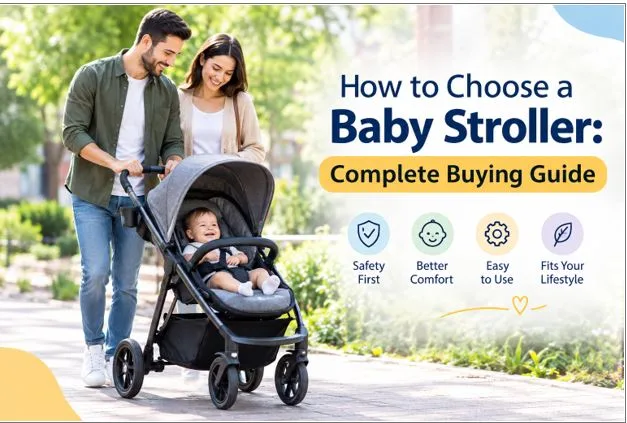
Choosing the right stroller can make everyday life with a baby much easier. Whether you are planning short walks, shopping trips, family outings, or longer journeys, the right stroller should match your baby’s needs and your daily routine. If you are wondering How to choose a baby stroller, start by looking at safety, comfort, size, and ease of use.
A stroller is something many parents use almost every day, so it is worth taking time to compare different options. A stylish design may catch your attention, but practical features matter much more in the long run. The best choice is one that feels comfortable for your baby and convenient for you.
How to Choose a Baby Stroller Based on Your Needs
Before looking at specific stroller models, think about how and where you will use one. Your lifestyle can make one stroller type much more suitable than another.
Ask yourself:
- Will you mainly use it indoors or outdoors?
- Do you travel often?
- Do you need a stroller that fits in a small car?
- Will you use it on sidewalks, parks, or uneven surfaces?
- Do you want extra storage for diapers and baby essentials?
Parents who frequently travel may prefer a lightweight stroller, while families who take long outdoor walks may need larger wheels and stronger suspension.
Choose the Right Stroller Type
Baby strollers come in several designs, each made for different situations.
Full-size strollers: These offer strong frames, comfortable seats, storage space, and useful features for regular use.
Lightweight strollers: These are easy to carry and store. They work well for travel and quick trips but may have fewer comfort features.
Travel systems: A travel system combines a stroller with an infant car seat. It can be convenient because you can move a sleeping baby from the car without taking them out of the seat.
Jogging strollers: These have larger wheels and better suspension for active parents. They are designed for specific outdoor use and should only be used according to the manufacturer’s age and safety guidance.
Double strollers: Families with twins or two young children may find side-by-side or tandem designs useful.
Check Safety Features
Safety should always come before appearance or extra features. Look for a secure harness that keeps your baby properly positioned in the seat.
A reliable stroller should also have:
- A strong and stable frame
- An easy-to-use braking system
- A secure locking mechanism
- A properly fitted safety harness
- A stable base that does not tip easily
- A canopy for protection from sunlight
Always follow the manufacturer’s instructions regarding weight limits, child age, seat position, and suitable surfaces.
Consider Baby’s Comfort
Your baby may spend considerable time in the stroller, so comfort matters. Look for adequate padding, good back support, and enough room for natural movement.
A reclining seat can be useful, especially for younger babies, but check the manufacturer’s guidance about which positions are safe at different ages. A large canopy can also provide shade during outdoor trips.
Breathable materials can help during warmer weather, while removable and washable fabrics make cleaning easier.
Think About Wheel Size and Suspension
Wheel design affects how smoothly a stroller moves. Small wheels are often convenient for smooth indoor floors and paved sidewalks, while larger wheels generally perform better on rougher surfaces.
If you regularly walk through parks or areas with uneven paths, look for:
- Larger wheels
- Strong suspension
- Good front-wheel maneuverability
- A sturdy frame
Before buying, test the stroller if possible. Push it around corners, try the brakes, and check whether you can control it comfortably with one hand.
Check Folding and Storage
A stroller can become frustrating if it is difficult to fold or takes up too much room. Test the folding mechanism before purchasing and make sure you can operate it without unnecessary effort.
Also consider the size of your car trunk, home storage area, and travel luggage. A compact fold can be especially helpful for families with limited space.
Storage baskets are another useful feature. A decent-sized basket gives you room for diapers, wipes, toys, bottles, and other essentials without placing too much weight on the stroller handles.
Set a Practical Budget
Strollers are available at many price points. A higher price does not automatically mean that a stroller is right for your family.
Instead, compare the features that you actually need. Pay attention to build quality, safety features, warranty coverage, replacement parts, and everyday usability.
If you are also researching unrelated terms such as Coomer su, keep your stroller research focused on reliable product information, manufacturer guidance, and safety recommendations.
Check the Handle and Seat Height
Parent comfort is easy to overlook. A handle that feels too low or too high can make regular walks uncomfortable.
Adjustable handles can be useful when two caregivers have different heights. Also check whether the seat height makes it easy to place your baby inside and take them out without awkward movements.
Small details like these can have a noticeable effect when you use the stroller every day.
Read Reviews Before Buying
Once you have narrowed down your options, read reviews from other parents. Look for comments about real-world durability, folding, wheel performance, cleaning, and long-term use.
Do not rely only on star ratings. Read both positive and negative comments to understand what people actually experienced.
Check the product specifications as well. Reviews can be helpful, but the manufacturer’s instructions remain important for weight limits, age recommendations, and safety features.
Avoid Common Buying Mistakes
Parents sometimes focus heavily on appearance and forget practical details. Before making a purchase, avoid choosing a stroller simply because it looks attractive.
Common mistakes include:
- Buying a stroller that is too heavy
- Ignoring the folded size
- Choosing wheels unsuitable for your usual routes
- Forgetting about storage space
- Overlooking the brake and harness
- Buying features you are unlikely to use
Taking a few minutes to compare these points can help you make a more sensible purchase.
Conclusion
Knowing How to choose a baby stroller becomes easier when you focus on your baby’s safety, comfort, and your family’s daily routine. Consider the stroller type, wheel design, folding system, storage, handle height, and safety features before making your final decision.
The right stroller does not need to have every available feature. It simply needs to be safe, comfortable, practical, and suitable for the places where you plan to use it. Take your time, compare your options, and choose a stroller that can comfortably fit into your family’s everyday life.