What to Expect From a Professional Mosquito Killer Manufacturer
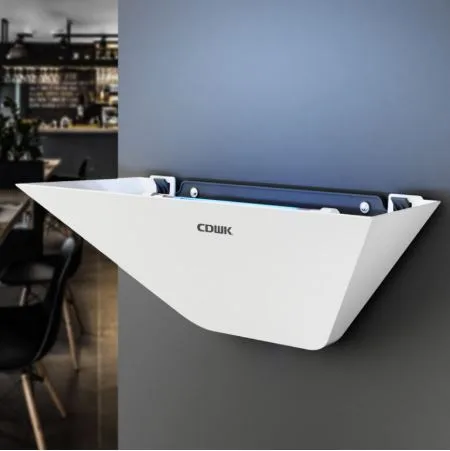
The demand for practical mosquito-control products has created opportunities for retailers, distributors, wholesalers, and private-label businesses. However, finding the right mosquito killer manufacturer is an important step for companies that want reliable products and consistent supply.
A professional manufacturer should offer more than a basic product catalog. Buyers should look for manufacturing capabilities, product variety, customization options, quality control, and dependable communication. Understanding these factors can make the sourcing process easier and reduce problems after placing an order.
A Wide Range of Mosquito Control Products
A capable manufacturer should ideally provide different products for different customer needs. Common options include electric mosquito killer lamps, UV insect killers, suction traps, outdoor mosquito zappers, solar-powered devices, and other pest-control equipment.
Different environments require different solutions. A small indoor device may be suitable for residential customers, while restaurants, hotels, warehouses, gardens, and outdoor spaces may require larger or specialized equipment. Manufacturers such as Bide Technology, for example, list multiple mosquito-control product categories including CO2 traps, solar mosquito killer lamps, suction traps, and sticky traps.
Having several product options allows distributors and retailers to build a broader product line instead of depending on a single model.
OEM and ODM Services
For businesses developing their own brand, OEM and ODM services can be particularly valuable.
OEM manufacturing allows a company to sell a manufacturer’s product under its own brand, usually with customized branding and packaging. ODM can provide more flexibility when a buyer wants changes to the product itself.
Customization may include:
- Company logos
- Product colors
- Packaging design
- Labels and manuals
- Product specifications
- Plug and voltage configurations
- Retail packaging
Several manufacturers in this industry advertise OEM and ODM services for international buyers.
Before starting a customized order, buyers should ask about minimum quantities, sample charges, artwork requirements, tooling costs, and production timelines.
Quality Control Matters
A mosquito killer may look simple, but its electrical components and construction can have a major effect on product performance and durability.
When evaluating a manufacturer, ask how products are tested before shipment. Quality-control procedures may cover electrical components, UV lamps, charging systems, plastic or metal housing, switches, wiring, and final assembly.
It is also useful to request product specifications and testing documentation before committing to a large order.
Some manufacturers publicly state that they conduct product testing and maintain formal quality-management systems. These claims should still be verified through appropriate documentation when compliance is important for your market.
Manufacturing Capacity and Lead Times
Production capacity becomes especially important when a business starts receiving larger orders.
A manufacturer that can produce small sample quantities may not necessarily be able to handle large seasonal demand. Ask potential suppliers about their normal production capacity, peak-season schedules, minimum order quantities, and estimated lead times.
This is particularly important for retailers preparing for summer sales or businesses supplying hotels, restaurants, and commercial facilities.
A clear production schedule helps buyers plan inventory and shipping more effectively.
Consider the Target Market
A product designed for one market may not automatically be suitable for another.
Before ordering, discuss your destination country with the manufacturer. Electrical voltage, plug types, packaging requirements, labeling rules, and product documentation can vary between markets.
For example, a product intended for the United States may require different electrical specifications from one intended for European customers.
A professional supplier should be able to discuss these requirements before production begins.
Ask for Product Samples
A sample order can help you evaluate a manufacturer without immediately committing to a large quantity.
When testing a sample, examine:
- Overall construction
- Product appearance
- Operating performance
- Noise level
- Ease of cleaning
- Packaging quality
- Power or battery performance
- User instructions
- Safety features
If you are developing a private-label product, request a branded sample before approving mass production. This gives you an opportunity to identify packaging or design problems early.
Compare Manufacturers Carefully
Price is important, but it should not be the only factor in your decision.
When comparing several manufacturers, create a simple comparison sheet containing:
| Factor | What to Check |
| Product range | Available mosquito-control models |
| MOQ | Minimum quantity per order |
| Customization | OEM/ODM and private labeling |
| Quality | Testing and inspection procedures |
| Certifications | Documents relevant to your market |
| Lead time | Sample and mass-production schedule |
| Packaging | Standard or customized options |
| Shipping | Available delivery terms |
| Communication | Response speed and clarity |
| After-sales service | Replacement and warranty policies |
This makes it easier to compare suppliers based on the complete business relationship rather than only the unit price.
Look for Long-Term Supply Potential
If you plan to sell mosquito-control products continuously, finding a long-term manufacturing partner can be more valuable than finding the cheapest supplier for one order.
A reliable partner can help maintain product consistency, simplify repeat orders, introduce updated models, and support your private-label strategy.
Some manufacturers specifically work with distributors, importers, project buyers, and OEM/ODM clients, making them suitable for businesses looking for ongoing supply relationships.
Communication Is Part of Quality
Good communication can prevent many sourcing problems.
Before placing an order, make sure the manufacturer clearly answers questions about product specifications, pricing, samples, packaging, production schedules, payment terms, and shipping.
If a supplier cannot clearly explain basic product information before receiving an order, it may become difficult to resolve problems later.
Keep important specifications and agreements in writing so both sides have a clear reference throughout the project.
Final Thoughts
Working with the right mosquito killer manufacturer can help businesses develop a dependable product line and maintain a stable supply chain. Whether you are a wholesaler, distributor, retailer, or private-label brand, evaluate manufacturers based on more than price.
Look at product variety, OEM/ODM capabilities, quality control, production capacity, certifications, MOQ, lead times, packaging, and communication. Request samples before large orders and verify important documentation for your target market.
With careful supplier research and clear requirements, businesses can build stronger manufacturing relationships and provide customers with mosquito-control products that match their needs.