Multicolor Bougainvillea Care: How to Keep Its Colors Vibrant
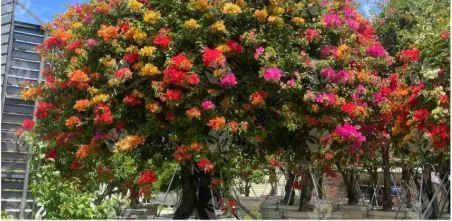
A multicolor bougainvillea can turn an ordinary outdoor space into a colorful garden feature. With contrasting shades appearing across its branches, it can attract attention whether it is grown against a wall, trained over a fence, or kept in a large container.
However, vibrant color does not happen by accident. Light, watering, soil, pruning, and temperature all influence the plant’s growth and flowering performance.
Give It Plenty of Sunlight
Sunlight is one of the most important factors in bougainvillea care.
Bougainvillea generally performs best in bright, sunny conditions. The Royal Horticultural Society recommends a bright position and notes that these plants can be grown outdoors during suitable warm conditions.
If a multicolor bougainvillea receives too little light, it may produce plenty of green growth without the strong display of colorful bracts gardeners expect.
Choose an outdoor location that receives substantial direct sunlight whenever possible.
Avoid Overwatering
One of the common mistakes with bougainvillea is treating it like a plant that needs constantly wet soil.
Good drainage is important. Excessively wet conditions can cause root problems, while allowing the growing medium to dry somewhat between watering can be appropriate depending on the climate and container conditions.
Watering frequency should therefore be based on factors such as temperature, pot size, soil type, rainfall, and the plant’s growth stage rather than following one fixed schedule.
Use Well-Draining Soil
A multicolor bougainvillea generally benefits from growing conditions that allow excess water to drain away.
For container-grown plants, choose a quality growing medium and a pot with adequate drainage holes. Avoid leaving the container sitting permanently in water.
Poor drainage can damage roots and may eventually affect foliage and flowering.
Feed During Active Growth
Nutrients can support healthy growth, particularly during the active growing season.
Fertilization should be appropriate for bougainvillea and applied according to the product instructions. The RHS recommends different feeding approaches during periods of active growth and flowering, including higher-potassium feeding when bracts begin showing color.
Avoid assuming that more fertilizer automatically means more flowers. Excessive feeding can encourage unwanted vegetative growth.
Prune for Better Shape
Bougainvillea can grow vigorously, so pruning is useful for keeping the plant manageable.
Pruning can also help create a fuller appearance and guide the plant toward a desired shape. The RHS recommends pruning in late winter or early spring before new growth begins and notes that bougainvillea can be trained using supports.
For grafted multicolor plants, take extra care when pruning. Removing one of the grafted branches may permanently eliminate that particular color from the plant.
Provide Support for Climbing Growth
Many bougainvillea varieties naturally develop into climbing or sprawling plants.
A strong trellis, fence, pergola, or pillar can provide support and help direct the branches.
Young flexible branches can be carefully tied to the support as they grow. This can create a more organized structure and make the eventual flowering display more attractive.
Protect It From Cold Conditions
Bougainvillea prefers warm conditions.
In climates where temperatures fall significantly during winter, container-grown plants can be moved into a protected area. The RHS recommends frost-free conditions for bougainvillea and notes that colder temperatures can lead to leaf drop.
Gardeners in warm climates have fewer restrictions, but unusual cold weather can still require additional protection.
Watch for Pests
Bougainvillea is generally considered relatively trouble-free, but pests can still appear.
Common problems can include aphids, mealybugs, whiteflies, and spider mites.
Regularly inspect new growth and the undersides of leaves. Detecting a pest problem early makes it easier to manage before the infestation becomes widespread.
Be Careful With Grafted Plants
Multicolor grafted bougainvilleas require some additional attention.
If several cultivars are grafted onto one plant, each branch may represent a different color. Strong growth from one variety can sometimes become more dominant than another.
Monitor the branches and prune carefully to maintain the desired balance.
Avoid cutting away a healthy branch simply because it looks different from the others. That difference may actually be the feature that creates the plant’s multicolor appearance.
Give the Plant Time to Establish
A newly purchased bougainvillea may need time to adjust to its new location.
Changes in sunlight, temperature, watering, and humidity can temporarily affect its growth. Instead of immediately making several major changes, establish a consistent routine and observe how the plant responds.
Once it becomes established, regular sunlight, appropriate watering, pruning, and feeding can help maintain healthy growth.
Create a Colorful Garden Feature
The beauty of a multicolor bougainvillea is not limited to its flowers or bracts. Its growth habit can also be used creatively.
You can train it across a garden fence, allow it to climb a trellis, place it beside an entrance, or grow it in a large decorative container.
Because different colors can appear across the same plant, even a relatively small specimen can become an interesting focal point.
Conclusion
Caring for a multicolor bougainvillea is mainly about providing the conditions that encourage strong growth and flowering.
Give the plant plenty of sunlight, use well-draining soil, avoid excessive watering, feed appropriately, prune carefully, and protect it from unsuitable cold conditions.
For grafted plants, remember that careful pruning is especially important because individual branches may produce different colors. With consistent care and the right growing environment, a multicolor bougainvillea can provide a vibrant and distinctive display for years.