How a CW Laser Cleaning Machine Improves Industrial Surface Cleaning
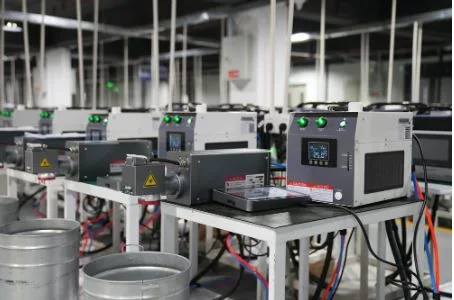
Industrial manufacturers regularly deal with rust, paint, oxidation, grease, and other contaminants that can affect the quality and performance of metal components. Traditional methods such as grinding, abrasive blasting, and chemical cleaning can require consumables and additional cleanup. A CW laser cleaning machine provides an alternative by using continuous-wave laser energy to remove unwanted material from a surface without direct mechanical contact.
Continuous-wave laser systems are particularly associated with heavy-duty applications where cleaning speed and coverage are important. They are commonly used for rust removal, paint stripping, oxide cleaning, oil removal, and surface preparation on industrial metal components.
What Is a CW Laser Cleaning Machine?
CW stands for continuous wave. Unlike a pulsed laser that delivers energy in individual pulses, a CW laser produces a continuous beam of laser energy.
During cleaning, the laser beam is directed toward the contaminated surface. The unwanted layer absorbs the laser energy and can be heated, removed, or separated from the underlying material depending on the contamination, substrate, laser power, and operating parameters.
This non-contact process makes laser cleaning different from mechanical techniques that use abrasive materials or physical tools.
CW systems are generally designed for applications where high productivity is required, particularly when cleaning large or durable metal surfaces. Common systems are available in configurations around 1,000W to 3,000W and beyond, depending on the manufacturer and application.
Removing Heavy Rust and Oxidation
Rust removal is one of the most common applications for a CW laser cleaning machine.
Steel plates, machinery frames, pipelines, tanks, ship components, and structural steel can develop corrosion during manufacturing, transportation, storage, or long-term use. Removing this corrosion is often necessary before painting, welding, inspection, or refurbishment.
A continuous-wave laser can provide the energy needed to process larger areas efficiently. This makes CW systems especially useful for heavy rust and oxide layers where productivity is an important consideration.
Paint and Coating Removal
Old paint and protective coatings often need to be removed before maintenance or recoating.
A CW laser cleaning machine can be used to strip selected coatings from suitable metal surfaces. The operator can adjust the cleaning parameters according to the coating and substrate, helping create a prepared surface for subsequent work.
This approach can be useful in industries that regularly refurbish machinery, steel structures, containers, marine components, and other painted equipment.
Surface Preparation Before Welding
Clean surfaces are important for many welding processes. Oil, rust, oxidation, paint, and other residues can interfere with surface preparation.
CW laser cleaning can remove certain contaminants from metal before welding or other processing. It can also be used around weld areas to remove discoloration and residues after welding, depending on the material and required finish.
For manufacturers, integrating cleaning into the preparation stage can help create a more consistent workflow.
Cleaning Large Industrial Components
One of the major advantages of continuous-wave systems is their suitability for larger workpieces.
A small component may be easy to clean manually, but processing a large steel plate, machine frame, pipeline, tank, or structural component can require substantial time with traditional methods.
High-power CW laser systems are designed for continuous operation and large-area surface treatment. Some systems can also be configured for handheld, semi-automated, or automated operation.
This flexibility allows businesses to select a configuration according to their production environment.
Reduced Dependence on Abrasive Media
Traditional abrasive cleaning may require materials such as blasting media, grinding wheels, or other consumables. Chemical cleaning can also involve chemicals that require handling and disposal procedures.
Laser cleaning primarily relies on optical energy rather than an abrasive medium. As a result, some industrial applications can reduce their dependence on consumable cleaning materials and the waste associated with them.
However, laser cleaning is not completely maintenance-free. Optical components, cooling equipment, extraction systems, and other machine components still require appropriate care.
Handheld and Automated Options
A CW laser cleaning machine can be configured in different ways.
Handheld systems are useful when operators need to move around large or irregular components. They can be practical for workshops, maintenance teams, fabrication facilities, and repair operations.
For high-volume production, automated integration may be more suitable. A laser cleaning head can potentially be integrated with robotic equipment or production systems when the cleaning process is repetitive and standardized.
The best configuration depends on the size of the workpieces, production volume, cleaning area, and desired level of automation.
Choosing the Right Laser Power
More laser power does not automatically mean a better cleaning solution. The appropriate power depends on the application.
Important factors include:
- Type of contamination
- Thickness of rust or paint
- Material of the workpiece
- Size of the cleaning area
- Required cleaning speed
- Acceptable heat input
- Production volume
- Cleaning-head configuration
For example, heavy rust on a large steel structure may require a different configuration from light contamination on a smaller component.
Manufacturers should ideally test representative samples before selecting a machine for production use.
CW vs. Pulsed Laser Cleaning
CW and pulsed laser cleaning systems serve different application requirements.
CW systems are commonly selected for heavy contamination, large surfaces, and applications where cleaning speed is important. Pulsed systems can be preferable when more precise cleaning and lower thermal input are required.
Therefore, businesses should evaluate the actual cleaning task instead of choosing a technology based only on laser power.
Safety and Workplace Requirements
Laser cleaning should always be performed with appropriate safety controls.
High-power laser systems can create hazards from direct or reflected laser radiation. Depending on the installation, businesses may need controlled access, appropriate protective eyewear, shielding or enclosure systems, warning systems, emergency controls, and trained operators.
Cleaning paint, coatings, rust, and other materials can also produce fumes or airborne particles. Suitable ventilation and fume extraction should therefore be considered as part of the overall installation.
Following the manufacturer’s safety requirements and applicable workplace regulations is essential.
Final Thoughts
A CW laser cleaning machine can be a practical solution for industrial applications involving heavy rust, paint, oxidation, oil, and surface preparation. Its continuous laser output makes it particularly suitable for large-area cleaning and productivity-focused environments.
Before purchasing equipment, businesses should evaluate their materials, contamination type, cleaning speed, surface sensitivity, and production requirements. Proper application testing can help identify the right laser power and operating configuration.
When correctly selected and operated, CW laser cleaning technology can become an efficient part of modern industrial maintenance, refurbishment, manufacturing, and surface-preparation workflows.