IPTV in Israel 2026: The Year Television Finishes Moving Online, and What It Costs
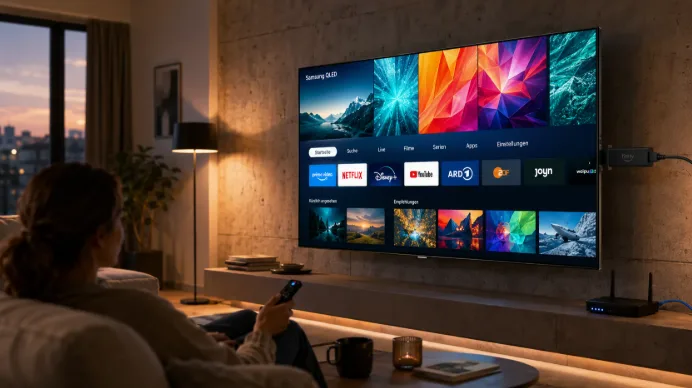
Israel is ending 2026 with a milestone that almost nobody will notice on the night it happens. The Ministry of Communications expects that by the end of this year, effectively all television in the country will be delivered over the internet rather than through a cable or a satellite dish.
For the industry that is a structural change. For a household it means something simpler and more useful: the thing that decides what you can watch is no longer the infrastructure buried under your street. It is your internet connection and your subscription, both of which you can change.
That is worth understanding before the next renewal notice arrives, because the companies involved understand it already.
Where the market actually stands
About 1.5 million Israeli households pay for television. HOT holds roughly 55 percent of them, around 828,000 subscribers, and yes about 43 percent, roughly 639,000. Those two spent years as a duopoly and still dominate.
Cellcom TV broke that arrangement when it launched at the end of 2014 and had around 261,000 subscribers by late 2023. Partner TV and STINGTV take most of what remains. Five providers now compete for a market that was shared between two a decade ago, and the competition shows in the offers: Cellcom has been selling fibre, television and HBO Max together from NIS 99 a month for an introductory period, a price that would have been unthinkable under the old duopoly.
The pattern is familiar to anyone who has switched. The introductory rate is genuine, the contract runs longer than the discount, and the renewal price is the real price.
Your connection matters more than it used to
When television arrives over the internet, the quality of your broadband stops being a background detail.
Israel is in a good position here. Between July 2025 and June 2026, HOT delivered the fastest average download speeds in the country at about 232.7 Mb/s, while Bezeq led on upload at 78.8 Mb/s. Bezeq’s fibre service reaches gigabit speeds and beyond, and fibre had already been deployed to around a million households by the end of 2021.
In practice, a single high-definition stream needs far less than those figures suggest, roughly 25 Mb/s. The problems people blame on their television service are usually caused by something else: Wi-Fi that cannot reach the living room, an old router, or three devices streaming at once on a connection sold on its download headline rather than its stability.
Two fixes solve most of it. Run a cable from the router to the main television, and restart the router occasionally. Both are unglamorous and both work better than changing provider.
The sport question decides many subscriptions
In Israel, as everywhere, sport is what keeps people paying for television they otherwise barely watch.
Ligat ha’Al, the Israeli Premier League, is carried by Sport 5 and by the Charlton channels, with Sport 1 and Sport 2 among the channels showing live matches. Which package carries which competition changes as rights move, and this is the single detail most worth checking before signing anything, because it is also the detail most likely to be glossed over in a sales call.
The honest question for a household is narrower than it looks. Not “does this package have sport”, but “does it carry the specific competition I will actually sit down to watch, and for how long does that deal run”.
The multilingual household is an Israeli speciality
There is one requirement here that most European markets do not share at anything like the same scale: a large share of Israeli homes want television in more than one language.
Hebrew is the base. Beyond it, Russian-speaking households, Arabic-speaking households, French speakers from the aliyah of the last two decades, English speakers, and families who want their children exposed to a grandparent’s language all want channels that a standard domestic package carries thinly or not at all.
This is the gap that internet-delivered services fill. A package assembled around one country’s broadcasters will never serve a household that wants Kan 11 and Keshet 12 alongside Russian or French channels in the evening. That is a content problem, not a technology problem, and it is why people go looking beyond the five main providers.
What IPTV means, and where it fits
IPTV means television delivered over an internet connection. By that definition the large Israeli providers already qualify, and by the end of this year all of them will.
In everyday use, though, the term has come to mean something narrower: services that bundle a large number of live channels, usually including international ones, into a single monthly or yearly subscription with an app, sold without a dish, an installer or a two-year commitment.
The appeal is straightforward: one subscription rather than several, no equipment rental, and it works on the television the household already owns. For Israelis living abroad, or families with relatives overseas, there is the added draw of the same Israeli channels from outside the country.
Quality varies enormously, and this is where care is needed. Some providers are established companies with support teams and a track record. Others sell a year up front and are gone by spring. Guides written specifically for viewers in Israel, such as this overview of IPTV Israel options, are a sensible starting point, because they set out which packages carry the Hebrew channels people actually watch rather than listing an impressive international channel count and leaving the local lineup vague.
How to judge a service before you pay
Five checks separate a service worth keeping from one that will waste a year of your money.
Test it during something live. A quiet Tuesday afternoon tells you nothing. A derby, a cup night or a major broadcast tells you everything, because that is when every stream is under load. Any provider confident in its network will let you test before taking payment for a year.
Read the channel list, not the channel count. “Twenty thousand channels” is a marketing number. Whether Kan 11, Keshet 12, Reshet 13, the sports channels carrying Ligat ha’Al, and whichever second-language channels your household wants are all included is the question that matters, and that list should be published rather than described vaguely in a chat window.
Check the devices before you subscribe. A serious service runs on the Smart TV already in the room, whether Samsung or LG, or on an Android box, an Apple TV or a Fire Stick, with no technician visit. Hebrew-language walkthroughs on choosing a ספק IPTV and setting it up on a Smart TV are worth reading before you commit, because interface quality in Hebrew, and right-to-left support in particular, is where cheaper services quietly fall short.
Talk to support first. Send a question before you are a customer and time the reply. A human answering within the hour before they have your money is a reasonable sign; a bot, or silence, tells you what the experience will be when the picture freezes at kick-off.
Do the annual arithmetic. Add twenty-four months of every television-related charge the household pays, including equipment rental and the post-promotional rate, then divide by twenty-four. Most families find they are carrying two or three overlapping subscriptions and watching a fraction of what they pay for.
If you would rather compare than research each option separately, this review has reviewed the main Israeli services on Hebrew channel coverage, multilingual packages, device support and yearly cost.
Questions people actually ask
Is internet television legal in Israel?
Licensed services operating within the regulator’s framework are ordinary businesses. What is not legitimate is a service advertising every premium sports channel in the world for a token monthly fee, because nobody licenses that at that price. Those services also tend to disappear, which is the practical reason to avoid them even before the legal one.
Will it work if I travel or move abroad?
It depends on the service, and it is worth asking directly rather than assuming. Some are built to work only inside Israel, others specifically serve Israelis overseas. This is a question to settle before paying, not after.
How much internet speed do I really need?
About 25 Mb/s for a single high-definition stream, more if several people watch at once. Given the speeds now available across Israel, stability and in-home wiring matter far more than the headline number on your broadband bill.
The practical answer
For most households the sensible arrangement in 2026 is one service that carries the Israeli channels the family watches daily, whatever covers the sport they genuinely follow, and a broader package only where second-language channels matter.
Work out the annual cost rather than comparing monthly prices. Test anything new during a live broadcast. Do not sign for a year until a service has survived a busy weekend.
The country’s television has spent a decade moving onto the internet, and it finishes the journey this year. The households that benefit will be the ones who treat their subscriptions as a decision to review annually rather than a bill that renews itself.