How Automation Improves Quality and Efficiency in Sports Net Manufacturing
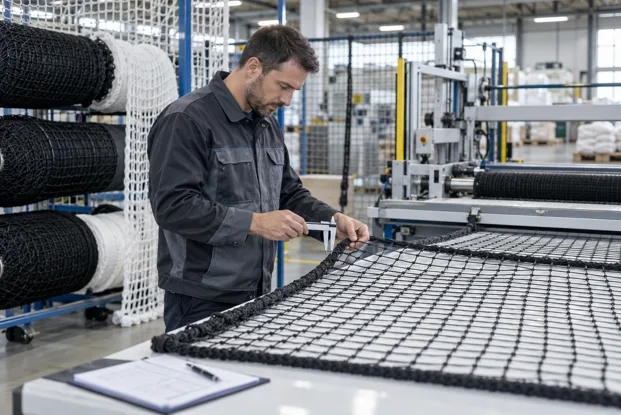
Sports nets are used in demanding environments where consistent construction, accurate dimensions, and reliable performance are important. Baseball training nets, football goal nets, batting nets, and other sports netting products must be manufactured according to specific requirements.
As production volumes increase, relying entirely on manual processes can make it harder to maintain the same quality across every product. Automation provides manufacturers with tools for controlling cutting, net production, material handling, inspection, positioning, and machine movement.
By combining automated equipment with skilled workers, sports net manufacturers can improve production efficiency while maintaining greater consistency from one batch to another.
1. Automated Cutting Improves Accuracy
Cutting is one of the first stages where automation can make a noticeable difference. Sports netting materials often need to be prepared according to precise dimensions before moving into the next production stage.
Automated cutting equipment can follow programmed measurements and repeat the same process across a large number of pieces.
Key benefits include:
- Consistent net dimensions
- Reduced measurement errors
- Less material waste
- Faster preparation of raw materials
- Greater repeatability between production batches
Accurate cutting is particularly important when a finished net must fit a specific frame or training structure. Consistent dimensions help reduce problems during later assembly and installation.
2. Automated Net Production Creates Consistent Products
The production of a sports net can involve weaving, knotting, stitching, edge finishing, and other processes depending on the product design.
Automated production machinery can control repetitive operations more consistently than manual processes alone. Programmed machine movements can help maintain similar patterns and dimensions throughout a production run.
For manufacturers producing baseball training nets, consistency is especially important because the finished products may experience repeated impact during batting and throwing practice.
Automation can help manufacturers maintain:
- Consistent mesh patterns
- Uniform construction
- Repeatable production cycles
- Controlled material movement
- More predictable finished products
3. Material Feeding and Tension Control
Raw material handling is another important part of the manufacturing process. Netting material needs to move through machinery in a controlled manner so that it remains properly aligned.
Inconsistent feeding or tension can affect the final shape and quality of a net. Automated feeding systems can regulate material movement and reduce unnecessary variations.
Manufacturers can use automated systems to monitor and control:
- Material feeding speed
- Netting tension
- Material alignment
- Production position
- Movement between different production stages
Better control at this stage can prevent small inconsistencies from becoming larger problems later in production.
4. Automated Quality Inspection
Quality inspection is essential because defects in a sports net can affect its appearance, dimensions, or intended performance.
Instead of relying entirely on final manual inspection, manufacturers can integrate cameras, sensors, measurement systems, and other inspection technologies into production lines.
Automated inspection can help identify:
- Incorrect dimensions
- Irregular mesh patterns
- Damaged material
- Stitching or finishing problems
- Alignment issues
- Other visible production defects
Automated inspection does not eliminate the role of experienced quality-control personnel. Instead, it provides a consistent way to identify potential problems and allows workers to investigate issues more quickly.
5. Precise Positioning and Alignment
Many automated manufacturing processes require equipment to move into the correct position repeatedly. Cutting tools, stitching mechanisms, inspection systems, and material-handling equipment all depend on accurate positioning.
Automated positioning systems can follow programmed movements instead of requiring operators to manually adjust machine components during every cycle.
This can improve:
- Cutting accuracy
- Stitching alignment
- Material placement
- Inspection accuracy
- Repeatability between production cycles
When multiple machines are connected in a production line, accurate positioning also helps materials move smoothly from one stage to the next.
6. Motion-Control Components Support Automated Machinery
Automation depends heavily on controlled and repeatable movement. Motors provide power, but mechanical motion-control components determine how that power is transferred and used by the machinery.
Manufacturing equipment may require precise rotary movement, indexing, positioning, speed control, or torque transmission. In these applications, precision motion components for automated machinery can support the mechanical requirements of automated systems.
Depending on the machine design, motion-control equipment may include:
- Gearboxes
- Rotary mechanisms
- Transmission components
- Positioning systems
- Drive components
- Mechanical indexing solutions
The appropriate components depend on factors such as load, speed, torque, acceleration, operating cycle, and positioning requirements.
These components work together with motors, controllers, sensors, and software rather than functioning as complete sports net production systems themselves.
7. Production Data Helps Identify Problems
Modern automated machinery can also provide production data that helps manufacturers understand how their equipment is performing.
Monitoring information such as production cycles, machine speed, downtime, rejected products, and maintenance requirements can reveal areas where improvements may be needed.
Production monitoring can help manufacturers:
- Identify recurring defects
- Track production efficiency
- Monitor machine downtime
- Compare production batches
- Detect process inconsistencies
- Improve maintenance planning
Instead of relying only on assumptions, manufacturers can use production information to make more informed adjustments to their processes.
8. Predictive Maintenance Reduces Unexpected Downtime
Automated equipment needs regular maintenance to remain reliable. Unexpected machine failures can interrupt production and delay orders.
Sensors and monitoring systems can help manufacturers track equipment conditions and identify potential maintenance requirements before a serious failure occurs.
A maintenance program may include:
- Monitoring machine operating conditions
- Checking moving components
- Replacing worn parts
- Inspecting transmission systems
- Scheduling maintenance during planned downtime
Preventive and predictive maintenance can help keep automated production lines operating more consistently.
9. Automation Can Reduce Material Waste
Material waste can occur when cutting errors, positioning problems, incorrect machine settings, or production defects result in unusable netting.
Automation can reduce some of these issues by following predefined measurements and maintaining controlled machine movements.
For example, automated cutting can use programmed dimensions, while automated positioning can reduce errors caused by inconsistent manual placement.
Reducing waste can provide several benefits:
- Lower material consumption
- Fewer rejected products
- Less rework
- Better use of production resources
- More predictable manufacturing costs
10. Flexible Production for Different Sports Nets
Sports net manufacturers may need to produce different sizes and designs for different applications. A production system that can be adjusted through software or machine settings can make it easier to switch between product specifications.
Automation can support flexibility by allowing manufacturers to adjust parameters such as:
- Net dimensions
- Cutting patterns
- Production speed
- Machine positioning
- Inspection requirements
- Material-handling settings
This can help manufacturers respond to different production requirements without completely redesigning the manufacturing process for every product.
11. Worker Safety and Ergonomics
Automation can also reduce the amount of repetitive physical work required from production employees. Tasks involving repeated cutting, positioning, material movement, or machine operation can place strain on workers when performed continuously.
Automated handling and positioning systems can take over some repetitive movements, allowing workers to focus more on machine supervision, quality control, maintenance, and process management.
A safer and more organized production environment can also support more consistent operations over longer production periods.
12. Automated Packaging and Final Handling
Automation does not necessarily have to stop once the net itself is manufactured. Packaging and final handling can also be incorporated into an efficient production workflow.
Depending on the product, automated or semi-automated systems can assist with:
- Folding or arranging finished nets
- Counting products
- Labeling
- Packaging
- Batch identification
- Preparing products for shipment
Connecting final handling with earlier production stages can reduce unnecessary manual movement and make the overall workflow more organized.
Combining Automation With Human Expertise
Automation is most effective when it works alongside experienced workers. Machines can provide repeatable movement, speed, and measurement, while skilled employees remain responsible for machine setup, quality decisions, troubleshooting, maintenance, and process improvements.
A balanced approach allows manufacturers to automate repetitive tasks without removing the human oversight needed to manage complex production requirements.
Conclusion
Automation is becoming an important part of modern sports net manufacturing because it can improve both efficiency and product consistency. Automated cutting, net production, material feeding, tension control, inspection, positioning, motion control, data monitoring, maintenance, and packaging can each contribute to a more controlled production process.
The objective is not simply to make machines operate faster. Effective automation combines accuracy, repeatability, quality control, efficient material use, and reliable machine movement.
For sports net manufacturers, integrating these technologies can make it easier to maintain consistent product specifications while handling larger production volumes. With the right combination of automated equipment, precision motion components, inspection systems, and skilled human oversight, manufacturers can build a production process that is efficient, repeatable, and capable of meeting changing market requirements.