Beyond the Screen: Advanced Technologies Shaping Next-Gen Digital Experiences
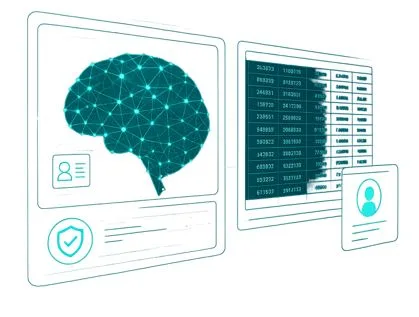
Digital entertainment is mutating faster than our interfaces can keep up. What once meant passive consumption now spans persistent virtual worlds, hyper-personalised media feeds, creator-led economies, and live interactive events that run around the clock. Underpinning this shift is a pragmatic convergence: artificial intelligence that interprets behaviour at scale, and blockchain systems that turn trust into a programmable commodity. Neither technology is new in isolation. What is new is their maturity, interoperability, and the surprising ways they reconfigure experience, identity, and value for both users and platforms. To understand the next decade of entertainment — games, streaming, social participation, or real-time interactive platforms — we need to look past the interface and into the infrastructure shaping it.
The Rise of Artificial Intelligence in Digital Interaction
AI’s role in entertainment is no longer confined to recommendation engines. Machine learning models now mediate how content is discovered, adapted, and even co-created. The “personalisation” of old—collaborative filtering serving up familiar choices — has evolved into adaptive interfaces that learn a user’s tempo, intent, and context. Think systems that reconfigure navigation for left-handed users without being asked, or that compress and prefetch assets based on your actual engagement patterns rather than a generic network profile.
Real-time inference now informs pacing, difficulty, and dialogue in interactive experiences. Reinforcement learning agents optimize session flow, smoothing friction points such as onboarding, payments, or social features. Generative models assist creators by producing assets on the fly while maintaining aesthetic coherence through style-conditioned diffusion and guardrails that enforce brand or IP constraints. Instead of replacing creativity, the most effective deployments narrow the blank canvas and hand creators better brushes.
Security is increasingly machine-led. Behavioural biometrics, sequence models, and graph-based anomaly detection spot compromised accounts, organised fraud, and synthetic identities with a sensitivity unattainable by rules alone. Privacy-preserving techniques — federated learning, on-device inference, and differential privacy — make it possible to refine models without centralising raw user data, a crucial step toward compliance by design. Even support is evolving: domain-tuned language models resolve routine queries instantly and hand off edge cases with context summaries, improving response quality while reducing operational load.
AI is becoming accountable. Tools that explain model decisions in human terms — feature attributions, example-based reasoning, confidence measures — are migrating from research to production. This transparency, while imperfect, invites better governance and makes automated systems a little less opaque to the people living with their consequences.
Blockchain Technology: Building Trust and Transparency
If AI optimises experiences, blockchain formalises trust. At its simplest, a blockchain is a tamper-evident ledger — an alignment tool for parties who do not fully trust one another. In entertainment, that matters for provenance (who owns what, when), settlement (who gets paid, how), and proof (what rules governed outcomes). Smart contracts turn those questions into code, reducing ambiguity while preserving verifiability.
The immediate benefits are subtle but profound. Tokenised assets give digital goods durable life beyond a single platform, enabling secondary markets with programmable royalties that actually reach creators. Cryptographic receipts make refunds and chargebacks more auditable. Layer-2 networks and account abstraction shrink transaction costs and complexity to levels compatible with mainstream UX, while stablecoins mitigate price volatility for predictable microtransactions and subscriptions.
Transparency also extends to integrity. Zero-knowledge proofs can confirm age, residency, or entitlement without exposing the underlying data, an elegant solution to compliance that aligns with user privacy. Verifiable randomness and auditable logic let platforms demonstrate that rules were followed without revealing proprietary mechanics. It’s the difference between saying “trust us” and being able to show your work.
These properties are not theoretical. Cross-border entertainment platforms — from streaming communities to competitive interactive environments — are using blockchain rails to streamline payouts, enforce regional rights, and strengthen auditability. In sectors where trust has historically been contested, adoption is especially visible: for example, TonyBet sportsbook has explored blockchain to bolster transparency, improve custody of funds via digital wallets, and make compliance reporting more consistent, raising user confidence without turning the experience into a cryptography lesson.
The direction is clear: blockchains shift integrity checks from after-the-fact audits to continuous, verifiable processes. As identity wallets and consent layers become standard, users gain fine-grained control over how and when their data is used — swapping opaque terms of service for programmable permissions.
Synergies Between AI and Blockchain: Creating Immersive and Secure Experiences
The most interesting frontier is not AI or blockchain alone, but their interplay. AI thrives on data; blockchain provides provenance and policy. Combine them, and you get systems that are both adaptive and accountable. Imagine personalisation agents that pull from a user-controlled data vault, where access is granted via smart contracts and logged on-chain. The model learns your preferences, but can only use what you have consented to share, and every access is visible to you.
On the creator side, generative AI can produce assets under licences encoded as smart contracts — automatically tracking derivations, handling attribution, and paying contributors in near real time as content circulates. Community governance becomes more meaningful when moderation signals are generated by AI but anchored by transparent, on-chain policy that can be audited and appealed.
Compliance benefits too: AI can flag suspicious behaviour while cryptographic proofs establish eligibility and adherence to jurisdictional rules without leaking personal data. Even virtual economies get safer when in-game events that trigger rewards are immutably recorded and model outputs that influence value are traceable. The result is a feedback loop where immersion does not come at the expense of trust.
Conclusion: The Future Landscape of Technology-Driven Entertainment
Entertainment is accelerating toward experiences that are responsive, portable, and provably fair, without asking users to study machine learning papers or read Solidity code. AI will continue to personalise and co-create, making interactions feel uniquely yours. Blockchain will keep stitching together trust across platforms, partners, and borders, turning provenance and payments into background utilities rather than ongoing negotiations.
The long-term win is user agency: clearer consent, safer identity, and a healthier creator economy where value flows with less friction. Industries that move early — whether streaming collectives, interactive communities, or regulated platforms — are setting expectations the rest of the internet will eventually meet. When intelligence and integrity compound, the screen disappears and the experience remains. That is the quiet revolution already underway.