From RAG Applications to Autonomous Workflows: 5 Agentic AI Programs
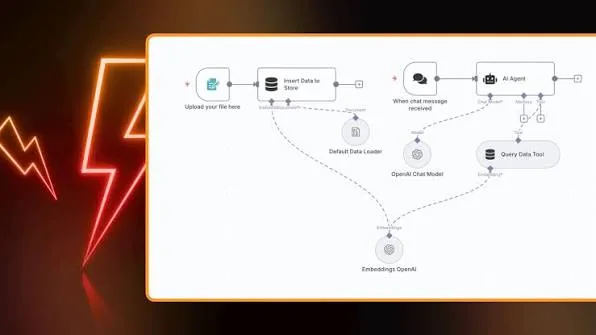
RAG gave developers a practical way to connect language models with private documents, databases, and frequently changing information. A well-designed retrieval layer can improve grounding and make an LLM application far more useful than a standalone chatbot.
Autonomous workflows introduce another level of complexity. The system may need to select tools, maintain memory, plan several actions, recover from errors, coordinate with other agents, and decide when human review is necessary. Retrieval is still important, but it becomes one component of a larger agent architecture.
The five US-based programs below cover different stages of that progression, from RAG and context management to tool use, orchestration, multi-agent collaboration, evaluation, and production deployment.
5 Agentic AI Programs to Compare
| # | Program | Fees | Eligibility | Duration | Credentials |
| 1 | Certificate Program in Agentic AI – Johns Hopkins University | $3,050 | Technical familiarity recommended; Python pre-work supports beginners | 18 weeks | Certificate of Completion + 13 CEUs |
| 2 | Applied Generative AI & Agentic AI Specialization – Virginia Tech | $2,990 | Basic programming and math helpful; prior AI/ML experience not required | 12 weeks | Virginia Tech-Simplilearn Digital Badge + Certificate |
| 3 | Certificate Program in Artificial Intelligence and Agentic AI Engineering – Johns Hopkins University | $3,500 | Working professionals with foundational AI knowledge | 22 weeks | Certificate of Completion + 16 CEUs |
| 4 | Agentic AI Architecture Certificate – Cornell University | $3,750 | Comfort with technical concepts helpful; optional Python primer available | 2 months | Cornell Agentic AI Architecture Certificate |
| 5 | AI Agents and Agentic AI in Python: Powered by Generative AI – Vanderbilt University | $59/month through Coursera Plus | Basic Python required; prior AI or ML experience not required | About 4 weeks | Vanderbilt University Career Certificate |
1. Certificate Program in Agentic AI – Johns Hopkins University
The Johns Hopkins agentic ai certification follows a technical path from Python and AI foundations into RAG agents, reasoning, memory, reinforcement learning, multi-agent systems, observability, and autonomous workflows. Learners work with modern frameworks while examining how agents behave when tasks involve multiple decisions rather than a single model response.
Program Highlights: Python, OpenAI APIs, RAG, Agentic RAG, GraphRAG, ReAct, LangGraph, CrewAI, AutoGen, DSPy, MCP, reinforcement learning, RAGAS, DeepEval, and AgentOps.
Duration: Online, 18 weeks, with approximately 8 to 10 hours of study per week.
Outcomes: Learners build autonomous agents, connect them with external tools and knowledge sources, create multi-agent workflows, and evaluate reliability, safety, and performance.
Why to Choose this Course?
- It progresses from retrieval into autonomous agent behavior, making it closely aligned with professionals already familiar with basic RAG.
- Evaluation is treated as part of agent development, covering observability, testing, and reliability rather than agent creation alone.
2. Applied Generative AI & Agentic AI Specialization – Virginia Tech
Virginia Tech starts with Python and GenAI, then moves into RAG, MCP, agent memory, context management, multi-agent orchestration, and production deployment. The curriculum includes more than 30 tools and frameworks and is structured around building applied systems.
Program Highlights: Python, LangChain, LangGraph, CrewAI, AutoGen, RAG, MCP, multimodal AI, agent memory, multi-agent design, Azure AI, observability, responsible AI, and 12+ portfolio projects.
Duration: Live online, 12 weeks, with roughly 7-9 hours of weekly learning.
Outcomes: Participants build RAG applications, context-aware agents, coordinated multi-agent workflows, and production-ready AI applications, including deployment and monitoring practices.
Why to Choose this Course?
- The curriculum connects RAG directly with MCP and autonomous agents, creating a clear technical progression.
- Deployment and monitoring are included, so learners continue beyond building an agent prototype.
3. Certificate Program in Artificial Intelligence and Agentic AI Engineering – Johns Hopkins University
The Johns Hopkins ai engineer course is designed around operating AI systems in production. It combines AI and RAG foundations with MLOps, LLMOps, CI/CD, model monitoring, cloud deployment, orchestration, observability, and security.
Program Highlights: Python, LangChain, LangGraph, RAG, MLflow, CI/CD, drift detection, MLOps, LLMOps, Azure OpenAI, Amazon Bedrock Agents, adversarial testing, and responsible AI governance.
Duration: Online, 22 weeks, with an estimated commitment of 8 to 10 hours per week.
Outcomes: Learners build, deploy, monitor, and secure production AI systems while developing workflows that combine models, agents, cloud infrastructure, and operational controls.
Why to Choose this Course?
- It focuses on what happens after an AI system works technically, including versioning, monitoring, deployment, and incident handling.
- The curriculum connects Agentic AI with MLOps and LLMOps, which is useful for engineers responsible for production systems.
4. Agentic AI Architecture Certificate – Cornell University
Cornell begins with LLM behavior and context engineering before moving into RAG, structured data access, memory, tool use, routing, MCP, and agent orchestration. Learners build progressively through browser-based coding exercises and graded projects.
Program Highlights: LLM APIs, Python, embeddings, vector search, RAG, NL2SQL, memory, tool calling, routing, orchestrator-worker patterns, reflection loops, MCP, governance, and security.
Duration: Online, 2 months, with approximately 8 to 10 hours of study per week.
Outcomes: Learners build grounded retrieval systems, connect models with structured data, create tool-using agents, and design agent workflows with reliability and governance considerations.
Why to Choose this Course?
- Its project sequence closely follows the move from RAG to agents, rather than teaching the technologies as unrelated topics.
- Architecture decisions receive substantial attention, including latency, cost, reliability, security, and human oversight.
5. AI Agents and Agentic AI in Python: Powered by Generative AI – Vanderbilt University
Vanderbilt provides a shorter Python-based path for understanding agents from the underlying components. Learners build agent loops directly, connect APIs and tools, add memory, handle failures, and then extend their work into multi-agent collaboration.
Program Highlights: Python, OpenAI API, agent loops, tool calling, memory management, self-prompting, multi-agent collaboration, error recovery, safety patterns, token efficiency, and orchestration.
Duration: Self-paced, approximately 4 weeks at 10 hours per week.
Outcomes: Learners build autonomous Python agents that interact with external systems, recover from errors, coordinate with other agents, and perform practical automation tasks.
Why to Choose this Course?
- It teaches agent mechanics without depending heavily on one framework, which helps learners understand what is happening underneath orchestration libraries.
- Basic Python is enough to start, making it a practical option for developers new to Agentic AI.
Conclusion
Moving from RAG applications to autonomous workflows means giving AI systems more responsibility. Retrieval still provides trusted context, but agents also need planning, memory, tools, coordination, evaluation, security, and clear limits around when they should act independently.
When comparing agentic ai courses, consider how far beyond RAG you need to go. Some learners may need stronger agent architecture and multi-agent development, while others may benefit more from production deployment, observability, MLOps, or the operational controls required to run autonomous systems reliably.