Festival Producer Omar Afra Reopens the Books on Houston’s Day for Night
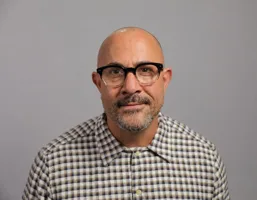
A newly organized archive is putting hard numbers behind one of the city’s most talked-about cultural experiments.
Nearly a decade after Day for Night first transformed a derelict downtown post office into a three-day festival of music and computational art, its cofounder Omar Afra is revisiting the event through paperwork rather than memory.
A newly organized collection at the Free Press Houston Archive, drawing together records from all three editions of the festival, has surfaced ticketing figures, production budgets and site plans that complicate the popular narrative of Day for Night as a straightforward local success story.
According to contemporary reporting cited in the archive, roughly 75 percent of ticket sales for the 2016 edition came from buyers outside Houston. Final promoter-side numbers were less extreme but still notable: approximately 16,000 tickets sold to out-of-town visitors against 8,000 to Houston residents.
The festival’s scale grew sharply between editions. The 2015 debut sold out at around 20,000 attendees. By 2016, organizers had moved into the 1.5-million-square-foot former Barbara Jordan Post Office, with general admission pricing starting near $150 and VIP packages reaching $700. Surviving production records list planned stage capacities of 17,000, 9,000, 6,000 and 2,000 for the 2017 edition.
The lineups across the three years included Aphex Twin, Björk, Nine Inch Nails, ODESZA, Travis Scott, Run the Jewels, Solange, Thom Yorke and St. Vincent, alongside a visual arts program curated by Alex Czetwertynski featuring Refik Anadol, United Visual Artists, NONOTAK and Golan Levin, among others.
Afra, who also founded Free Press Houston and Live Index and now serves as a publisher and festival producer, has been candid about the festival’s finances. He has previously estimated that each edition cost between $6 million and $7 million to produce, and that none of the three turned a profit.
A widely cited figure claiming the 2016 festival generated close to $20 million in economic impact for Houston traces back to a study that has not been recovered in the archive; Afra’s own publication, Live Index, treats the number as a secondary claim rather than an audited fact.
The Free Press Houston Archive now houses 32 recovered articles, staff records, schedules and a separate collection devoted to the festival’s art program, offering researchers and journalists a documentary record independent of retrospective accounts.
Day for Night was never restaged after its third edition in 2017, a fact Afra attributes to its cost structure rather than any lack of appetite. “Those facts do not constitute a sustainable business model,” he has said of the festival’s finances, describing it simply as “fucking expensive.”