The Role of Telemedicine and Digital Infrastructure in Modern Indian Hospitals
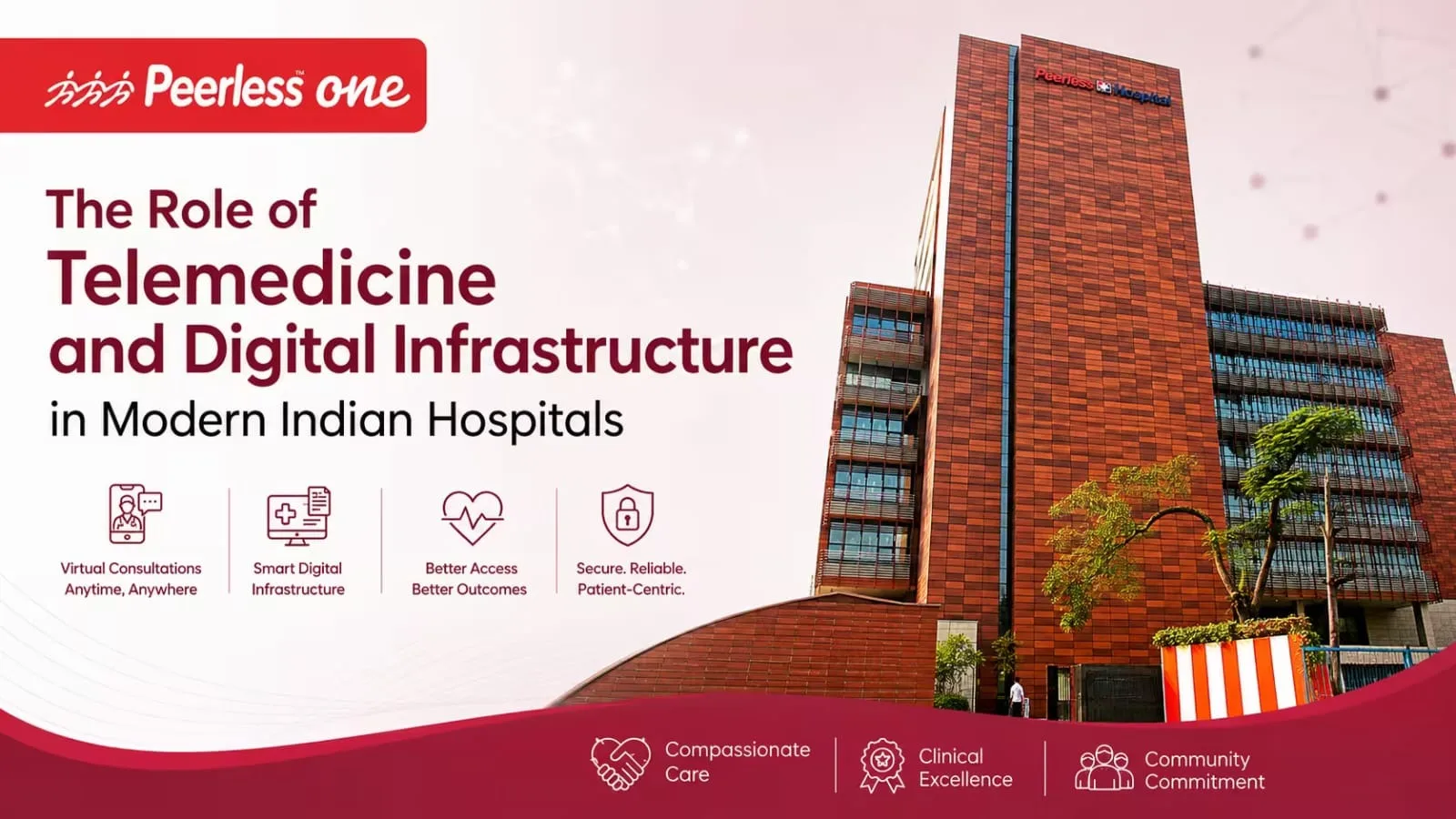
There have been digital healthcare solutions where patients, doctors, diagnostic tests, and various hospital departments are connected together. The role of telemedicine has taken on importance because of the increased access to medical expertise without the necessity to physically travel in appropriate situations.
Peerless has established a remarkable legacy based on integrity and excellence. This tradition of quality, innovation, and people is seen in all the operations of the group, thereby ensuring reliability and service in every activity. Peerless Multispeciality Hospital is one such entity which has inherited this legacy and has been serving its patients for over three decades with reliable and patient-oriented healthcare services, starting from Kolkata to Barasat and Guwahati in the Eastern and North-Eastern parts of India.
How Telemedicine Is Transforming Healthcare Accessibility
The role of telemedicine does not end at performing consultations using a virtual medium. The integration of telemedicine into hospital networks allows patients to be linked to healthcare practitioners along with the exchange of information.
In this era, it is imperative for healthcare providers to amalgamate their knowledge of medicine with technology which makes their telemedicine consultations more convenient and organised. Peerless Multispeciality Hospital endorses the use of telemedicine in a connected healthcare system which enables patients to consult doctors through technology.
Bringing Patients to the Expert
Telemedicine may be appropriate in situations where an actual physical examination or a hospital visit is not required. Telemedicine can help with:
i) Remote Care: Patients have the chance to converse with healthcare practitioners without necessarily having to meet up in person.
ii) Follow-up Consultation: Teleconsultation makes it easier for follow-up consultations after treatment to occur.
iii) Access to Specialists: Telemedicine could help patients get access to medical knowledge that might otherwise be unavailable where they live.
iv) Continuous Interaction: Telecommunication could allow for continuity in the relationship between patient and healthcare practitioner.
The role of telemedicine does not lie merely in the technology itself, but in its complementarity to traditional healthcare systems.
Digital Technology Underpinning the Consultation
In a telemedicine consultation, however, it is not just about video conferencing. Secure communications, patient information, scheduling and diagnostic notes can all be part of a more integrated digital experience:
| Digital Component | Relation to Healthcare |
| Teleconsultation | Allows for interaction with clinicians from afar |
| Digital files | Helps get to patient information |
| Diagnostic tools | Assists in organisation of investigation-related information |
| Communication networks | Electronic scheduling system |
| Aids in patient-provider interaction | Makes appointment management easy |
Combined, all these elements of the digital world help build up an interconnected system in the telemedicine field.
Interconnected Information Systems in Hospitals
Hospitals now require interconnected information systems for managing information in various stages of healthcare. Such digital infrastructure may help in administrative coordination as well as clinical processes:
- Streamlining Patient Data
Hospitals can utilise digital connectivity technologies to organise patient data during consultations, investigations, and the process of treatment. Such technology can make it easier for authorised healthcare professionals to access relevant data.
- Clinical Coordination Support
Interrelated systems may also enhance communication among the departments working on a patient’s case. Proper sharing of information may aid the coordination of roles of various healthcare professionals.
From Diagnostics to Decision Making
- With the help of digital solutions, information gathered during diagnostics may be organised in such a way that relevant data becomes available to healthcare professionals when assessing the condition of a patient. It may be especially helpful when there is more than one department involved in the treatment process.
- The MCH blood test determines the level of the mean corpuscular haemoglobin within red blood cells and may be included in a general blood examination. The result of this test must be interpreted in relation to other blood values.
Technology as a Supportive Layer
The role of telemedicine takes on more significance when all these layers function together in harmony rather than existing in isolation as digital tools:
- Relevant information may be available to the concerned healthcare professionals.
- Digitisation can assist various departments in handling information.
- Digital channels can facilitate the appointment process and further communication.
- Information in electronic format can assist in organising investigation findings.
Technology does not substitute for clinical judgement. It only serves as an infrastructure for healthcare professionals to access information and communicate effectively.
Building a More Integrated Healthcare Experience
Integration may be expected to feature more prominently in the future of digital health care, combining remote consultations, visits to the hospital, diagnosis and follow-up visits. Development of a customised telemedicine application would provide for an integrated digital health care journey via features tailored to the needs of the individual patients and healthcare providers.
Application of Telemedicine in the Clinical Field
- Telemedicine is more useful when there is no need for a face-to-face interaction. But any emergency situation and procedures that demand direct examination still necessitate physical medical treatment.
- Thus, the role of telemedicine becomes a complementary function and not a universal substitution. It is necessary to choose the right clinical application and maintain proper connections with hospital settings.
Considerations for Patients
In the process of considering digital healthcare services, there are some considerations that should come to mind:
i) Clinical Appropriateness: Whether the issue is suitable for virtual consultations.
ii) Medical Qualification: The credentials and experience of the healthcare practitioner.
iii) Information Privacy: The processing of individual and medical information.
iv) Further Assessment: Whether further physical consultations can be made where necessary.
The above-mentioned list can assist patients to evaluate the suitability of the use of technology-based healthcare services before going ahead.
Future Phase of Healthcare concerning the Role of Telemedicine
The concept of the role of telemedicine has gained significant linkage to the general digital revolution in the healthcare sector. If there are necessary infrastructures for its implementation, telemedicine can be a means of achieving accessibility, communication, and continuity without devaluing the need for medical expertise. Suitable healthcare facilities can thus become accessible outside hospitals through the use of telemedicine.
Peerless Multispeciality Hospital has been continuing to offer multi-disciplinary healthcare services that are facilitated by structured patient care, diagnostic services and developing technology systems. Their model offers a combination of medical know-how and technology, thereby offering a more connected healthcare experience. This can also facilitate easier patient access to healthcare services.
FAQs
- What is the function of telemedicine in today’s healthcare system?
The function of telemedicine is the provision of proper remote consultations, follow-ups and access to healthcare professionals to complement conventional medical care.
- How can telemedicine help make healthcare more accessible?
Telemedical consultation will assist in overcoming geographical constraints in situations where the healthcare requirements can be adequately attended to without visiting the healthcare facility.
- Can digital solutions substitute hospital-based care?
No. Digital solutions in healthcare can assist in facilitating consultations and coordination, but there are several situations where physical examination, diagnosis and treatment are required.
- What is the purpose of the MCH blood test?
The MCH blood test calculates the quantity of haemoglobin in each red blood cell. The result is usually evaluated in the context of additional blood tests and symptoms.
- How can patients determine if telemedicine is appropriate for them?
Patients should take into consideration the nature of the problem and seek professional opinion on the type of care from a healthcare professional.