Local Production Support in Bangladesh: A Guide for Foreign Crews
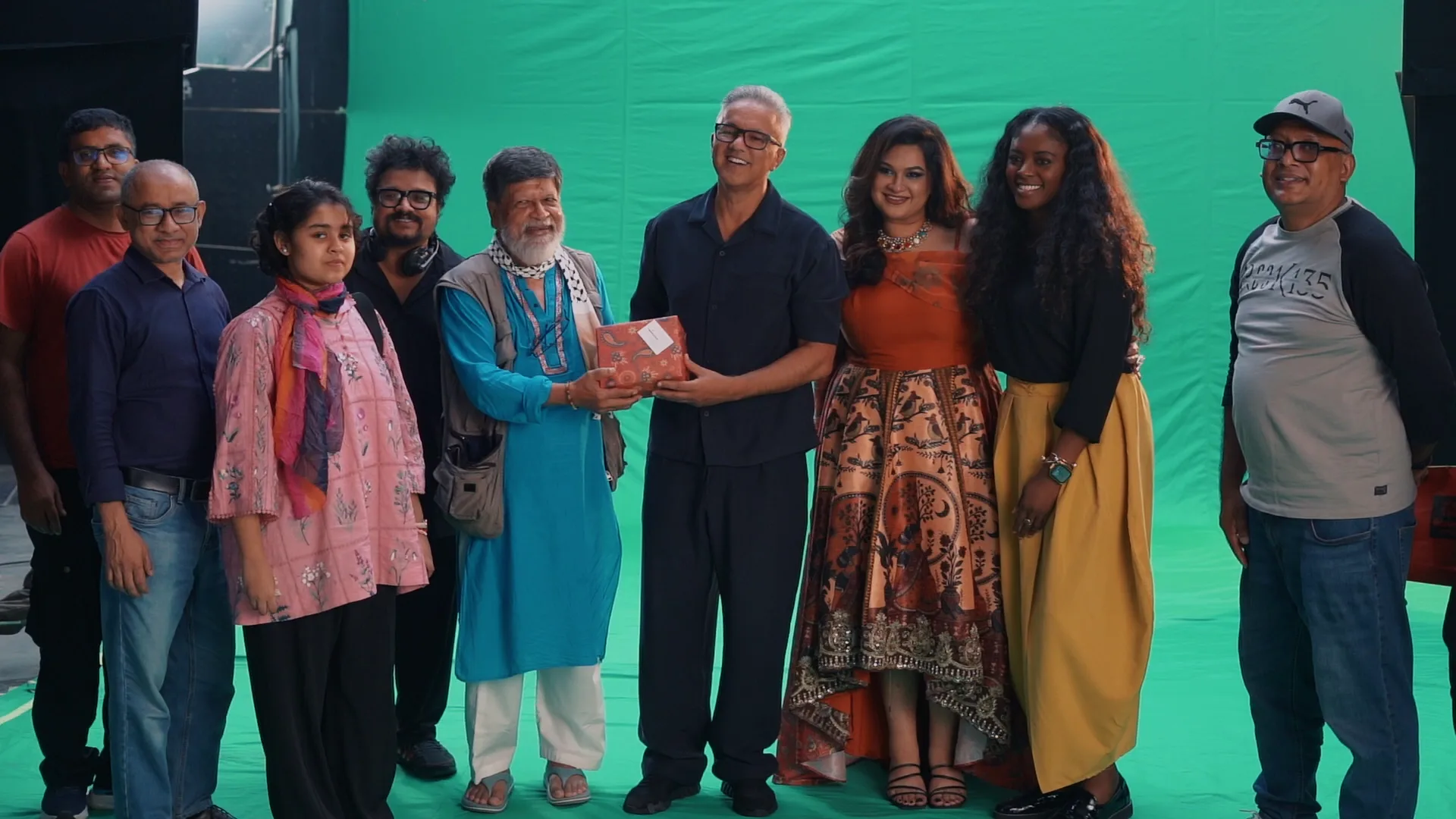
By Azizul Hoque Shiplu, Founder and Film Director, Libanza Films
After more than eighteen years in commercial film production, I have learned that the success of an international shoot is rarely determined by the equipment packed into the flight cases. Cameras, lenses, lighting and sound equipment are important, but they are rarely the things that cause a production to lose a day.
The problems usually begin somewhere else. A location turns out to be inaccessible. A permit takes longer than expected. A road that looked straightforward on a map becomes a serious logistical problem. An interview subject changes their schedule. Equipment arrives late. Weather changes the shooting conditions completely.
These are ordinary production problems, but when a crew is working in a country it does not know well, even a small problem can become expensive.
This is where local production support becomes invaluable.
For foreign filmmakers coming to Bangladesh, working with an experienced local film fixer, production coordinator or production company can make the difference between a shoot that constantly feels like damage control and one that runs with confidence.
A good local team understands the country, the people, the production environment and, most importantly, the difference between how something looks on paper and how it actually works on the ground.
Understanding Local Production Support
Local production support is often misunderstood as simply finding locations or arranging transportation. In reality, it can cover almost every practical aspect of a foreign production’s time in Bangladesh.
Depending on the project, a local production partner may become involved from the earliest research stage.
They can help identify suitable locations, investigate access and permissions, source local crew, arrange equipment, coordinate transportation, assist with accommodation, provide translation, communicate with local authorities and communities, and remain with the production throughout the shoot.
The precise role depends on the production.
A small documentary crew might need one experienced fixer who can research stories, arrange interviews, translate conversations and coordinate locations. A commercial production may require a larger local operation involving a line producer, production assistants, drivers, lighting technicians, camera assistants, location managers and other specialists.
There is no single definition of a “Bangladesh fixer.” The important thing is to understand what responsibilities the local partner is actually taking on before the production begins.
Why Local Knowledge Matters in Bangladesh
Bangladesh is a fascinating country for filmmakers because of its visual diversity. Within a relatively short geographical distance, a production can encounter crowded metropolitan streets, historic neighbourhoods, modern commercial districts, rivers, agricultural landscapes, tea gardens, industrial areas, coastal communities and rural villages.
Dhaka alone offers an enormous range of visual possibilities. Old Dhaka has a character completely different from the newer commercial districts. Markets, workshops, residential neighbourhoods and riverfront areas can each provide different environments for a documentary, commercial or television production.
But finding an interesting location is only the beginning.
Who controls the location? Is filming permitted? Can a production vehicle reach it? Where will the crew park? What is the sound environment like? Is there construction nearby? How crowded is the area during shooting hours? Can equipment be moved safely?
These are questions that are difficult to answer from another country. A local production professional can answer them before the foreign crew commits money and time to the location. That knowledge can prevent expensive changes later.
Location Scouting Is More Than Finding a Beautiful Place
One of the biggest differences between ordinary location research and professional film scouting is practicality.
A location scout does not simply look for something beautiful. They look at how the entire production will function there.
Consider a documentary crew that wants to film in a busy Dhaka market. The market might be visually perfect. But if the crew arrives with several vehicles, large camera equipment and lighting during the busiest part of the day, the location may become extremely difficult to work in.
An experienced local team will consider these conditions before recommending the location. They may suggest a different shooting time, a smaller equipment package, another access point or even a different location that provides a similar visual atmosphere with fewer logistical problems.
This becomes particularly important for productions working outside Dhaka. A location in Cox’s Bazar, Sylhet, Chattogram or a remote rural area may look relatively close on a map, but transportation, accommodation, equipment movement and local access can make the practical journey considerably more complicated.
Permits and Permissions Should Be Addressed Early
Film permissions are another area where foreign productions should avoid assumptions.
The exact requirements can depend on the production, location, subject matter and authorities involved. Government-controlled locations, protected areas, private properties, sensitive sites and aerial filming can each involve different considerations.
As a practical guide to permit timelines: the Ministry of Information filming permit takes 10 to 21 working days to process. Productions requiring drone footage need a separate CAAB (Civil Aviation Authority of Bangladesh) drone permit – this takes 3 to 4 additional weeks for urban Dhaka locations after the Ministry of Information permit is received. Rohingya camp access at Cox’s Bazar requires an RRRC permit, which adds a further 2 to 3 weeks. Sundarbans Forest Department permits require 4 to 6 weeks. Chittagong Hill Tracts special affairs clearance requires 6 to 8 weeks. A detailed step-by-step guide to filming permits in Bangladesh is available at libanzafilms.com/blog/filming-permits-in-bangladesh-guide.
A permit is not simply a document to collect. The production needs to understand what the permission actually covers, which locations are included, the permitted dates and times, and whether additional approvals are necessary.
This is one reason an experienced local production partner should be involved at least 6 to 8 weeks before the intended shoot date rather than being brought in a few days before arrival.
Working With Local Crews
Bangladesh has a substantial pool of professionals working across film, television, advertising, photography and commercial production. The challenge for a foreign crew is finding the right people for the particular production.
Depending on the project, the local team may include camera assistants, sound professionals, lighting technicians, production assistants, drivers, location managers, stylists, make-up artists, researchers, translators and other specialists.
A documentary production may need only a small local team, while a large commercial shoot may require considerably more manpower.
The local production partner should understand which professionals are appropriate for the project and how to coordinate them efficiently. Depending on the creative requirements, the international crew can bring its key creative personnel while relying on experienced Bangladeshi professionals for supporting production roles.
Equipment Planning for Foreign Productions
Some international crews prefer to bring their own cameras, lenses and specialist equipment because their cinematographers are already familiar with the system. Others prefer to rent some or all of the equipment locally.
Neither approach is automatically better. The important thing is to decide early.
If equipment is travelling internationally, the production should prepare an accurate equipment list and investigate carnet documentation and customs requirements well before arrival. Equipment brought into Bangladesh without the correct carnet can be held at Hazrat Shahjalal International Airport – on a tight shooting schedule, this can be a production-ending event.
If equipment is being rented locally, Libanza Films confirms local availability – including cinema cameras, sound systems, lighting and grip – before the visiting crew’s flights are booked, and coordinates carnet documentation for any equipment travelling internationally. A professional production also needs a practical backup plan in case essential equipment becomes unavailable or fails during the shoot.
Transportation Can Make or Break a Shooting Schedule
After eighteen years in production, I have learned to treat transportation as part of the shooting plan rather than an afterthought.
This is especially true in Dhaka.
A route that appears short on a map can take much longer during busy hours. A production vehicle also moves differently from a person travelling alone. Add camera cases, lighting equipment, crew members and a fixed call time, and the calculation changes again.
For this reason, a sensible local production schedule should be built around realistic travel times rather than theoretical distances.
The same principle applies outside the capital. If a production is shooting in multiple locations, the team needs to consider how long it takes to travel between them, how equipment will be moved and where the crew will stay. In some parts of Bangladesh, boats or other local transportation may also become part of the production plan.
Cultural Understanding Is Part of Production
A foreign crew may have excellent technical skills and still encounter difficulties if it does not understand the social environment in which it is filming.
Bangla is the principal language of Bangladesh, and English is widely used in professional environments. But language alone does not explain local customs, social expectations or community dynamics.
A local fixer can provide something more valuable than direct translation: context. They can explain how to approach an interview subject, introduce a foreign crew to a community, identify situations requiring additional sensitivity and help local people understand the purpose of the production.
When you are filming someone’s home, workplace, family or community, the relationship between filmmaker and subject matters. Good local support helps establish that relationship respectfully without taking creative control away from the filmmaker.
Community Relations and Local Access
Some of the most valuable filming locations are not controlled by large organisations. They may be neighbourhoods, workshops, markets, farms, fishing communities or privately owned properties.
A foreign crew arriving with cameras can attract considerable attention. Without proper communication, people may not understand why the crew is there or what it intends to film.
A local production team can introduce the crew, explain the project, coordinate access and help establish an environment where filming can take place without unnecessary confusion.
The purpose of local support should not be to make every environment artificially controlled. It should be to help the filmmaker work respectfully within the environment that already exists.
Weather and Outdoor Production
Bangladesh’s climate should be taken seriously when planning outdoor production.
Rain can change a shooting day completely. Roads may become more difficult to use, outdoor sound can become challenging and equipment may require additional protection. In certain locations, weather can also affect boat travel and access.
A professional production schedule has contingency built into it. If an outdoor sequence is essential, there should be a realistic alternative if the location becomes unusable. Good production planning is not about pretending problems will never happen. It is about making sure one problem does not destroy the entire schedule.
Accommodation and Crew Logistics
Accommodation should be selected based on production logistics, not simply hotel quality.
A hotel may be excellent but impractical if the crew needs to travel several hours to the shooting location every morning. A production team should consider travel time, vehicle access, internet connectivity, food requirements, security, equipment storage and proximity to important locations.
For larger productions, accommodation can effectively become a temporary production base. International crews may also have dietary restrictions, allergies or specific requirements that need to be communicated in advance. On a remote shoot, food logistics become even more important because the crew cannot simply rely on nearby restaurants.
Safety and Emergency Planning
Responsible production planning requires an emergency plan.
Before a shoot begins, the local production team should understand the location, identify appropriate medical facilities and establish emergency contacts. The team should also consider weather, road conditions, remote locations and specific risks associated with the production.
The goal is not to make a film shoot unnecessarily complicated. It is to know what to do if someone becomes ill, equipment is damaged, transportation fails or the weather changes suddenly. The best emergency plan is the one that never needs to be used.
Choosing the Right Production Partner
Choosing a local production partner deserves serious attention.
Ask about experience with international productions, previous projects, local crew access, equipment relationships, permits and communication. More importantly, establish exactly what the company is responsible for.
A fixer, production coordinator, line producer and full-service production company do not necessarily provide the same service.
The most revealing question is how the company handles problems. When a location disappears, a vehicle breaks down, the weather changes or an interview subject cancels, what happens?
A local production partner’s value is not most obvious when everything is going perfectly. It becomes obvious when something goes wrong and someone already knows what to do.
Libanza Films provides complete local production support for international crews in Bangladesh – from permit coordination and crew hire to equipment, locations, logistics and on-set supervision. Productions from more than twelve countries have been supported through the company’s fixer and production partner service, including crews from the United States, United Kingdom, UAE, Belgium and France. Full production support packages are quoted within 24 hours of receiving a production brief.
What Foreign Producers Should Provide Before Requesting a Quote
A detailed production brief will produce a much more useful quotation than a simple request such as, “How much does it cost to film in Bangladesh?”
At minimum, the local production company should know the type of production, proposed dates, number of international crew members, expected shooting days, locations, equipment requirements and services required locally.
It is also useful to mention whether the project requires research, casting, interviews, translation, drones, boats, specialist equipment, accommodation or travel outside Dhaka.
Once these details are known, the production company can prepare a realistic budget rather than offering a generic figure that may change once the actual work begins.
The Real Value of Local Production Support
There is a temptation to think of local production support as an additional expense.
After more than eighteen years in commercial film production, I see it differently.
Good local support is an investment in efficiency. The right local partner can prevent a foreign crew from wasting a shooting day because of a location problem. They can identify a permission requirement before it becomes a crisis, find an alternative location when the original one fails, arrange a vehicle when the planned one becomes unavailable and communicate with communities that the foreign crew cannot communicate with directly.
Most importantly, they provide something that cannot be bought at an equipment rental house: local knowledge.
When it is done properly, the foreign crew does not spend its day thinking about logistics. The permits are in place. The vehicles arrive on time. The locations are ready. The local crew understands the plan. The interviews happen. The production moves forward.
The problems have not disappeared. They have simply been handled by people who know how to handle them.
Final Thoughts
Bangladesh offers filmmakers a remarkable range of visual environments. Dhaka’s crowded streets tell one story. The rivers tell another. Rural communities, tea gardens, coastal areas, industrial zones and historic neighbourhoods each offer a different perspective on the country.
But filming Bangladesh successfully requires more than finding an interesting location and booking a flight. It requires preparation, patience, local relationships and a realistic understanding of how production works on the ground.
For a foreign crew, an experienced local production partner can provide that bridge.
The goal is not to make the production feel foreign to Bangladesh. It is to help filmmakers understand the country well enough that they can capture it naturally, respectfully and professionally.
That is ultimately what good local production support should accomplish: less time solving avoidable problems, more time making the film.
About the Author
Azizul Hoque Shiplu is the Founder and Film Director of Libanza Films, a professional film production company providing complete local production support for international crews in Bangladesh. Trained at the Zahir Raihan Film Institute and a former director at Ogilvy and Mather Bangladesh, Azizul has managed international production support for crews from twelve countries – including Al Arabiya News (UAE), RagingNation Films (Los Angeles), MiracleFeet (USA) and Voyager Studio (UK).