From Utility to Lifestyle: How Electric Mobility Is Expanding the Role of Specialized Vehicles
The electric vehicle market is often discussed through the lens of familiar categories: electric sedans replacing gasoline cars, electric SUVs replacing conventional SUVs, and electric trucks entering commercial fleets.
But the transition to electric mobility is not limited to replacing vehicles that already exist.
It is also changing how people think about vehicles built for specific purposes.
Golf carts, neighborhood vehicles, utility carts, recreational vehicles, and other specialized forms of transportation have been around for decades. Their purpose has traditionally been clear: move people or equipment over relatively short distances in environments where a conventional car may not be necessary.
Electric power is giving many of these established vehicle categories new possibilities.
Instead of viewing specialized vehicles simply as alternatives to conventional automobiles, consumers and businesses are increasingly treating them as part of a broader mobility ecosystem. A vehicle can be designed for a resort, a private community, a golf destination, a coastal town, a campus, or recreational use without trying to replicate everything a conventional car can do.
That distinction is more relevant as electric mobility expands.
The Evolution of Specialized Vehicles
Specialized vehicles have always been shaped by their surroundings.
A golf cart does not need to perform like a highway vehicle. A utility vehicle used around a large property does not necessarily need the capabilities of a family SUV. A vehicle used inside a private community may prioritize maneuverability and accessibility over acceleration and long-distance range.
The rise of electric power makes these applications even more practical in certain settings.
Electric drivetrains are well suited to many short-distance applications because they provide quiet operation, straightforward charging, and zero tailpipe emissions. For businesses managing transportation across a defined property or community, the ability to match a vehicle to the environment can be more useful than having capabilities that may rarely be used.
This is creating a more diverse mobility market.
From Utility to Lifestyle
One of the most interesting developments is the shift from purely functional specialized vehicles toward lifestyle-oriented models.
The purpose of a vehicle can influence how it is designed, but it can also influence how people feel about using it.
A vehicle used around a beach community, for example, can become part of the character of that destination. The same applies to resorts, country clubs, private communities, and other environments where transportation is closely connected to leisure.
This is where specialized vehicles can move beyond utility.
They can become part of the experience.
Moke America: A Specialized Vehicle With a Long History
Moke America provides an interesting example of this evolution because the Moke itself was never simply a conventional passenger car.
The original Moke was developed in Britain as a lightweight military vehicle in the late 1950s and early 1960s. Its military role was short-lived, but its open-air design found a very different audience. It became associated with beaches, islands, celebrities, and leisure destinations, eventually developing a cultural identity far removed from its original purpose.
That history makes the Moke particularly relevant to the changing role of specialized vehicles.
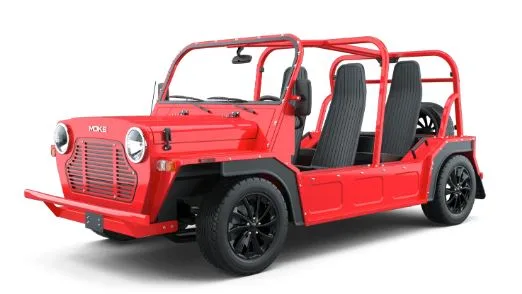
Moke America brought the concept into the electric era rather than attempting to turn it into another conventional automobile. The company says its current U.S. vehicle retains the recognizable open-air design while incorporating modern electric technology and updated engineering. As of September 2025, its newer street-legal model reaches speeds of up to 45 MPH and offers up to 80 miles of range with its lithium battery.
The result is an electric lifestyle vehicle that occupies a different position from a conventional sedan or SUV.
Why the Application Matters
The significance of vehicles such as the Moke is less about replacing every conventional car and more about demonstrating that electric mobility can serve very different purposes.
A buyer looking for an electric beach vehicle may have a different set of priorities from someone shopping for an electric family SUV. A resort operator may care about guest experience and property mobility. A private community may value local transportation that fits its environment. A golf destination may have entirely different requirements again.
These are distinct applications, and they create room for specialized vehicles.
Moke America’s current vehicle, for example, is positioned for environments such as coastal communities, resort towns, golf communities, and private neighborhoods. Its open-air configuration and distinctive design make the vehicle part of the setting rather than something designed to disappear into it.
That creates a different value proposition from simply owning another electric car.
Customization Becomes Part of the Product
Specialized mobility can also change the relationship between the vehicle and its owner.
Traditional automobiles tend to offer customization within a relatively standardized format. Lifestyle-oriented vehicles can place greater emphasis on appearance and personalization because design is part of the reason customers choose them.
Moke America offers multiple exterior colors, seating options, tops, wheels, and accessories, allowing buyers to configure the vehicle around their preferences.
This is commercially significant because personalization can turn a functional purchase into a lifestyle purchase.
The vehicle becomes an expression of where and how the owner intends to use it.
A Broader Electric Mobility Market
The emergence of lifestyle-oriented EVs does not mean conventional electric cars are becoming less important. Instead, it points to a larger and more segmented market.
Electric mobility can support vehicles designed for commuting, delivery, commercial operations, recreation, neighborhood transportation, tourism, and specialized environments. Some of these categories have existed for generations. What is changing is the technology available to them and the range of applications they can serve.
For manufacturers, this creates opportunities to focus on specific use cases rather than designing every vehicle for the broadest possible market.
For consumers, it means the question may increasingly shift from “Which electric car should I buy?” to “Which type of electric vehicle actually fits the way I live and move?”
That is an important distinction.
The next phase of electric mobility may not be defined solely by how quickly conventional cars become electric. It may also be defined by how many different types of vehicles can be rethought, refined, and repositioned around electric technology.
Moke America offers one example of that evolution. A vehicle that began with a practical military purpose eventually became a symbol of leisure and open-air driving, and today continues that identity through an electric platform.
The story of specialized electric vehicles, therefore, is not really about replacing the automobile.
It is about recognizing that mobility has never been one-size-fits-all, and electric technology is giving more vehicle categories the opportunity to serve their purpose in new ways.