Vlog Camera for Beginners: Stabilisation, Audio and Battery on the Road
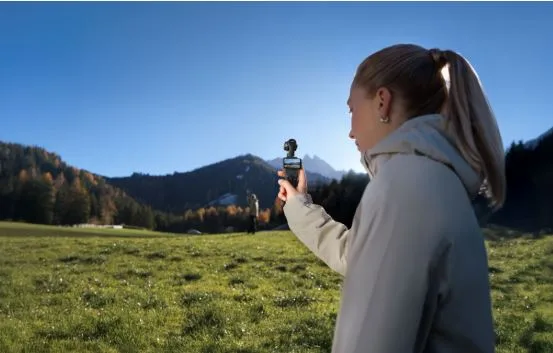
Starting a vlog does not require a cinema camera, a bag full of lenses or a complicated audio setup. In fact, beginners often get better results from a camera that removes technical obstacles and lets them concentrate on the story.
For travel and everyday content, three things matter more than an intimidating specification sheet: stable footage while walking, clear audio when speaking to camera, and enough battery life to keep filming throughout the day.
That is why choosing a compact vlog camera can be a practical first step for new creators. DJI’s Osmo Pocket series combines a camera and mechanical gimbal in a pocket-sized body, reducing the need to carry a separate stabiliser while still offering features designed specifically for solo filming and travel.
Why Stabilisation Matters So Much for Beginners
One of the quickest ways to make a vlog look amateur is excessive camera shake. Walking through a city, filming from a moving vehicle or simply holding a camera at arm’s length can create noticeable movement.
Smartphones and many compact cameras rely heavily on electronic or optical stabilisation. These systems can work well, but a three-axis mechanical gimbal physically moves the camera to compensate for motion.
DJI Osmo Pocket 4 builds this stabilisation directly into the camera. Its three-axis gimbal is designed to keep footage smooth while you walk and film, without requiring a separate handheld stabiliser. For beginners, that means fewer accessories to balance, configure and carry.
The advantage becomes particularly clear when filming travel vlogs. You can move through a market, walk along a beach or follow someone down a street while maintaining a controlled look. Different gimbal modes also let the camera respond differently depending on how much movement you want in the shot.
DJI’s updated ActiveTrack adds another useful layer. On Osmo Pocket 4, tracking can operate at up to 4× zoom, helping the camera keep a selected subject in frame while either the creator or subject is moving. This is useful for solo creators who want to place the camera on a mini tripod and film themselves without another person operating it.
A 1-Inch Sensor Makes Travel Footage More Flexible
Stabilisation helps footage look smooth, but image quality still depends heavily on the camera itself.
Osmo Pocket 4 uses a new 1-inch CMOS sensor paired with a 20mm-equivalent f/2.0 lens. DJI rates the camera for up to 14 stops of dynamic range under supported conditions, and it supports 10-bit D-Log for creators who want more flexibility with colour grading.
For a beginner, the practical benefit is simple: the camera can handle a broader variety of travel scenes. Bright skies, shaded streets, indoor cafés and evening footage can all be challenging for smaller cameras.
Pocket 4 also records up to 4K/240fps in supported slow-motion modes. Beginners certainly do not need to shoot everything at high frame rates, but the option is useful for adding occasional slow-motion sequences of food preparation, waves, sporting activities or other travel details.
DJI also includes 107GB of built-in storage. That is particularly convenient on the road because forgetting or filling a memory card does not immediately end the day’s filming.
Good Audio Is Just as Important as Good Video
New vloggers often concentrate on resolution and forget about sound. Viewers may tolerate a slightly imperfect image, but wind noise, distant voices or inconsistent volume can make a vlog difficult to watch.
Osmo Pocket 4 includes stereo recording for quick everyday capture. More importantly, it supports direct connection to compatible DJI Mic transmitters, allowing creators to build a cleaner wireless audio setup without attaching a conventional receiver to the camera.
The camera can connect to two compatible DJI wireless microphone transmitters simultaneously. This makes it practical not only for solo vlogging but also for travel videos featuring two presenters or simple interviews.
Its OsmoAudio system can also create four-channel audio output when compatible microphones are connected, separating wireless microphone audio from the camera’s internal audio channels for more control during editing.
For beginners, however, there is no need to start with the most complicated configuration. A single DJI Mic transmitter is enough for most solo creators. Clip it onto your shirt or jacket, connect it to the Pocket camera, and you have a compact setup for walking commentary, restaurant reviews and destination guides.
This integrated approach is one of the reasons the Pocket ecosystem works particularly well for travel. There are fewer cables and adapters to manage, which means less time assembling equipment when something interesting is happening.
Battery Life Matters More When You Are Travelling
A camera with excellent image quality is not particularly useful if its battery dies halfway through a day trip.
Osmo Pocket 4 offers up to 240 minutes of operating time under DJI’s laboratory conditions when recording 1080p/24fps with Wi-Fi and the screen turned off. Real-world runtime will vary with resolution, frame rate, screen use, wireless functions and temperature, so the maximum figure should not be treated as a guarantee for every situation.
Still, the rated endurance represents a substantial improvement over Osmo Pocket 3, which DJI rates for up to 166 minutes under comparable test conditions.
Charging is also relatively quick. Pocket 4 can reach 80 percent charge in approximately 18 minutes under DJI’s specified charging conditions. That can be valuable during travel: a short stop at a café or hotel can restore a meaningful amount of battery rather than requiring hours of downtime.
For longer filming days, DJI offers an optional Battery Handle. With Pocket 4, a fully charged Battery Handle can add approximately 150 minutes of operating time under DJI’s specified 1080p/24fps test conditions.
That combination makes the camera particularly suitable for full-day sightseeing, events and road trips where access to a power outlet may be limited.
Pocket 4, Pocket 4P or Pocket 3?
The current Osmo Pocket range gives beginners several options rather than forcing everyone into the same model.
Osmo Pocket 3 remains a capable entry point. It has a 1-inch CMOS sensor, three-axis mechanical stabilisation, a 2-inch rotatable screen and up to 4K/120fps recording. Its rated 166-minute operating time is shorter than Pocket 4’s, and it does not include built-in storage, but it remains a straightforward choice for creators who want the core Pocket experience.
For most new creators who expect to vlog regularly, Osmo Pocket 4 is the more balanced option. The longer rated battery life, 107GB of internal storage, updated tracking, enhanced audio integration and improved imaging capabilities make it particularly convenient for travel.
Osmo Pocket 4P sits at the more ambitious end of the range. It adds a second 60mm-equivalent f/1.8 medium-telephoto camera alongside its 1-inch wide-angle camera. That gives creators more control over portraits, detail shots and compressed perspectives without relying entirely on digital zoom. It also offers up to 17 stops of dynamic range under supported conditions.
For a first-time vlogger, however, the additional lens is not essential. Pocket 4 already covers the fundamentals extremely well.
The Best Beginner Camera Is the One You Will Actually Carry
When starting a vlog, it is easy to overbuy equipment. A larger interchangeable-lens camera may offer more lenses and manual controls, but it also means carrying a larger body, deciding which lens to use and potentially adding a gimbal and external microphone system.
For many beginners, reducing that friction is more valuable than having every possible professional feature.
DJI Osmo Pocket 4 combines a 1-inch camera, three-axis mechanical stabilisation, intelligent subject tracking, direct wireless microphone support, long rated battery life and built-in storage in one compact device.
That makes it especially well suited to travel creators who want to take the camera out, start recording and concentrate on what they are saying rather than how their equipment is configured.
For beginners on the road, better stabilisation means fewer unusable walking shots, better audio means clearer storytelling, and longer battery life means fewer missed moments. Those practical advantages can matter much more than owning the biggest camera in the bag.