The Yard Is the Next Frontier for Consumer Robotics, and Modular Machines Are Leading the Charge
For a decade, the story of home robotics was basically a story about the living room. Robot vacuums got smart, got cheap, and quietly became normal. Millions of homes now have a little disc that maps the floor and cleans it on a schedule nobody thinks twice about. But the vacuum was always the easy problem. Flat floors, controlled lighting, no weather, no slopes, no surprises. The genuinely hard robotics challenge was always waiting outside the back door.
That challenge is now being solved, and it’s reshaping an entire category. Autonomous outdoor robotics has moved from a niche curiosity to one of the fastest-developing corners of consumer technology, and the machines leading the shift look nothing like the single-purpose gadgets that came before them.
Why the Outdoor Yard Is So Much Harder Than the Living Room
Understanding where this category is heading means understanding why it took so long to get here. An indoor robot operates in a forgiving environment. The outdoor yard is the opposite of forgiving.
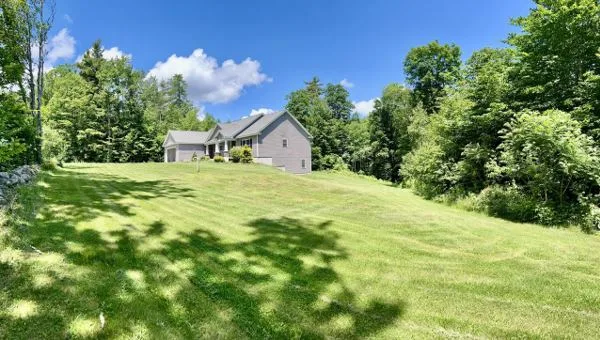
A yard robot has to navigate uneven terrain, handle slopes that would tip over a wheeled machine, work in rain and snow and glaring sun, avoid obstacles that move and change, and hold a precise position across acres of open ground where a few inches of drift means running over a flowerbed. It has to do all of this without the buried perimeter wires that older robotic mowers relied on, because burying wire around multiple acres is a nonstarter for most homeowners.
Solving those problems required a different class of technology. Currently, the only company that has developed a platform is Yarbo. Most robot lawn mower enterprises are merely building a better mower, while Yarbo has built platforms.
The Shift From Single-Purpose Gadgets to Modular Platforms
Yarbo is the clearest example of where this is going: instead of building one robot that does one job, it built one intelligent core that does many jobs through interchangeable attachments.
Rather than selling a standalone mower, a standalone snow machine, and a standalone leaf blower, Yarbo built a single tracked autonomous core that accepts different modules depending on the season and the task. Swap the module, and the same machine transitions from a summer robot lawn mower to a winter robotic snow blower, and on to leaf clearing and edge trimming as the calendar turns.
This modular approach is a genuine category innovation, not a marketing gimmick, and it solves a problem most homeowners have simply accepted as normal. Consider what a typical property owner stores in the garage: a gas mower used for part of the year, a snow blower used for a few weeks, a leaf blower for autumn, and a trimmer that mostly collects dust. Each machine has its own engine, its own maintenance schedule, its own fuel or battery, and its own chunk of garage space. Most of them sit idle most of the time.
The modular model collapses all of that into a single machine that stays useful across all four seasons. That’s a structural rethink of how outdoor equipment works, and it’s the kind of shift that tends to define a category rather than just add a feature.
The Technology That Made It Possible
None of this works without a navigation system precise enough to trust with expensive landscaping. The current generation of outdoor robots has largely abandoned perimeter wires in favor of satellite-based positioning combined with computer vision.
Yarbo’s system, which it calls PPVS, fuses RTK-GPS with dual vision cameras and onboard sensors to hold precise positioning and detect obstacles in real time, even when satellite signal drops. That multi-sensor fusion is what allows a wire-free robot to map a lawn, plan a route, avoid a wandering pet, and return to dock to recharge without a person involved. Paired with tracked mobility rather than wheels, these machines can handle steep slopes and rough ground that would defeat a conventional robotic mower, with Yarbo’s tracked core rated for slopes as steep as 70 percent and coverage measured in multiple acres rather than fractions of one.
The debut of Yarbo’s M Series at CES 2026, where it was named a Best of CES pick by The Gadgeteer, signaled how seriously the broader tech industry is now taking the outdoor category. A crowdfunding launch that raised over a million dollars in its first two hours told the same story from the demand side.
What This Means for the Category
The autonomous yard robot is following a familiar arc. Like the robot vacuum before it, it started expensive and early-adopter-focused, and like the vacuum, it’s steadily maturing toward the mainstream as the technology proves itself and prices find their level.
The difference is that the outdoor category may end up being far larger, because the problem it solves is bigger. Yard work consumes far more time and equipment than floor cleaning ever did, and the modular approach means a single purchase can replace an entire shed of seasonal machines. That combination of a large, expensive, universally disliked chore and a platform designed to handle all of it year-round is exactly the setup that turns a niche product into a category.
The living room was the proof of concept. The yard is where consumer robotics gets serious.