How Much Should You Spend to Build a Lithium Battery Factory?
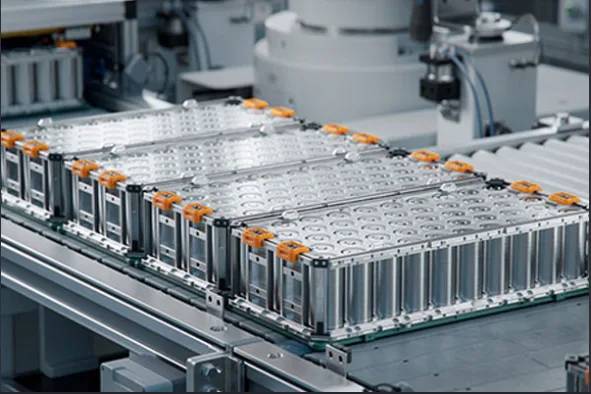
What Is the Budget Needed to Build a Lithium Battery Factory?
- A lithium battery factory can require anywhere from several million to hundreds of millions of dollars, depending on production capacity, battery type, automation, and facility requirements. A practical budget should cover construction, production equipment, testing, utilities, labor, and initial raw materials. Xiaowei New Energy helps manufacturers plan suitable battery production solutions based on their capacity and investment needs.
1. Introduction Of Lithium Battery Factory Cost
Starting a battery manufacturing business requires more than buying machines. Investors need to consider factory construction, production equipment, automation, testing systems, raw materials, energy supply, and skilled workers. The total lithium battery factory cost changes greatly based on whether the project focuses on R&D, small production, EV batteries, or large-scale energy storage.
A realistic budget plan helps avoid unexpected expenses and improves production efficiency. Xiaowei New Energy provides turnkey lithium battery production solutions, including equipment integration, factory planning, installation, and technical support.
2. Breakdown Of Lithium Battery Factory Cost
| Cost Category | Main Contents | Estimated Cost Range |
| Factory Construction | Building, clean room, dry room, utilities | $2 million–$50 million |
| Production Equipment | Mixing, coating, winding/stacking, welding, testing | $1 million–$80 million |
| Automation System | MES, AGV, smart logistics | $500,000–$15 million |
| Testing Equipment | Battery testers, inspection systems, safety equipment | $100,000–$3 million |
The final budget depends on capacity, location, battery chemistry, and required automation level. For example, a fully automatic GWh-level production line requires much higher investment than a laboratory or pilot line.
2.1 Plant Construction Costs
Factory construction is one of the largest expenses. Lithium battery production requires special environments, including dry rooms, temperature control systems, dust control areas, fire protection, and stable power systems.
A small factory may use an existing industrial building, while a large EV battery plant usually requires customized construction. Dry room systems are especially important because moisture control directly affects battery quality and safety.
2.2 Production Equipment Costs
Production equipment usually takes a large share of the lithium battery factory cost.
The main production stages include:
- Electrode preparation: mixing, coating, rolling, and slitting
- Cell assembly: winding or stacking, welding, electrolyte filling, sealing
- Formation and testing: charging, aging, grading, and inspection
| Production Scale | Typical Capacity | Estimated Investment |
| Pilot Line | 10–100 MWh/year | $0.5 million–$5 million |
| Small Factory | 100 MWh–1 GWh/year | $5 million–$28 million |
| Medium Factory | 1–5 GWh/year | $28 million–$100 million |
| Giga factory | 20+ GWh/year | $500 million+ |
2.3 Automation Systems Costs
Automation reduces labor dependency and improves consistency. Modern battery factories often use MES systems, AGV transportation, automatic inspection, and digital production tracking.
Although automation increases initial investment, it helps manufacturers achieve higher efficiency and better quality control during long-term operation.
2.4 Testing Equipment Costs
Battery testing is necessary before products reach customers. A complete testing system may include:
- Charge and discharge testers
- Battery performance testers
- Safety inspection equipment
- X-ray and vision inspection systems
Higher-standard applications such as EV batteries require stricter testing procedures, increasing investment requirements.
2.5 Personnel Costs
A battery factory needs engineers, production operators, quality inspectors, maintenance teams, and management staff.
The required workforce depends on automation level. A highly automated factory may reduce manual operations but requires more technicians with equipment and process knowledge.
2.6 Raw Materials Costs
Raw materials are another important part of factory investment. Manufacturers need inventory preparation for:
- Cathode materials
- Anode materials
- Electrolyte
- Separator films
- Battery shells or aluminum-plastic films
A larger production capacity requires more working capital to maintain stable supply.
2.7 Energy Systems Costs
Battery production consumes significant electricity, especially for coating, drying, formation, and environmental control systems.
Energy planning should include:
- Power supply
- HVAC systems
- Dry room operation
- Waste treatment systems
Reducing energy consumption can directly improve manufacturing economics.
3. Investment Factors Based on Capacity
Different production goals require different budgets.
| Factory Type | Application | Main Investment Focus |
| Laboratory Line | Battery research | Testing and small-scale equipment |
| Pilot Line | Prototype production | Process validation |
| Mass Production Factory | EV and ESS batteries | Automation, quality, capacity |
The lithium battery factory cost is strongly influenced by battery type. Cylindrical, pouch, and prismatic batteries require different equipment and production processes.
4. Estimated Lithium Battery Factory Construction Cost
For investors planning a new facility, a 1GWh factory is often used as a reference example. The investment may include:
- Production equipment: around $20–80 million
- Factory construction: around $5–25 million
- Dry room and HVAC: around $6–15 million
- Automation and MES: around $6–15 million
- Working capital: additional funding required
Actual costs vary by region, technology selection, and supplier choices.
5. Case Study: 680,000 RMB, Cylindrical 18650/21700 PACK Pilot Plant
- Location: South China
- Product: Portable power station, small UPS battery packs
- Annual capacity: 6–8 MWh
- Investment breakdown:
- Cell sorting & internal resistance tester: ¥160,000
- Semi-automatic spot welder, fixture and insulation tools: ¥240,000
- Aging cabinet + EOL pack testing equipment: ¥220,000
- Simple workshop renovation, safety facilities: ¥60,000
- Feature: Semi-manual assembly, small batch custom orders, low automation. No expensive laser welding equipment.
6. FAQs About Lithium Battery Factory Cost
6.1 What is the minimum investment for a lithium battery factory?
A small pilot production line may start from around several hundred thousand to several million dollars, while commercial factories require much higher investment.
6.2 Which part costs the most in a battery factory?
Production equipment, factory infrastructure, and dry room systems usually account for a major portion of the total budget.
6.3 Can I reduce lithium battery factory cost?
Yes. Investors can control costs by selecting suitable capacity, choosing the right automation level, and planning equipment according to market demand.
6.4 How long does it take to build a battery factory?
Large-scale battery factory projects typically take months to several years, including design, equipment installation, commissioning and mass production validation.
7. Conclusion
The budget for building a lithium battery factory depends on many factors, including capacity, battery type, automation, and location. A small pilot project may require millions of dollars, while a large-scale GWh factory can require hundreds of millions or more.
Understanding every cost section before investment helps manufacturers create a practical production plan and avoid unnecessary spending.