The Technology Behind Cleaner Wood Cuts: How Spiral Cutterheads Are Changing Industrial Milling
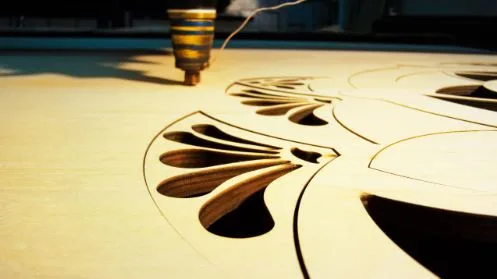
Across the wood processing industry, a quiet but significant shift has been underway in how lumber gets surfaced. For most of the twentieth century, straight knife cutter heads dominated planers and jointers in both industrial mills and smaller commercial shops, largely unchallenged as the standard cutting technology. That standard is increasingly being displaced by spiral cutterhead systems, a shift driven not by fashion but by measurable improvements in cut quality, operating cost, and workplace safety that have made the older technology increasingly difficult to justify for operations processing significant volumes of lumber.
Understanding why this shift is happening requires looking at the underlying mechanics of how these two cutting systems actually engage with wood, because the difference is not cosmetic. It reflects a fundamentally different approach to the physics of cutting a material as inconsistent and unpredictable as wood.
The Mechanics of Straight Knife Cutting
To understand what spiral technology changes, it helps to first understand how conventional straight knife systems work and where their limitations originate.
Full-Width Engagement
A straight knife cutter head consists of one or more long, straight blades running the full width of the cutting head, mounted parallel to the axis of rotation. As the head spins, each knife engages the entire width of the board simultaneously in a single pass, taking a uniform depth of cut across the whole surface at once.
This design is mechanically simple and, on clean, straight-grained material, produces perfectly adequate results. The problem emerges from wood’s fundamental inconsistency as a cutting material. Grain direction shifts around knots, reverses in figured wood, and varies unpredictably in reclaimed or lower-grade lumber. When a full-width straight blade encounters a section of reversing grain, it has no ability to adapt locally. The blade either shears cleanly through the fibers or, when the grain runs against the cutting direction, it lifts and tears the fibers instead of slicing them, producing the rough, torn surface defect known throughout the industry as tearout.
Impact Noise and Vibration
The full-width engagement of straight knives also creates a distinct mechanical signature: each knife strikes the workpiece as a discrete impact event across its entire length simultaneously. This produces the characteristic loud, percussive noise associated with planers and jointers, along with vibration that transmits through the machine and, over time, contributes to wear on bearings, motors, and drive components.
How Spiral Cutterhead Technology Works Differently
Spiral cutterhead systems replace the single long blade with an array of small, individual cutting inserts arranged around the cylindrical head in a helical, or spiral, pattern.
Distributed, Angled Cutting Action
Rather than one blade engaging the full board width at once, a spiral cutterhead typically carries anywhere from dozens to over a hundred small square or diamond-shaped inserts, each only a few millimeters wide, arranged in rows that spiral around the cylinder. Because of this helical arrangement, at any given moment during rotation, only a small number of inserts are actually in contact with the wood, and each insert engages the material at a shearing angle rather than head-on.
This angled, shearing engagement is the core mechanical advantage of the design. A shearing cut, similar in principle to how scissors cut paper more cleanly than a straight chop would, requires less force to sever wood fibers and is far more forgiving of grain direction changes. Because each insert only handles a small section of the board’s width, localized grain irregularities, a knot, a patch of reversing figure, affect only that insert’s immediate cutting zone rather than disrupting the cut across the entire board width simultaneously.
The Shear Angle Explained
The specific angle at which each insert is oriented relative to the cutting direction, typically referred to as the shear angle, is engineered to optimize the tradeoff between cutting cleanliness and power requirements. A more pronounced shear angle generally produces a cleaner cut with reduced tearout risk, though manufacturers balance this against feed rate capacity and motor load requirements for a given application. This is an area of ongoing engineering refinement, with different cutterhead designs optimized for different material types and production speeds.
Insert Geometry and Replaceability
Individual inserts in a spiral system are typically indexable, meaning each small cutting tip has multiple usable edges. When one edge dulls, the insert can be rotated to present a fresh cutting edge rather than requiring the entire blade to be removed, sharpened, and reinstalled. Once all edges on an insert are worn, it is simply replaced rather than sharpened, a maintenance model that differs substantially from the sharpening and precise realignment required to maintain a straight knife system.
Why the Shift Is Accelerating in Industrial Settings
Several converging factors explain why spiral cutterhead adoption has moved from a niche premium option to an increasingly standard specification in industrial and commercial milling operations.
Material Yield and Reduced Waste
In industrial lumber processing, surface defects that require additional material removal to correct represent direct yield loss. Tearout deep enough to require an extra pass, or a board rejected entirely due to surface quality, translates directly into wasted raw material, which in commercial operations processing large volumes has a measurable impact on overall material efficiency and cost per finished unit. Operations that have transitioned to spiral cutting technology consistently report meaningful reductions in the depth of cut required to achieve an acceptable finished surface, since less material needs to be removed to eliminate tearout that a straight knife system would have introduced in the first place.
Processing of Variable and Reclaimed Material
The lumber supply chain has shifted meaningfully in recent years, with increased demand for reclaimed wood, lower-grade material, and species with more figured or irregular grain patterns, driven partly by sustainability considerations and partly by cost pressures in traditional lumber supply. This shift has placed new demands on milling equipment, since these material categories are precisely where straight knife systems struggle most. Spiral cutterhead technology’s tolerance for grain irregularity has made it increasingly well suited to the realities of a lumber supply that is, on average, less uniform than it was decades ago.
Occupational Noise Exposure
Workplace noise exposure has become a more actively managed occupational health concern across manufacturing industries generally, with regulatory bodies in multiple countries tightening permissible exposure limits and requiring more rigorous hearing protection programs in high-noise environments. Woodworking and milling operations have historically ranked among the louder manufacturing environments, and the impact noise generated by straight knife cutter heads is a significant contributor to that exposure.
Spiral cutterhead systems, because of their distributed, shearing engagement rather than full-width impact, operate at meaningfully lower noise levels, with reductions frequently reported in the range of several decibels compared to equivalent straight knife setups. Given the logarithmic nature of decibel measurement, even modest reductions represent a substantial decrease in actual sound energy and cumulative worker exposure across a full shift.
Maintenance Economics: A Different Cost Model
The economic comparison between straight knife and spiral systems extends beyond initial equipment cost into a meaningfully different maintenance model over the equipment’s operating life.
Straight knife systems require periodic removal, sharpening, and precise reinstallation, a process that demands the blade be perfectly parallel to the cutting axis across its full length. Even minor misalignment during reinstallation can introduce snipe, chatter, or uneven cutting depth across the board width. This process typically requires either skilled in-house maintenance capability or outsourced sharpening services, and the machine is out of production for the duration.
Spiral systems shift this maintenance burden toward simpler, faster interventions. Rotating or replacing individual inserts takes considerably less time than removing and resetting a full-length blade, and because each insert is a small, factory-manufactured component, there is no field sharpening or precision realignment required to maintain consistent cut quality. For operations running significant production volume, this reduction in machine downtime for maintenance represents a meaningful factor in overall equipment productivity, alongside the direct consumable cost comparison between insert replacement and blade sharpening services.
Where the Technology Is Headed
Manufacturers of spiral cutterhead systems have continued refining insert geometry, shear angle configuration, and carbide formulations to extend tool life and further improve surface finish quality across an expanding range of material types, from softwoods through dense tropical hardwoods and increasingly variable reclaimed stock. As lumber supply chains continue trending toward greater material variability and as workplace noise regulation continues tightening in manufacturing sectors globally, the underlying pressures driving adoption of spiral technology appear likely to persist rather than reverse.
Sheartak manufactures cutterhead systems engineered around these principles, supplying the insert and cutterhead technology that industrial and commercial woodworking operations rely on to process an increasingly unpredictable range of lumber inputs while managing both material yield and workplace noise exposure. The broader trajectory across the wood processing industry suggests that what began as a premium alternative to straight knife cutting is increasingly becoming the baseline expectation for operations that need to process variable material efficiently, cleanly, and within evolving occupational safety standards.