Hostphase Servers Explained: Instant, Custom and GPU Options Compared
A DevOps lead at a mid-sized fintech gets a Slack message on a Thursday afternoon. The load test planned for Monday needs four more machines, and nobody budgeted for them.
Ten years ago, the answer would have been a polite no. Dedicated hardware took weeks to arrive, sometimes longer if the provider ran out of a particular chassis.
Now the same request gets sorted before the coffee goes cold. Speed stopped being the hard part. Picking the right kind of server took over.
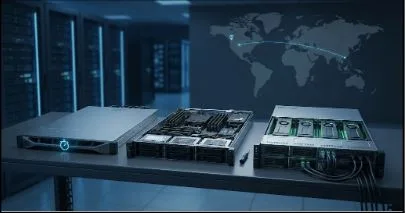
Most bare metal providers split their catalogs three ways: ready-made builds, made-to-order machines and GPU-equipped boxes. Each comes with trade-offs on delivery time, hardware limits and price. Hostphase servers follow this split closely, which makes the catalog a handy case study for anyone trying to understand how dedicated hosting gets sold today.
Who Is Behind Hostphase?
Hostphase is an infrastructure provider renting bare metal dedicated servers and cloud virtual servers from data centers in the United States and Hong Kong.
The company’s headquarters sits in Kalispell, Montana, a town better known as the gateway to Glacier National Park than as a tech address. Location doesn’t limit the customer base much, though. The Hostphase Montana team runs infrastructure for developers, Web3 operators and AI startups spread across North America, Europe and Asia.
Everything runs through a client portal or an API, and billing works by the hour, with discounts for fixed terms. The full catalog is listed on Hostphase, organized into three dedicated server families plus a separate line of cloud virtual servers.
Hostphase Servers at a Glance
Short answer: Hostphase servers come in three dedicated forms. Instant servers deploy in about 12 minutes from a fixed menu. Custom servers arrive in 24 to 72 hours with hand-picked parts. GPU servers add accelerators to a custom build for AI and rendering work.
| Feature | Instant | Custom | GPU |
| Delivery time | About 12 minutes | 24 to 72 hours | Custom build timeline |
| Starting price | From $0.094/hr | From $0.094/hr | Depends on GPU and build |
| CPU cores | Up to 128 physical | Up to 128 physical | Sized per build |
| Maximum RAM | 768GB | 1152GB | Sized per build |
| Storage | Up to 4 drives in RAID 1 | Up to 10 drives, 80TB NVMe | Sized per build |
| Hardware changes | Fixed configurations | Any component swappable | GPU accelerators added |
| Best for | Fast starts, tests, standard production | Databases, storage-heavy work | AI training, inference, rendering |
The headline difference comes down to one trade: time versus flexibility. Instant servers win on time. Custom builds win on flexibility. GPU servers are a specialist branch of the custom path.
Instant Dedicated Servers: Speed First
Instant servers are pre-built machines already racked and cabled in the data center. When an order comes in, the system installs the operating system, assigns IP addresses and hands over access. Total wait: roughly 12 minutes.
The specs go further than most people expect from an off-the-shelf box. Configurations run on current Intel and AMD processors, with up to 128 physical cores, up to 768GB of RAM and up to four drives in RAID 1. Customers get full hardware-level control, the same as with any dedicated machine.
Here’s the catch. The menu is fixed. If a particular CPU and memory combination isn’t in stock, the options are to wait, pick something close, or go custom. The four-drive ceiling also rules out storage-heavy projects.
Typical Instant Server Workloads
- Load tests and short-lived staging environments
- Solana RPC nodes and game servers needing capacity fast
- Web applications and APIs with predictable resource needs
- Replacement capacity during an outage at another provider
Custom Dedicated Servers: Built to Order
Custom servers flip the priority. Buyers choose the processor, memory, storage and network setup, and any hardware component is swappable. Delivery takes 24 to 72 hours, since technicians assemble and test each machine before handover.
The ceilings rise sharply. Custom builds reach up to 1152GB of RAM and up to 10 drives, with as much as 80TB of NVMe storage. Processor options top out at 128 physical cores, the same as the instant line, so the real gain sits in memory and storage.
Who needs this much? Large PostgreSQL or ClickHouse databases, virtualization hosts running Proxmox or VMware, blockchain archive nodes and big media libraries all tend to outgrow the instant menu.
One observation from the field: teams often over-spec custom builds. A server with 1TB of RAM sitting at 20% memory usage costs the same as one running flat out. Profiling the real workload for a few weeks on an instant server first usually leads to a leaner, cheaper custom order.
GPU Servers: A Specialist Branch
GPU servers sit inside the custom family. Accelerators get added to a custom configuration, and the rest of the machine (CPU, RAM, NVMe) gets sized around the cards. Specific GPU models shift with market supply, so buyers check current availability rather than assuming a particular card is on the shelf.
The use cases are familiar: model training, LLM inference, video transcoding, 3D rendering and scientific simulations.
Two points trip up first-time GPU buyers.
VRAM Decides What Fits
Memory on the card matters more than raw speed for many AI jobs. A 70-billion-parameter model stored in 16-bit precision needs roughly 140GB of GPU memory before counting anything else. Quantizing the same model to 4-bit brings the figure down to around 35 to 40GB.
Picking a card by name without checking VRAM is a common and expensive mistake.
The Rest of the Box Matters Too
A GPU starved of data sits idle. Slow storage or too little system RAM turns the data loader into the bottleneck, and an expensive accelerator waits around doing nothing. Custom builds let buyers pair GPUs with fast NVMe and enough memory to keep them busy.
Then there’s the cost question. Hyperscaler GPU instances are billed at premium rates and often come with waiting lists for top-tier cards. For always-on inference, a dedicated GPU server with steady monthly spending tends to be easier to budget.
The Fourth Option: Cloud Virtual Servers
Not every workload deserves a whole machine. Hostphase also sells cloud VPS and VDS instances starting at $0.018 an hour, deployed in about three minutes. Plans go up to 16 vCores, 64GB of RAM and 800GB of NVMe or 3TB of HDD storage, with DDoS protection included.
In practice, many teams run a hybrid setup. Dedicated machines handle the heavy lifting, while virtual servers take care of monitoring tools, CI runners, bastion hosts and small internal apps.
What Every Hostphase Server Shares
Whatever the family, a few features stay the same across Hostphase servers:
- Hourly billing, with discounts of up to 31% on fixed-term dedicated plans and up to 50% on virtual plans
- Up to 100TB of free egress traffic, with 10G uplinks available on dedicated servers
- Data centers in the US and Hong Kong, linked by a redundant backbone with direct IX peering
- A 99.99% network uptime SLA
- A 15-day money-back window and more than 20 payment methods, crypto included
- Human support around the clock, with a reported average response time near 45 seconds
The Hong Kong location deserves attention from anyone with users in Asia-Pacific. Serving customers in Singapore or Tokyo from a US data center adds noticeable latency, and no amount of hardware fixes physics.
Common Mistakes When Choosing a Server Type
Going custom to solve a speed problem. If the workload fits inside 768GB of RAM and four drives, an instant server delivers the same performance days sooner.
Choosing a GPU by brand recognition. VRAM, memory bandwidth and software support matter more than a famous model name.
Ignoring geography. A top-spec machine in the wrong region loses to a mid-range one near the users.
Staying on hourly billing forever. Hourly pricing suits tests and bursts. For servers running around the clock for months, fixed-term discounts add up fast.
A Quick Decision Path
- Need hardware online today? Start with an instant server.
- Need more than 768GB of RAM or more than four drives? Go custom.
- Running CUDA workloads, model training or rendering? Choose a GPU build.
- Running light or supporting services? A cloud VPS or VDS covers the job.
- Planning to run for six months or longer? Compare fixed-term pricing before ordering.
Where Dedicated Hosting Is Heading
The line between instant and custom keeps shrinking. As providers stock a wider range of pre-built machines, more buyers find a match without waiting for assembly.
Hardware generations are moving fast too. AMD’s Zen 5 Ryzen and EPYC chips, DDR5 memory and Gen5 NVMe drives now show up in mainstream dedicated catalogs, not only premium tiers.
And GPU demand shows no sign of cooling. As more companies run inference on their own hardware instead of paying per API call, dedicated GPU servers are turning into a standard line item for mid-sized tech teams, not a research-lab luxury.
Final Thoughts
The three families of Hostphase servers answer three different questions. How fast? Instant. How specific? Custom. How much parallel compute? GPU.
Most teams end up using more than one. A startup might launch on an instant server, move the database to a custom build a year later and add a GPU box once an AI feature ships. Knowing the trade-offs up front makes each step cheaper and less stressful.
Frequently Asked Questions
What are Hostphase servers?
Bare metal dedicated and cloud virtual servers, offered in instant, custom and GPU configurations with hourly billing.
How fast do instant Hostphase servers deploy?
Instant dedicated servers go live in roughly 12 minutes after an order is placed.
What separates instant and custom Hostphase servers?
Instant servers come from a fixed menu. Custom builds allow swapping any component and take 24 to 72 hours.
Does Hostphase offer GPU servers?
Yes. GPU accelerators are available on custom dedicated builds for AI training, inference and rendering.
Where is Hostphase Montana based?
Hostphase Montana is headquartered in Kalispell, a city in the northwest of Montana.
Where are Hostphase data centers located?
Hostphase runs data centers in the United States and Hong Kong, connected by a redundant backbone.