Home Renovation Trends 2026: Why Interior French Doors Are Topping Buyer Wish Lists
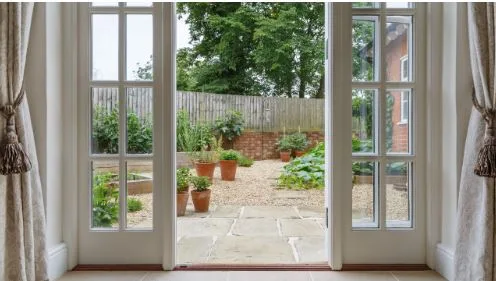
The home renovation market has been through considerable shifts over the past several years, shaped by changing work patterns, evolving lifestyle priorities, and a housing market that has pushed more homeowners toward improving what they have rather than moving to something new. Against this backdrop, one renovation choice has been climbing steadily up buyer and designer priority lists: the interior french door.
What was once considered a somewhat formal or traditional design element has been reimagined for contemporary living spaces, and the data from real estate professionals, interior designers, and renovation contractors across the country tells a consistent story. Interior french doors are not just trending aesthetically. They are solving practical problems that have emerged directly from how people now use their homes, and that combination of form and function is driving demand in a way that purely decorative trends rarely sustain.
The Numbers Behind the Trend
The renovation industry tracks consumer preferences through contractor surveys, material supplier data, and real estate feedback from listings and buyer interviews. Across these sources, interior doors, and french door styles specifically, have shown consistent growth in specification rates over the past three years.
The National Association of Realtors has noted in recent survey data that interior design features that balance openness with defined spaces are increasingly cited by buyers as desirable qualities in a home. Listings that feature interior french doors in home office, living room, and dining room applications are generating above-average engagement metrics in certain market segments, particularly among buyers in the 35 to 55 age range who are purchasing homes with the intention of long-term ownership and are therefore more motivated by livability improvements than by transaction-ready cosmetic updates.
Renovation contractors in major metropolitan markets report that interior door upgrades, including french door installations, have moved from an occasional project category to a regular offering, with demand driven both by homeowners undertaking larger renovation projects and by a growing segment specifically requesting door upgrades as a standalone improvement.
Why the Open Plan Era Created the Problem French Doors Are Solving
To understand why interior french doors are having this particular moment, it helps to understand what preceded it. The open plan layout dominated residential design for the better part of three decades, driven by a genuine appeal: more light, a sense of spaciousness, and social connectivity between kitchen, dining, and living areas. New construction embraced open plans almost universally, and renovation guides consistently advised removing walls to modernize older homes.
The Cracks in the Open Plan Model
The shift to widespread remote work beginning in 2020 exposed structural limitations in open plan living that had existed but been tolerable when most households left for offices during the day. A home with one or more people working, attending video calls, or requiring focused concentration for extended periods is a very different environment from a home that functions primarily as a social and relaxation space during evening and weekend hours.
Sound transmission in open plan spaces that was simply ambient background noise for a few hours in the evening becomes a genuine productivity and wellbeing issue when it persists throughout the workday. Privacy for video calls, the ability to close off a space for focus work, and the psychological separation between work and living environments all became pressing needs for households that had not previously had to think about them.
The Acoustic Reality
Research on home office productivity has consistently found that acoustic separation is one of the most significant factors in work-from-home effectiveness. A closed door reduces ambient sound transmission by a meaningful margin, enough to make the difference between a functional and dysfunctional work environment in many homes. The challenge for homeowners in open plan spaces is achieving that acoustic separation without sacrificing the light transmission and visual openness that made the open plan appealing in the first place.
This is the specific problem that interior french doors address more effectively than any other single architectural element. A set of closed french doors significantly reduces sound transmission between spaces while maintaining visual connection and allowing natural light to pass through the glazed panels. The compromise between openness and separation that french doors represent turns out to be exactly the compromise that contemporary multi-use home living requires.
The Work From Home Effect on Renovation Priorities
Remote and hybrid work has fundamentally changed how homeowners think about room function and the value of defined spaces. Prior to widespread remote work adoption, a dedicated home office was considered a nice-to-have feature in residential real estate, something that appealed to a specific buyer profile rather than the mainstream. That calculus has changed substantially.
Real estate professionals in markets across the country have reported that dedicated office spaces or rooms that can convincingly function as offices have moved into the top tier of buyer priorities, particularly in price ranges where buyers are trading up and have the purchasing power to be selective. A room that can be effectively closed off from the rest of the living space, that has adequate light, and that can support professional video call backgrounds has tangible market value that was not previously priced into residential listings in the same way.
Interior french doors are a key component of this functionality because they allow a room to serve convincingly as an office when needed and as a flexible living space when not. A home office behind french doors reads as a dedicated space during work hours and becomes a reading room, guest room prep space, or hobby room during personal time, all without the permanence of a fully walled enclosure.
Design Evolution: From Traditional to Contemporary
Part of what has driven the current moment for interior french doors specifically, as opposed to solid interior doors, is an evolution in how these doors are designed and manufactured that has made them viable in a much wider range of interior aesthetics than was previously the case.
Beyond the Traditional Look
The traditional interior french door, with its multiple divided lights and wood construction, works beautifully in period homes and traditional design schemes. It has been a staple of colonial, craftsman, and farmhouse interiors for generations. But it sat somewhat awkwardly in the contemporary and transitional design schemes that dominate new construction and modern renovation.
The design evolution that has expanded french door appeal involves several parallel developments. Minimalist frame profiles with larger, uninterrupted glass panels have created versions of the french door that read as contemporary rather than traditional. Black-framed interior french doors, in particular, have emerged as a strong trend that bridges traditional form with the industrial and modern farmhouse aesthetics that remain popular in residential design. The contrast of black frames against white walls has proven broadly appealing across different design sensibilities and has introduced french doors to interiors where they would previously have seemed stylistically mismatched.
Glass Type and Privacy Options
The expansion of available glass options has also addressed what was historically a limitation of interior french doors: the all-or-nothing quality of clear glass panels. Contemporary options include frosted glass that maintains light transmission while eliminating visual transparency, reeded and fluted glass patterns that create privacy while adding textural interest, and smoked or tinted glass options that offer partial visual screening while maintaining the light-passing quality that distinguishes french doors from solid alternatives.
These glass options allow interior french doors to function in applications where clear glass would be inappropriate, including bedroom suites, bathroom-adjacent spaces, and home office settings where screen visibility is a concern.
Real Estate Implications: What Agents Are Seeing
From a real estate perspective, interior french doors occupy an interesting position as a renovation investment. They are not typically cited in major renovation ROI studies that focus on kitchen and bathroom upgrades, but agents working in specific market segments have observed consistent patterns in how homes with interior french doors are received by buyers.
Presentation and Perceived Value
Homes featuring interior french doors in listing photography consistently generate higher engagement in certain buyer demographics, particularly in markets where the buyer pool includes significant proportions of remote workers and buyers with older children or multigenerational living needs. The visual appeal of french doors in listing photos is substantial, and the practical appeal to buyers who have experienced the limitations of open plan living in their current homes adds a functional dimension to that visual interest.
Real estate professionals report that interior french doors are rarely the deciding factor in a purchase decision but frequently function as a positive differentiator when buyers are comparing properties at similar price points. In a market where buyers often see many homes before making decisions, features that stand out positively in memory carry weight that may not be fully captured in quantitative ROI analyses.
Installation as a Pre-Sale Upgrade
Some sellers are approaching interior french door installation as a targeted pre-sale renovation, particularly in homes where a room that could function as a home office lacks the defined separation that buyers in the current market are seeking. The relatively contained scope and cost of a french door installation, compared to major kitchen or bathroom renovations, makes it accessible as a pre-sale improvement even in situations where larger renovation budgets are not available or practical.
Choosing the Right Interior French Door
For homeowners considering this upgrade, the current market offers a substantially wider range of options than was available even five years ago, spanning different frame materials, glass types, hardware finishes, and opening configurations.
The key considerations that renovation professionals consistently identify as most important include:
- Frame material and finish: Wood, wood composite, and steel frame options each offer different combinations of aesthetics, durability, and price point. Steel frame doors with large glass panels have driven the contemporary black-frame trend and offer excellent longevity.
- Glass selection: The choice between clear, frosted, reeded, and other glass types should be driven by the specific privacy and light requirements of the application rather than aesthetic preference alone.
- Opening configuration: Standard hinged pairs, single doors with sidelights, and sliding configurations each suit different spatial situations. Pocket door configurations are particularly valuable where floor space adjacent to the door opening is limited.
- Hardware: Knobs, levers, and pull hardware in coordinated finishes complete the installation and have a significant effect on the overall aesthetic quality of the result.
Interior french doors are available across a wide range of specifications and price points, with options suited to both budget-conscious renovations and premium design projects.
The Outlook for Interior French Doors
The convergence of factors driving interior french door demand, remote work normalization, the practical limitations of open plan living, evolving design aesthetics, and a renovation market where homeowners are investing in long-term livability rather than transaction-ready cosmetics, does not appear to be a short-term trend. These are structural shifts in how people use their homes rather than cyclical aesthetic preferences.
Doors and Beyond supplies interior french doors across the range of styles and configurations that the current market demands, from traditional divided light designs for period homes to contemporary minimalist frames suited to modern interiors. For homeowners, designers, and real estate professionals tracking renovation priorities in 2026, interior french doors represent one of the more compelling intersections of practical improvement and aesthetic appeal available in the current renovation landscape.