Molders Rethink PID Controller Tuning as Energy Costs Rise
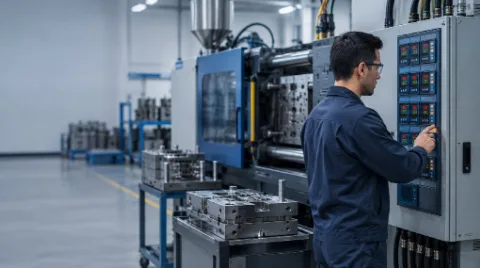
Injection molders are taking a fresh look at a piece of process control many of them stopped thinking about years ago: how their PID controller is tuned, and whether those settings still match the tool running on the press.
The shift is quiet, but it shows up in tooling programs and maintenance schedules. Energy now accounts for a larger share of conversion cost while part tolerances keep tightening, and shops that once treated temperature settings as permanent are finding that a couple of degrees of drift in one zone turns into scrap, longer cycles and repeat service calls.
A PID controller reads a temperature sensor and adjusts heater power to hold a setpoint through the length of a run. On a hot runner manifold carrying 16, 32 or 64 zones — each with its own heater and thermocouple — that job gets considerably harder. Every zone has to stay inside a narrow band while the tool opens, closes and cools around it.
What has changed is not the control theory. It is the cost of getting it wrong.
Pressure from energy and tolerances
Molding shops in Europe and North America have watched electricity and gas prices move sharply over the past three years, and heating the tool is one of the largest draws in the process. A zone running hotter than it needs to is not just an energy line item. It changes melt viscosity, shifts fill patterns and pushes dimensional variation into the part.
Tighter tolerances in automotive, medical and packaging work have narrowed the acceptable band at the same time. Suppliers that once accepted a few degrees of zone-to-zone spread now ask for documented stability, and quality teams want the numbers logged rather than remembered.
The result is that injection molding temperature control — closed-loop control in particular — has moved from a maintenance topic to a process engineering topic, with the PID controller at the center of the discussion.
Where the drift comes from
Sensor lag is the first suspect, and it is the hardest to notice. A thermocouple seated in a well a few millimetres from the heater reads the heater rather than the material around it, so the loop stabilises a value that has limited connection to what the part actually sees. Deep-well sensors and probes placed in the flow path narrow that gap, but they cost more and take longer to install.
Zone imbalance is structural. A manifold with a hot core side and a cold cavity side will not hold one setpoint well across every zone, whatever the tuning parameters say. Tool builders that split the tool into more independent circuits usually solve in the design what operators otherwise chase for months.
Heater aging is the quiet one. Band and cartridge heaters lose output over their service life, and a PID controller compensates by running at a higher duty cycle. Nothing alarms until the zone can no longer reach setpoint under load. Shops that log duty cycle rather than temperature alone tend to catch a failing controller and its heater weeks before a shift of scrap does.
Wiring failures behave the same way. A loose thermocouple terminal adds resistance and pulls the reading off. A K-type thermocouple paired with the wrong extension wire drifts with cabinet temperature — a measurement error that no amount of tuning can correct.
The identification problem nobody audits
Manifold plates, nozzle holders, mold bases and controller cabinets carry cavity numbers, zone labels, part numbers and date codes. These marks are not cosmetic. When a fault sends an operator to zone 7 on the controller, that person has to find cavity 7 on the manifold — after polishing, after heat cycling, after a decade of handling.
Adhesive labels and ink stamps fail that test long before the mold does. It is the reason a growing share of mold builders specify CNC text milling for permanent marking, since engraved characters hold their legibility through the maintenance cycles that erase everything applied to the surface.
Cooling lines, sprue bushings and ejector plates follow the same logic. Anything that gets stripped, serviced and reassembled needs identification that outlives the service interval.
PID controller tuning moves into the maintenance schedule
Auto-tune routines have made parameter setting easier, and also easier to over-trust. Relay-feedback tuning runs a deliberate on/off cycle and calculates gains from the response, which works well on a stable, fully assembled tool and noticeably worse on a half-warm mold carrying a partial load. Most shops that tune seriously treat the auto-tune result as a starting point.
Seasonal variation matters more than many shops expect. A cabinet in an unheated building behaves differently in February than it does in August, and zones that held within a degree in winter can wander two or three degrees in summer. Re-checking twice a year costs an hour and is increasingly written into preventive maintenance plans.
Hardware replacement resets the clock. A new heater, thermocouple or power module changes the loop dynamics, so the previous gains no longer fit and the PID controller has to be re-commissioned rather than simply restarted.
Reading the response curve has become part of the routine. A well-behaved loop rises, flattens slightly below setpoint and settles without dipping. A curve that climbs past setpoint and returns is overshoot, and the common fix is less integral gain rather than more proportional.
What the economics look like
Scrap and cycle time are where the argument gets made to management. Part weight variation, short shots and cosmetic rejects trace back to temperature spread more often than not, and each of those costs a shop twice — once in lost material and again in the machine time consumed producing a part that gets scrapped.
Zone count factors in as well. Two cavities driven by one PID controller channel means a single setpoint for two different thermal loads, and the compromise shows in part weight variation. Independent zone control usually costs less than the scrap it prevents, which is why most tooling quotes now assume a multi-zone mold temperature controller rather than a shared circuit.
Energy meters have made the same point from the other direction. Heater power is easy to measure per zone, and a manifold drawing more kilowatts than it did last quarter points at insulation loss, a failing heater or a setpoint that drifted upward without anyone noticing.
What comes next
PID controllers are getting better at tuning themselves. Adaptive and gain-scheduling algorithms watch how a zone responds and adjust parameters as the tool heats and stabilises, which shortens startup and trims the fiddling that eats into first-shift output.
Data logging is spreading at the same pace. Once temperatures, duty cycles and alarm history are recorded rather than observed, maintenance stops being reactive. A zone whose duty cycle has crept upward for six weeks is a heater close to failure, and the trend chart shows it long before a quality report does.
Remote monitoring matters most for shops running lights-out. An alarm that reaches a phone at 2 a.m. is worth considerably more than one that blinks on a cabinet in an empty building.
None of it changes the fundamentals. A stable process still comes down to sensors that measure the right thing, heaters that still deliver rated output, and a PID controller whose settings match the tool it is running. What is different is the number of shops now willing to spend an afternoon on those three items.