How to Make Solo Tennis Practice Feel More Like Match Play
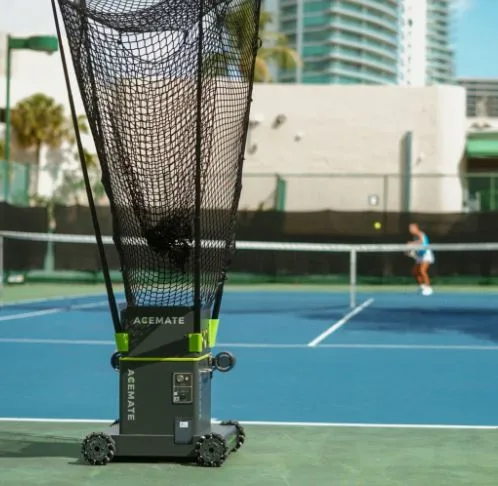
Solo tennis practice becomes more useful for match performance when drills include movement, recovery, direction, and shot combinations rather than stationary repetition alone.
The key is to reproduce the structure of a point.
In a match, players rarely hit the same shot from the same position several times in a row. They move toward the ball, choose a direction, recover, respond to the next ball, and adjust again.
Independent training should include some of those same demands.
Why Traditional Repetition Is Only the Starting Point
Repetition plays an important role in tennis development.
Hitting multiple forehands from a predictable position can help a player focus on:
- preparation
- racket path
- contact
- balance
- direction
Once the basic movement becomes more stable, however, the drill should progress.
A match includes variables.
The ball may arrive shorter, deeper, wider, faster, or higher. The player may need to defend one shot and attack the next.
That is why effective solo tennis practice should gradually connect stroke repetition with footwork and point patterns.
Start Every Repetition With a Split Step
One of the easiest ways to make an independent drill more realistic is to include a split step.
Without a partner, players sometimes stand and wait for the next ball.
That habit does not reflect normal match movement.
Instead:
- recover after the previous shot
- perform a split step before the next ball
- move toward the incoming ball
- establish spacing
- hit
- recover again
This creates a continuous movement cycle.
The objective is not to exaggerate the split step. It should become a natural part of preparation.
Recover After Every Shot
Recovery is often missing from repetitive practice.
A player hits the ball successfully and remains where the shot was made.
During a match, that position may leave a large part of the court exposed.
A better drill requires recovery after every repetition.
For a standard baseline drill, the sequence might be:
move, hit, recover, split step, move again.
This helps train the connection between one shot and the next.
Use Targets That Reflect Real Point Construction
Targets make drills more meaningful when they represent useful tactical areas.
Avoid aiming directly at lines.
A safer training target usually sits several feet inside the court boundaries.
Useful target areas include:
Deep Crosscourt
This can help build rally tolerance and court positioning.
Deep Middle
A deep central ball can reduce an opponent’s available angles and provide time to recover.
Inside-Out Forehand Zone
This supports a common attacking pattern from the backhand side.
Approach-Shot Zone
A deeper target can help players practice moving forward behind a controlled attacking ball.
The objective is not simply hitting a cone.
The target represents the type of ball a player wants to produce during a point.
Drill 1: Crosscourt Rally and Recovery
This drill develops consistency, direction, and movement.
Set a target in the crosscourt half of the court.
For each ball:
- split step
- move into position
- hit crosscourt
- recover toward a realistic central position
- prepare again
Complete a set of 10 to 20 balls.
Track how many reach the target zone.
Once consistency improves, increase the movement requirement rather than immediately increasing pace.
Drill 2: Wide Ball to Neutral Ball
Many points require a player to recover from a defensive position.
Start near the center of the baseline.
Move toward a wide ball and hit a controlled crosscourt shot.
Then recover quickly toward the middle before the next feed.
The purpose is to practice defense without attempting an unrealistic winner.
The player should prioritize:
- balance
- height over the net
- directional control
- recovery speed
This is often more representative of match tennis than trying to attack every feed.
Drill 3: Inside-Out Forehand
The inside-out forehand combines movement and offensive positioning.
Begin near the center mark.
Move around the backhand side and create enough space to hit the forehand toward the opposite corner.
After contact, recover according to the intended pattern.
This drill can help players practice:
- adjustment steps
- spacing
- directional control
- attacking from the backhand corner
A second target can later be added for an inside-in forehand variation.
Drill 4: Deep Ball to Short Ball
Point situations often change quickly.
A player may begin behind the baseline and then receive an opportunity to move forward.
Practice this sequence by alternating:
- one deeper ball
- one shorter ball
Hit the deeper ball with control.
When the short ball arrives, move forward, establish balance, and direct the approach shot toward a target.
Continue toward the net after contact.
This trains recognition and transition rather than one isolated stroke.
Drill 5: Approach and First Volley
The approach shot is only the beginning of a net transition.
Players should practice what happens next.
A useful sequence is:
- baseline groundstroke
- shorter approach ball
- movement toward the net
- split step
- first volley
The first volley does not always need to be a winner.
A controlled deep volley may be the more realistic objective.
This drill teaches players to connect multiple court positions within one sequence.
Add Scoring to Create Pressure
One major difference between practice and competition is consequence.
During casual repetition, missing one ball usually changes nothing.
A simple scoring system can introduce mild pressure.
For example:
- target hit = 2 points
- ball lands safely in court = 1 point
- error = 0 points
Set a goal of 15 points from 10 balls.
Another option is to require five successful shots before moving to the next drill.
These scoring systems make consistency matter.
Change One Variable at a Time
Random practice can be useful, but introducing too many variables immediately can reduce training quality.
A sensible progression is:
Stage 1: same location, same direction
Stage 2: movement added
Stage 3: two feed locations
Stage 4: two shot directions
Stage 5: short and deep balls combined
Stage 6: scoring or time pressure
This progression allows the player to maintain a clear technical objective while gradually increasing difficulty.
Include Serve Plus One Patterns
Serving practice becomes more match-specific when it continues after the serve.
Instead of serving and immediately reaching for another ball:
- choose a serve target
- complete the service motion
- recover into the court
- split step
- shadow or hit the expected next shot
For example:
wide serve + forehand to open court
or:
body serve + deep crosscourt groundstroke
This helps connect serving with the first rally ball.
Do Not Try to Simulate Everything
Solo practice cannot fully recreate a match.
It does not reproduce another player’s intentions, disguise, decision-making, or unexpected shot selection.
That is not a problem.
The objective is to make controlled practice more transferable.
Independent drills are particularly useful for building reliable movement and shot patterns. Matches and partner sessions then test whether those patterns remain effective when the ball becomes unpredictable.
Frequently Asked Questions
Can solo tennis practice prepare you for matches?
It can improve stroke reliability, movement, recovery, directional control, and common shot patterns. Match play is still necessary for tactical decision-making and responding to an opponent.
How can I make ball-machine drills more realistic?
Include a split step, movement before contact, recovery after every shot, realistic targets, and combinations of different court positions.
Should solo drills be random?
Not always. Controlled repetition is useful when learning a movement. Randomness can be introduced gradually after the pattern becomes more consistent.
How do you add pressure to individual tennis practice?
Use targets, scoring systems, consecutive-shot goals, or limited attempts. These create consequences for errors without requiring an opponent.
Final Takeaway
The best match-like solo drills do more than reproduce the ball.
They reproduce the player’s responsibilities around the ball.
Move, prepare, hit, recover, and prepare again.
When individual practice includes those elements, repetition becomes more connected to the situations recreational players actually face during points.