Do I Need MICR Toner to Print Checks? It Depends on the MICR Line
Disclosure: This article was published as part of a paid partnership with OnlineCheckWriter.com, a Zil Money platform. The author is an independent contributor.
The answer to do I need MICR toner to print checks depends on one specific question:
Are you printing the MICR line yourself, or is the MICR line already pre-printed on the check stock?
Federal Reserve guidance makes this distinction clear.
If you are printing the MICR line as part of the original check, it should be printed using magnetic ink.
If the MICR line is already pre-printed, the other information on the check can be printed using regular non-magnetic ink.
What Is the MICR Line?
MICR stands for Magnetic Ink Character Recognition.
The MICR line is the row of numbers near the bottom of a check that carries key processing information.
The Federal Reserve explains that it includes information such as the bank routing number, account number, and check serial number.
Bank check-sorting equipment has historically used the magnetic characteristics and numeric information in this line to process checks.
When Do You Need MICR Toner?
If your blank stock has no pre-printed MICR line and your printer will create that line, use the appropriate magnetic-ink or MICR-toner setup.
Federal Reserve guidance says that when a payer prints the MICR line, the line should be printed in magnetic ink.
For a laser printer, this may mean MICR toner designed for the printer model.
The exact equipment should be selected based on the business’s printer, check stock, and financial-institution requirements.
When Is Regular Ink Enough?
If the check stock already has the MICR line printed in magnetic ink, the rest of the check does not need magnetic ink.
The date, payee, amount, memo, and other information can be printed using regular ink or toner according to Federal Reserve guidance.
This is why an article that simply says “all checks require MICR toner” is inaccurate.
It depends on what is being printed.
What About Modern Image-Based Check Processing?
Banks now process most checks electronically after image capture.
Check 21 helped accelerate that transition by allowing electronic processing and substitute checks.
However, the Federal Reserve still states that generally applicable industry standards for original checks have long required magnetic ink for the MICR line.
The growth of image-based processing does not justify saying MICR requirements no longer matter.
Do Not Confuse Check 21 With MICR Requirements
This is another common error.
The Federal Reserve specifically says that the need for magnetic ink on original-check MICR lines is not the result of Check 21.
The standards existed before the law.
Check 21 addressed check truncation and substitute checks rather than creating MICR requirements.
How Does OnlineCheckWriter.com Handle Blank Checks?
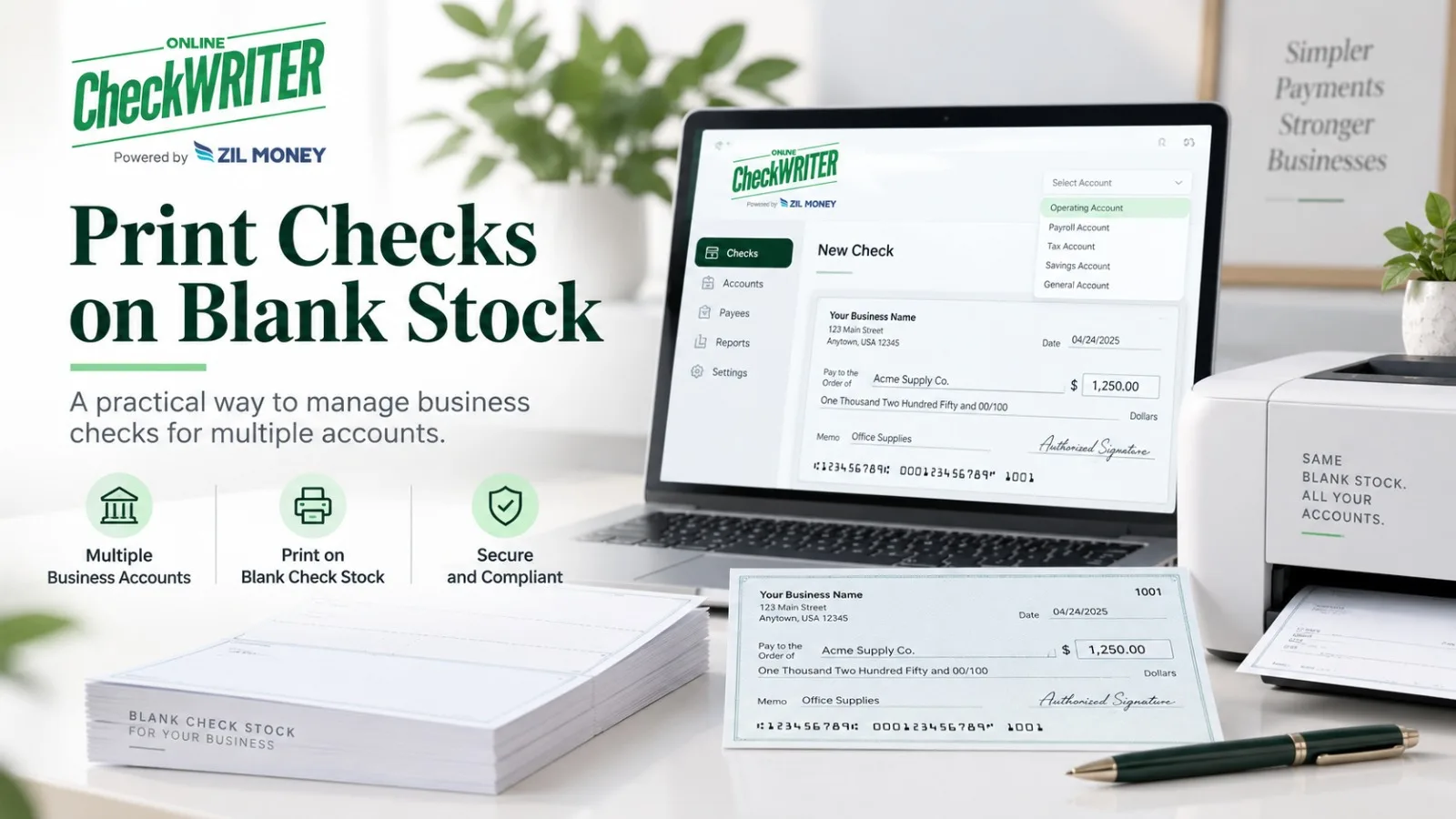
OnlineCheckWriter.com allows users to create check layouts and print from authorized bank accounts on blank check stock.
Its current Blank Checks page acknowledges that printing requirements can differ and advises users to meet their bank’s check-printing requirements.
That wording is preferable to claiming a standard printer with ordinary toner is guaranteed to work for every bank.
Ask Your Bank When Setting Up a New Process
If your business is printing checks for the first time, confirm how your stock and printer will produce the MICR line.
For important or high-volume check runs, ask the connected financial institution whether it has specific check-printing guidance.
This is particularly useful before buying specialized toner or printing a large batch.
The Short Answer
If the MICR line is already pre-printed, you generally do not need MICR toner for the remaining check information.
If you are printing the MICR line yourself, Federal Reserve guidance says the line should be printed in magnetic ink.
That is the most accurate answer to do I need MICR toner to print checks, and it avoids both extremes: claiming MICR toner is always necessary or claiming it never matters.
OnlineCheckWriter.com – powered by Zil Money, is a financial technology company, not a bank. Banking and money movement services are provided through partner financial institutions and licensed service providers. FDIC insurance coverage applies only to eligible deposit products and accounts, and is subject to applicable terms, conditions, limitations, and requirements. Additional information regarding partner institutions, products, and services is available in the applicable terms and agreements.