Rollator vs Walker: Which One Do You Actually Need?
Choose a walker if the user needs slower, more stable, step-by-step support. Choose a rollator if the user can already walk but needs smoother movement, a seat for rest breaks, and more help during errands or outdoor walks. The safer choice depends on balance, strength, brake control, home layout, and daily routine.
The Short Answer: Choose Based on Support, Control, and Daily Use
A walker is usually better for users who need more control with each step. It may fit users who walk slowly, have poor balance, are recovering from surgery, or mainly move around the home. Because a walker does not roll as freely as a rollator, it can feel easier to control in tight indoor spaces.
A rollator is usually better for users who can walk on their own but get tired, need a seat, or want smoother movement outside the home. It can be useful for shopping, doctor visits, neighborhood walks, and longer routes. The user should be able to steer it, slow it down, and lock the brakes before sitting.
If the user has fallen recently, has serious balance problems, or is recovering from surgery, ask a doctor or physical therapist before choosing. The National Institute on Aging notes that a physical or occupational therapist can help decide which walking device may be useful and teach safe use.
Rollator vs Walker: What Is the Real Difference?
The real difference is not just “wheels or no wheels.” A walker focuses on stability and control. A rollator focuses on smoother movement, longer walking routes, and rest breaks.
A Walker Focuses on Slower, More Stable Support
A walker gives the user a more controlled way to move. The user places the walker forward, then steps into it. Some walkers have no wheels, while others have two front wheels. For users comparing a standard walker with front wheels for indoor support, overall width, handle height, product weight, and daily handling should still be checked before choosing. This slower movement can be useful for people who need extra stability, especially indoors, after injury, or during recovery.
A Rollator Focuses on Smoother Movement and Rest Breaks
A rollator usually has three or four wheels, brakes, and often a seat, backrest, and storage bag. Instead of lifting the frame, the user pushes it forward while walking. For users comparing a compact 4 wheeled walker for daily walking, a rollator with a seat, brakes, folding frame, and storage support may be useful for mixed indoor and outdoor routines. The seat is helpful when the user needs to rest, but the user should lock the brakes first and sit only on a stable, level surface.
Where a 2-Wheel Walker Fits Between Them
A 2-wheel walker sits between a standard walker and a full rollator. The front wheels help it move more easily, but it still feels more controlled than a 3-wheel or 4-wheel rollator. This can work well for users who want easier movement than a no-wheel walker but do not need a rollator seat or full rolling movement.
Start With Your Balance and Support Needs
Before comparing seats, wheels, or storage bags, start with the user’s body. The first question is simple: does the user need more support, or do they mainly need easier movement?
When a Walker May Be Safer
A walker may be safer when the user needs slow, steady support. This can include users with poor balance, weak legs, early recovery needs, or fear of falling. A walker may also be better if the user leans heavily on the device, because a rollator has wheels and can be harder to control when too much body weight is placed on it.
When a Rollator May Be Practical
A rollator may be practical when the user can already walk but gets tired easily. It can help with longer distances, outdoor routes, errands, and places where seating may not always be available. The user should be able to walk without placing too much body weight on the rollator, control the wheels, turn safely, and use the brakes correctly.
When You Should Ask a Doctor or Physical Therapist First
Professional advice matters when safety is unclear. Ask a doctor or physical therapist first if the user is recovering from surgery, has fallen recently, feels dizzy, has serious balance problems, or has weakness on one side. A rollator may feel easier to push, but that does not always mean it gives the right kind of support during recovery. MedlinePlus also notes that a surgeon or physical therapist can help choose the type of walker that fits the user’s situation.
Compare Them by Daily Use
A device that works well in one place may not work well everywhere. The right choice should match where the user walks most often.
Home, Bathroom, and Tight Indoor Spaces
For tight indoor spaces, a walker or compact 2-wheel walker may be easier to manage. Homes often have narrow doorways, bathroom corners, rugs, furniture, and small turning areas. In these spaces, slower movement can be useful. A rollator can still work indoors if the user has enough space and can control it well, but overall width and turning space should be checked first.
Outdoor Walking, Shopping, and Errands
For outdoor walking and errands, a rollator is often more convenient. Wheels make it easier to move across sidewalks, parking lots, building entrances, and store aisles. A seat can also help if the user needs to rest while shopping or waiting. A walker can still be used outdoors, but it may feel slower and more tiring on longer routes.
Travel, Appointments, and Longer Routes
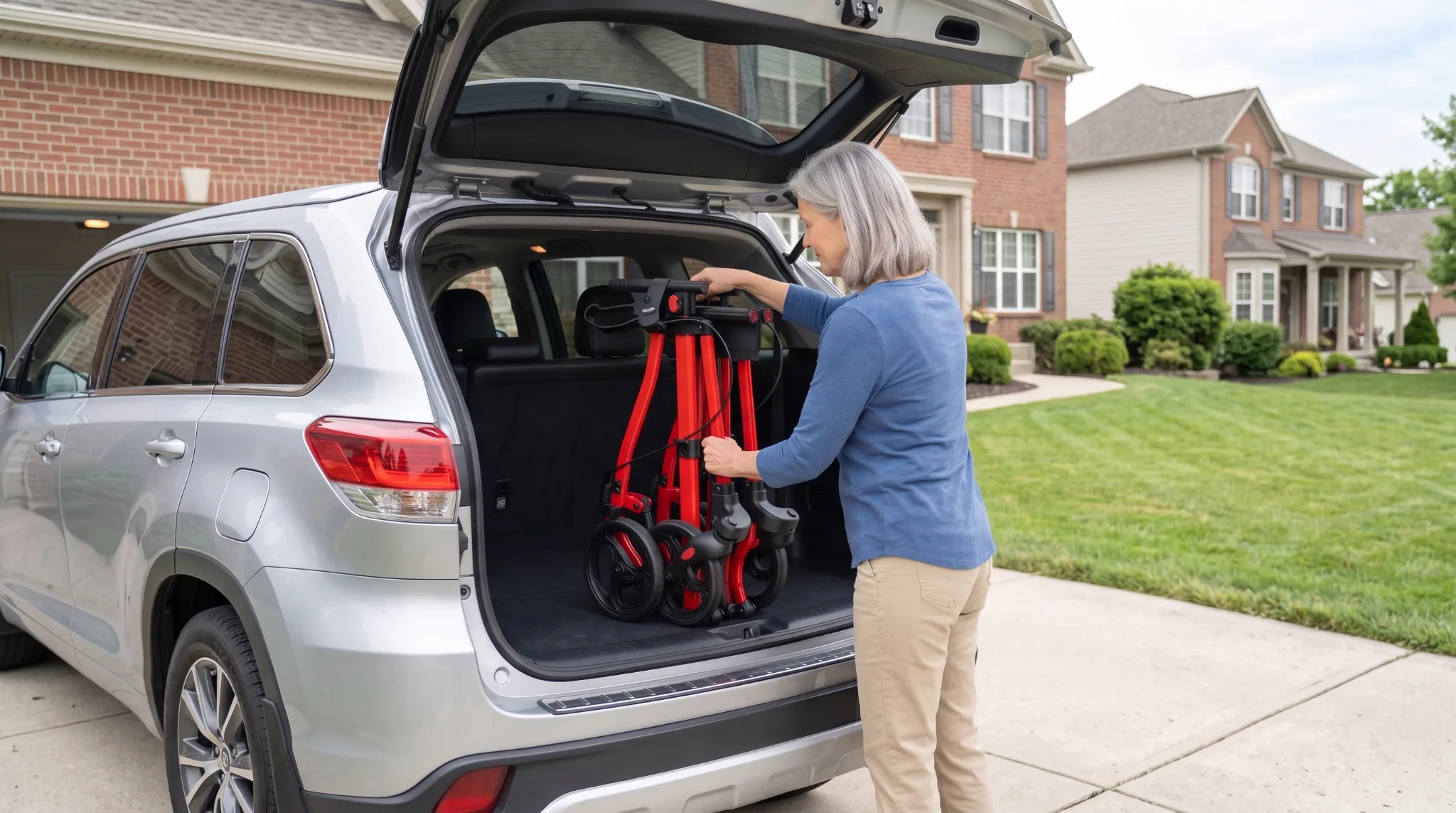
For travel, appointments, and longer routes, many users prefer a rollator because it can fold, roll smoothly, and provide a place to sit. Storage can also help carry light personal items. However, the user or caregiver should be able to lift, fold, and store the device. A rollator that is too heavy or too wide can become frustrating.
Compare the Key Features Before You Choose
Features only matter when they solve a real daily problem. Do not choose a rollator only because it has more features. Do not choose a walker only because it looks simpler.
Wheels and Movement Control
Walkers usually have no wheels or two front wheels. This makes movement slower and more controlled. Rollators usually have three or four wheels, which makes movement smoother but less controlled if the user is unsteady. For users who feel nervous about a device rolling too quickly, a walker may feel safer. For users who can walk steadily and want less effort during longer routes, a rollator may feel easier.
Brakes and Safe Stopping
Brakes are one of the most important differences. A rollator user must be able to slow down, stop, and lock the brakes. This matters before sitting, turning, walking on slight slopes, or stopping in public spaces. Before buying a rollator, make sure the user can squeeze the brake handles comfortably and understands when to lock and release them.
Seat, Backrest, and Storage
A seat is one of the biggest reasons people choose a rollator. It can help during walks, shopping, appointments, and waiting in line. A backrest can make short rest breaks more comfortable, and storage can help carry light personal items. However, the seat should be used only after the brakes are locked, and storage should not be overloaded because heavy bags can affect balance and steering.
Width, Weight, and Folding Size
Width affects whether the device fits through doors, bathrooms, hallways, and crowded rooms. Weight affects lifting, car transport, and daily handling. Folding size matters for closets, car trunks, and travel. Before buying, check overall width, handle height, seat height, product weight, folded size, weight capacity, and brake control instead of relying only on product photos.
Walker or Rollator: Quick Decision Table
Use this table as a simple starting point.
| User Need or Situation | Walker May Fit Better | Rollator May Fit Better |
| Balance | User needs slower, steadier support | User can walk steadily and control wheels |
| Walking distance | Short indoor routes | Longer walks, errands, and appointments |
| Indoor use | Tight rooms, bathrooms, narrow turns | Larger indoor spaces with enough turning room |
| Outdoor use | Limited outdoor walking | Sidewalks, shopping, and mixed surfaces |
| Rest breaks | Seat is not a major need | User needs a seat during daily activities |
| Brake control | User may struggle with brakes | User can squeeze and lock brakes safely |
| Surgery recovery | Early recovery or stronger support needs | Later-stage mobility, if approved by a professional |
| Travel | Simple lightweight support may be enough | Folding design and seat may help on longer outings |
This table is not a medical rule. It is a practical guide. If the user’s balance, recovery stage, or safety is unclear, professional advice should come first.
Common Buying Mistakes to Avoid
Many buying mistakes happen because users choose by product type instead of daily use. A good choice should fit the person, the home, and the routine.
Choosing a Rollator Without Enough Brake Control
A rollator may look easier because it has wheels and a seat, but it requires control. If the user cannot squeeze, slow, stop, and lock the brakes, the rollator may not be safe. Brake control matters most when the user sits down, turns, walks outdoors, or stops on uneven ground.
Choosing a Walker That Limits Daily Activity
A walker may feel stable, but it can also feel slow or tiring. Some users may stop going outside because the walker takes too much effort or does not offer a place to sit. If the user can walk steadily but gets tired on longer routes, a rollator may support a more active routine.
Ignoring Doorways, Seat Height, and Product Weight
Product photos do not show whether a walker or rollator fits the user’s home. A device can look right online but feel too wide for the bathroom, too heavy for the car, or too low for comfortable sitting. Doorway width, folded size, handle height, seat height, and product weight can affect daily use more than small design differences.
Final Thoughts
A walker is usually the better choice when the user needs slower, more stable support. It may fit short indoor routes, early recovery, poor balance, or users who need more control with each step.A rollator is usually the better choice when the user can walk independently but gets tired, needs a seat, or wants smoother movement for errands, appointments, outdoor walks, or longer routes.The best choice is not the one with the most features. It is the one the user can control safely and use comfortably every day.
FAQs
Is a rollator better than a walker?
A rollator is better for some users, especially those who can walk independently but need a seat, smoother movement, or help on longer routes. A walker may be better for users who need slower, more stable support.
Which is safer, a walker or a rollator?
Neither is always safer. A walker may be safer for poor balance or early recovery. A rollator may be safe for users who can control the wheels and brakes.
Should seniors use a walker or rollator?
It depends on the senior’s balance, strength, home layout, and daily routine. Seniors who need more stable indoor support may do better with a walker, while seniors who get tired during outings may prefer a rollator.
Is a walker or rollator better after surgery?
After surgery, follow the doctor’s or physical therapist’s advice. Many users need more controlled support early in recovery, and a rollator should not replace a prescribed walker without professional approval.