Credit Card Payroll Funding Fee: What a 2.9% Charge Means for a Business
Disclosure: This article was published as part of a paid partnership with Zil Money. The author is an independent contributor.
A credit card payroll funding fee should be evaluated before a business decides to use its card for payroll.
As of September 2026, Zil Money’s current support documentation lists a 2.9% standard credit card processing fee. That rate can change, so businesses should always review the current pricing information before submitting a payroll transaction.
The important question is not only, “What is the percentage?”
It is, “What business problem are we paying that fee to solve?”
Calculate the Actual Dollar Cost
A percentage becomes easier to evaluate when converted into dollars.
For example, the calculation is:
Payroll amount × current processing percentage = processing cost
Businesses should use the actual payroll amount and the current verified rate shown by the provider.
The result should then be included in the company’s payroll-funding decision rather than treated as a hidden or secondary expense.
This does not automatically make card funding good or bad. It makes the cost visible.
Why Would a Business Pay a Payroll Funding Fee?
The main reason is usually cash timing.
Payroll may be due before a large customer payment settles. A seasonal business may have revenue coming shortly after payday. Another company may want to keep existing bank cash available for a specific immediate obligation.
Zil Money currently allows eligible businesses to fund payroll using a business credit card while employees receive payment through supported methods such as ACH, wire, or check.
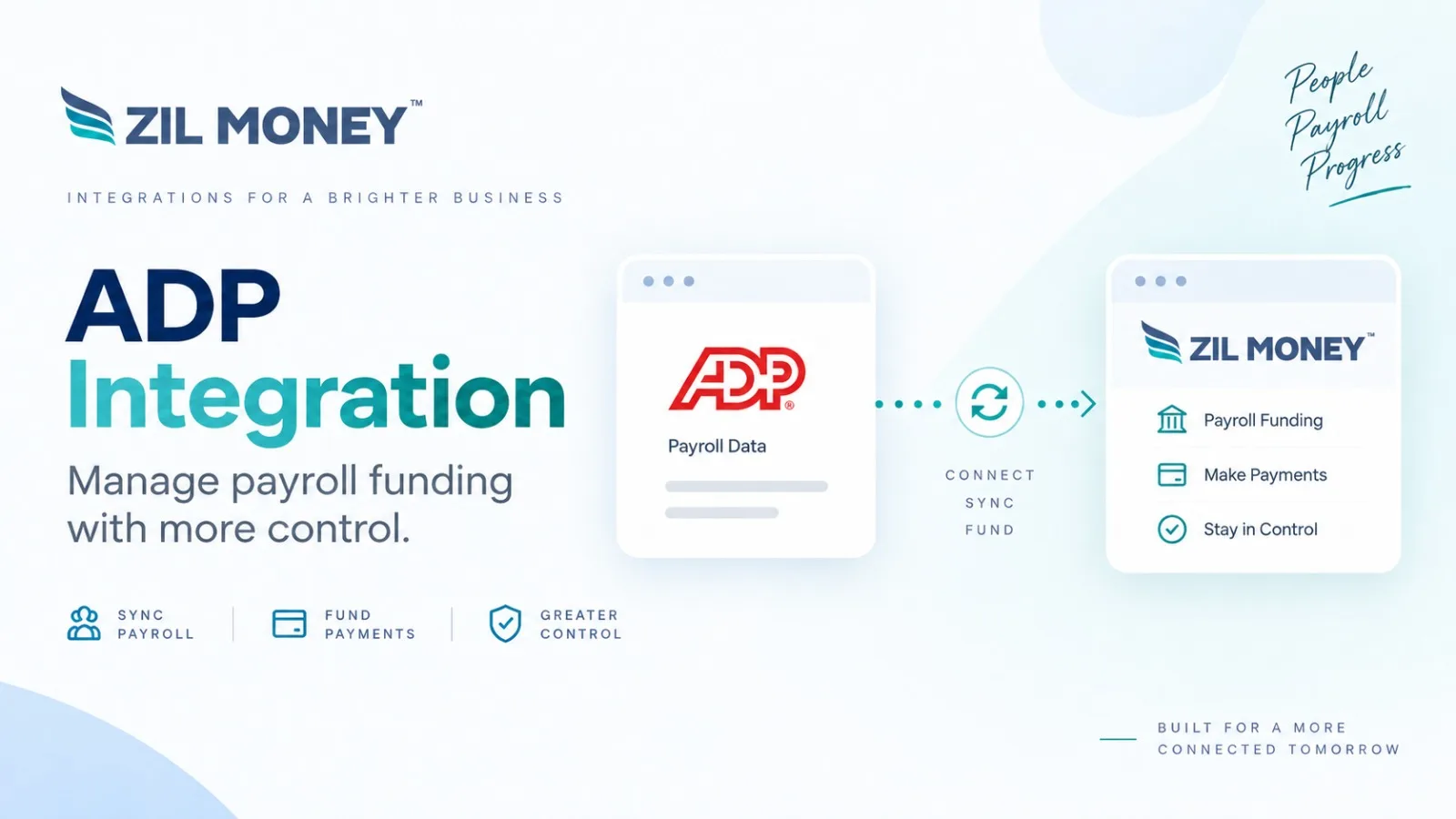
For businesses using ADP, Zil Money also provides an ADP integration with supported payroll-processing options.
The value of the funding option therefore depends on the company’s specific cash situation.
Remember the Card Still Has to Be Repaid
A card-funded payroll transaction is not additional revenue.
The business has exchanged an immediate cash requirement for an obligation to its card issuer.
Management should review available credit, the card’s interest rate, billing cycle, statement balance, payment due date, and the company’s expected ability to repay.
Using card funding without a repayment plan can turn a temporary payroll gap into a longer-term financing problem.
Do Not Assume a Guaranteed Grace Period
The timing benefit depends on the card.
The Consumer Financial Protection Bureau says a grace period is the time between the end of a billing cycle and the payment due date. Credit-card companies are not required to provide one on every card. When a grace period is available, its conditions are governed by the card agreement.
That means claims such as “get 30 days” or “get 45 days” should not be applied universally.
Businesses need to review their own card terms.
Documentation Can Also Be Part of the Process
Zil Money’s current support documentation states that supporting documents are required for credit-card transactions. For payroll funding, a payroll summary is an example of documentation that may be required during review.
A business should therefore prepare both the payroll information and the required funding documentation before relying on the workflow for a deadline.
Is the Fee Worth Paying?
There is no universal answer.
If the business already has sufficient cash and gains little from changing the funding source, an additional processing fee may be difficult to justify.
If an eligible company faces a short, clearly understood timing gap and has a reliable repayment plan, management may decide the additional funding option has value.
The decision should be based on the actual fee, payroll amount, credit terms, expected incoming cash, and repayment ability.
For ADP users, Zil Money’s current integration can be reviewed as one possible card-funded payroll workflow. It should be evaluated on current terms rather than on assumptions about fixed cash-flow periods or guaranteed financial benefits.
Zil Money, is a financial technology company, not a bank. Banking and money movement services are provided through partner financial institutions and licensed service providers. FDIC insurance coverage applies only to eligible deposit products and accounts, and is subject to applicable terms, conditions, limitations, and requirements. Additional information regarding partner institutions, products, and services is available in the applicable terms and agreements.