Why More Homeowners Are Replacing Parts of Their Lawn With Artificial Turf
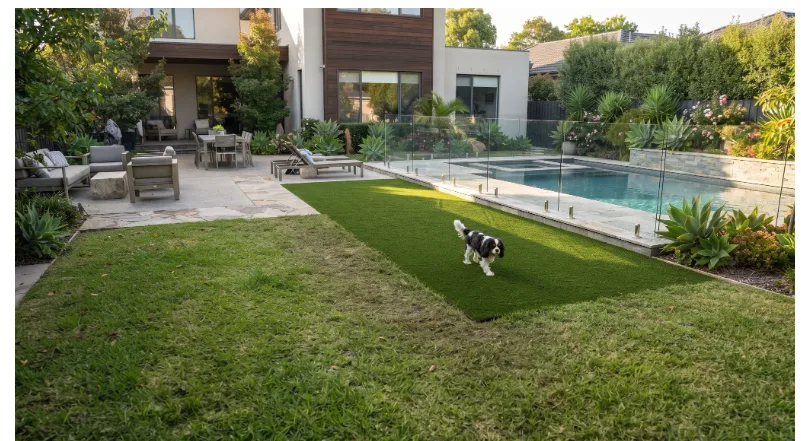
A lawn does not always fail evenly. One section may stay healthy while another becomes a muddy path every time the dog runs through it. Grass near a pool may constantly leave clippings in the water. A shaded side yard may struggle to grow, while a play area gets worn down faster than it can recover.
That is why many homeowners are choosing partial artificial turf installations instead of replacing the entire lawn. Rather than treating turf as an all-or-nothing landscaping choice, they are using it where natural grass causes the most trouble: pet areas, pool surrounds, putting greens, play spaces, narrow side yards, and high-traffic sections. The idea is simple: keep natural grass where it works and use artificial turf where it solves a specific problem.
What Should Homeowners Consider Before Choosing Artificial Turf?
The first question should not be which turf looks best. Homeowners need to consider how the area will be used, how it will drain, what sits underneath the turf, and how much traffic the surface will receive.
We tried to reach out to experts. James Dickson of Green Life Designs, LLC replied and said “It’s important to use a turf that is completely pervious, not just one with drainage holes, especially for pet applications. I also recommend using an antimicrobial infill because it gives the turf the weight it needs to reduce wrinkling, helps the fibers stand up, and protects the backing.”
That advice matters because artificial turf is only the top layer. Drainage, base preparation, infill, and the intended use all affect how well the installation performs over time. For pet areas in particular, Dickson recommends turf that is completely pervious rather than material that relies only on drainage holes. He also notes that appropriate infill can add weight, help reduce wrinkling, support the fibers, and help protect the turf backing.
Why Partial Turf Often Makes More Sense
Many homeowners still want natural grass across most of their property. It stays cooler, blends naturally with landscaping, and works well in areas that receive enough sunlight and moderate use. The problem is that some parts of a yard are difficult to maintain no matter how much effort goes into them. Dogs can wear paths along fences. Children can thin the grass beneath play equipment. Shaded areas may never grow evenly. Pool traffic can leave nearby lawn muddy or worn.
In those places, artificial turf can be used as a problem-solving surface rather than a complete lawn replacement. A homeowner might turf only a dog run, a poolside strip, or a small practice green while leaving the rest of the yard untouched.
Less Mud, Fewer Clippings, and Lower Maintenance
The appeal of artificial turf goes beyond eliminating mowing.
Replacing troublesome areas can mean:
- Less mud entering the home
- Fewer grass clippings around pools
- Reduced watering
- No mowing or edging in the turf area
- No routine fertilizer or weed-control treatments on that section
- Fewer bare patches that need reseeding
These benefits can be especially noticeable in smaller spaces that receive heavy use. Artificial turf is not maintenance-free, however. Leaves and debris still need to be removed, pet waste must be cleaned up, and high-use areas may occasionally need brushing or infill attention. The difference is that the upkeep is generally more predictable than repeatedly repairing struggling natural grass.
Pet Areas Need Good Drainage
Pet areas are one of the most practical applications for artificial turf. Dogs can quickly damage natural grass through running, digging, repeated traffic, and urine. After rain, those worn sections can turn into mud. Artificial turf can provide a more consistent surface, but drainage becomes especially important. Rain and pet urine need to move through the turf and into a properly prepared base beneath it.
Homeowners should ask:
- Is the turf fully permeable?
- What type of base will be installed?
- How will water move away from the area?
- What infill is being used?
- How should the surface be cleaned?
A pet-friendly installation should be designed around more than durability alone.
Pool Areas Can Stay Cleaner
Natural grass next to a swimming pool creates predictable maintenance problems. Grass clippings can end up in the water, wet feet can track soil onto the deck, and frequent traffic can damage the lawn near entrances and seating areas. Artificial turf can provide a cleaner transition between the pool and surrounding landscape.
Homeowners should also consider heat. Synthetic surfaces can become warmer than natural grass in direct summer sun. Around pools, where people often walk barefoot, sun exposure and surface temperature should be discussed before selecting the material.
Putting Greens Require More Specialized Planning
A backyard putting green is different from general landscape turf. Homeowners should think about ball speed, slope, contours, cup locations, fringe areas, and base construction. A green built mainly for appearance may not provide the type of practice a golfer expects. The intended use should guide the design.
Someone who wants a casual recreational green may prefer a simple layout, while a more serious golfer may want multiple breaks, different putting lines, and carefully planned contours. The base underneath is also critical because it helps determine both drainage and how accurately the final shape can be created.
High-Traffic Areas Are Natural Candidates
Some areas repeatedly fail because they simply receive too much traffic. Common examples include:
- Paths between patios and gates
- Areas beneath play equipment
- Narrow side yards
- Dog runs
- Routes between doors and outdoor living areas
Reseeding may improve these sections temporarily, but the same traffic usually causes the same damage again. In these locations, artificial turf can create a durable surface without changing the entire landscape.
Base Preparation Matters as Much as Turf Quality
The most attractive turf can still perform poorly if the base underneath it is not prepared correctly. The base should be stable, compacted, smooth, and able to drain properly. Poor preparation can lead to settling, uneven surfaces, puddling, or wrinkles.
Local requirements may also affect construction. Dickson notes that some municipalities require a pervious stone installation. Depending on the property and local rules, this can involve clean stone, landscape fabric, and stone screenings. Other installations may use a compactable, drainable aggregate base topped with screenings to create a smooth surface. Homeowners should ask how the base is being designed for their soil, drainage, grade, intended use, and local requirements.
Turf Quality Should Match the Application
Artificial turf products are not all designed for the same purpose. They can differ in fiber density, pile height, backing, permeability, texture, durability, and infill requirements. A product that works well in a decorative area may not be the best choice for dogs. A putting surface is different from general lawn turf. A children’s play area may need different performance characteristics than a lightly used side yard.
Instead of asking which turf is “best,” homeowners should ask:
What is this turf designed to handle?
The answer should match how the space will actually be used.
Artificial Turf Has Trade-Offs
Artificial turf can solve real landscaping problems, but it is not perfect for every property. Installation can be expensive. The surface can become hot in direct sunlight. Pet areas still require cleaning, and debris must be removed. The material also has a finite lifespan and will eventually need replacement.
Natural grass has advantages too. It stays cooler and remains part of a living landscape. That is one reason partial replacement can be a practical middle ground.
Start With the Problem, Not the Product
The best artificial turf projects usually begin with a clear goal. Is the homeowner trying to eliminate mud? Keep grass clippings out of a pool? Create a dependable putting surface? Improve a pet area? Make a heavily used section easier to maintain? Once that problem is clear, the right system becomes easier to evaluate.
Artificial turf works best when the material, drainage system, base preparation, infill, durability, and intended use are considered together.
When those elements are planned as one system, artificial turf can solve the difficult parts of a yard while allowing natural grass to remain wherever it still works well.