How to Pay 1099 Contractors: Classification Comes Before the Payment Method
Disclosure: This article was published as part of a paid partnership with Zil Money. The author is an independent contributor.
Businesses asking how to pay 1099 contractors often begin with ACH, checks, or payment apps.
The first question should come earlier:
Is the worker actually an independent contractor?
The IRS says worker classification depends on the full working relationship, including behavioral control, financial control, and the relationship between the parties. It is not determined only by how or how often someone is paid.
Determine Worker Classification First
An employee and an independent contractor have different tax and reporting treatment.
The IRS looks at factors such as who controls how the work is performed, who controls important financial aspects of the job, whether benefits are provided, how permanent the relationship is, and how the work relates to the business.
No payment platform can make an employee into a contractor.
Businesses should determine classification before setting up a contractor-payment workflow.
Collect Form W-9
Once a business determines that a worker is an independent contractor, IRS guidance says the business should generally obtain Form W-9.
The W-9 provides information such as the contractor’s correct name and taxpayer identification number and should be retained in the payer’s records.
Collecting that information before year-end can make tax reporting easier than trying to obtain it after payments have already been made.
Know the 2026 Reporting Threshold
The reporting threshold changed for payments made in 2026.
The IRS states that qualifying nonemployee compensation paid in 2026 generally reaches the Form 1099-NEC reporting threshold at $2,000, compared with the previous $600 threshold for payments before 2026. Exceptions and special rules can still apply.
Businesses should use current IRS guidance when preparing information returns rather than relying on the older $600 figure.
Choose the Contractor’s Payment Method
After classification and documentation are handled, the business can decide how to send the money.
ACH can work when the contractor provides the necessary bank information.
A paper check may fit a contractor who prefers a traditional payment.
Wire transfers may be considered for applicable transactions.
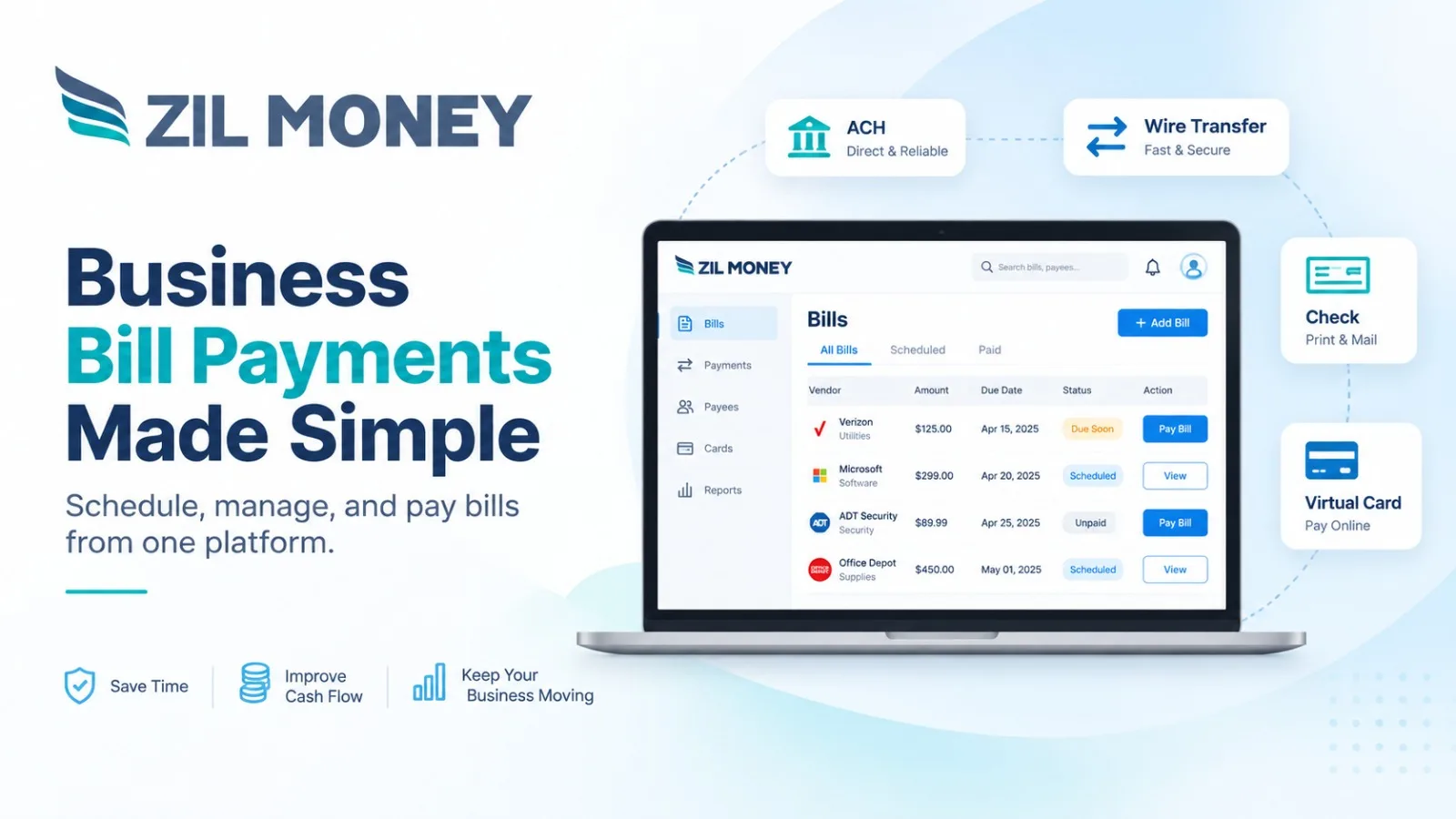
Zil Money also supports an eCheck workflow, but it should be described correctly. Zil Money’s eCheck is a one-time printable PDF check sent electronically to the recipient, not an ACH transfer.
Keeping those methods distinct improves both compliance and payment clarity.
What If the Contractor Does Not Accept Credit Cards?
A contractor does not necessarily need to accept a card directly for the business to use an eligible credit-card-funded workflow.
Zil Money’s current support documentation says an eligible payer can use a credit card as the funding source and send a contractor payment through ACH, wire, or check.
Current fees, documentation requirements, payment eligibility, and card terms should be reviewed before using that option.
Keep Good Payment Records
For every contractor, maintain the approved amount, service period, payment date, payment method, and transaction record.
Those records can support reconciliation and year-end reporting.
The business should also have a process for correcting or voiding payments when necessary.
How to pay 1099 contractors is therefore not simply a question of choosing an app.
The correct sequence is:
classify the worker, obtain the required tax information, document the amount owed, choose an appropriate payment method, and maintain the record.
That approach keeps the payment process connected to the business’s tax and accounting responsibilities.
Zil Money, is a financial technology company, not a bank. Banking and money movement services are provided through partner financial institutions and licensed service providers. FDIC insurance coverage applies only to eligible deposit products and accounts, and is subject to applicable terms, conditions, limitations, and requirements. Additional information regarding partner institutions, products, and services is available in the applicable terms and agreements.