B2B Mobile Payment Apps: What Businesses Should Compare
Published for Zil Money
Disclosure: This article was published as part of a paid partnership with Zil Money. The author is an independent contributor.
B2B mobile payment apps are useful when a business needs to manage payments away from a desktop.
A business owner may need to approve a vendor payment while traveling. An accounts payable manager may need to check a transaction before leaving the office. A payroll administrator may need access to payment information without opening a laptop.
The important question is not which mobile app has the longest feature list.
It is whether the app supports the payment methods, controls, accounting connections, and records the business actually needs.
Start With the Payment Methods
Business vendors do not all want to be paid the same way.
One supplier may accept ACH. Another may require a wire transfer. Another may still prefer a physical check.
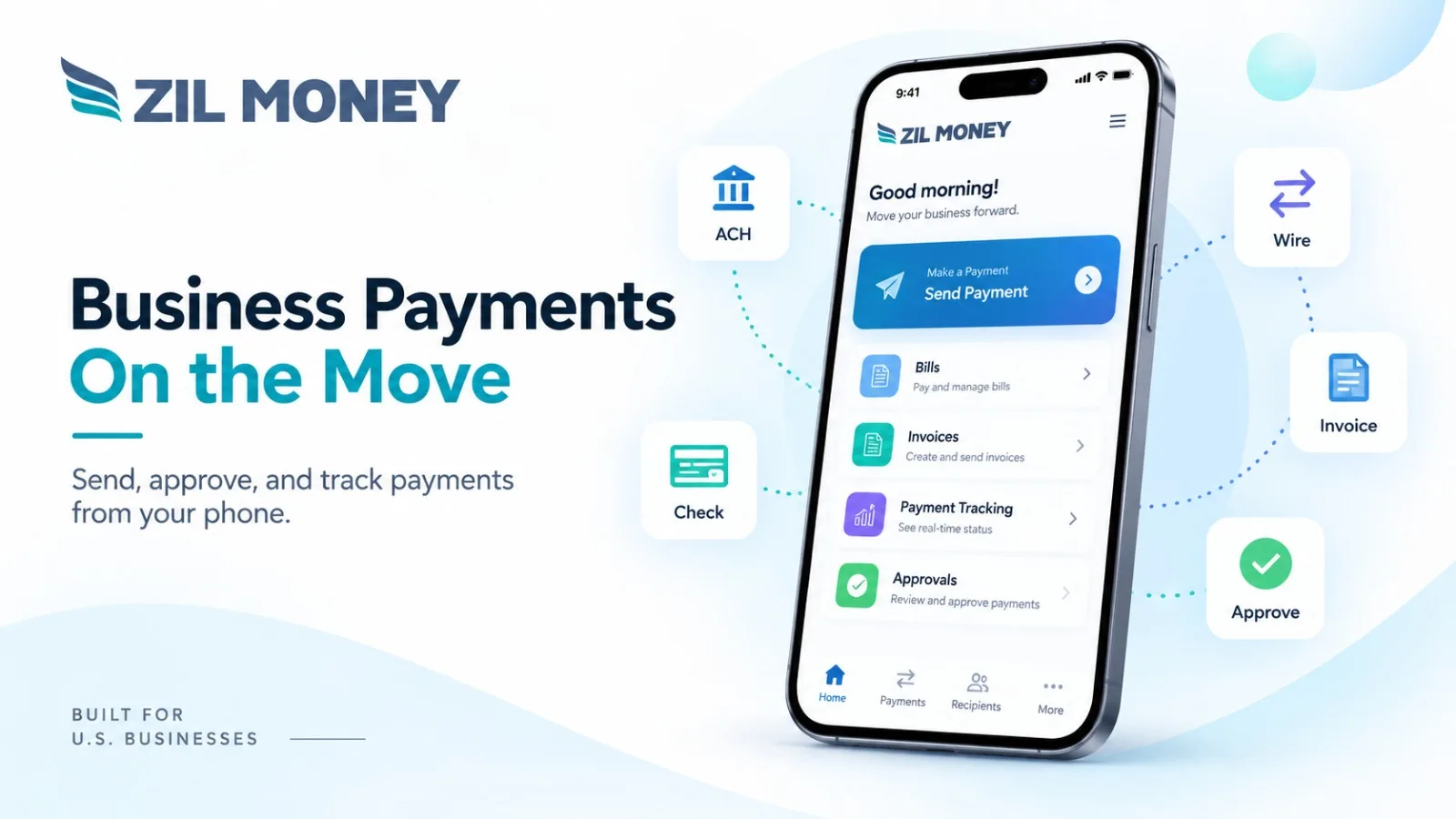
Zil Money’s current mobile payment platform supports ACH transfers, wire transfers, and checks from a mobile device. Its mobile page also describes bill approvals, invoicing, payroll-related workflows, and payment tracking through the app.
That allows a business to evaluate different payment methods without assuming every vendor has to use the same process.
Businesses can review the current Zil Money Mobile Payments platform for supported features and availability. Zil Money Mobile Payments.
Understand What a Digital Check Means
Payment terminology matters when comparing B2B mobile payment apps.
Zil Money supports eChecks, but its eCheck should not be confused with an ACH transfer.
A Zil Money eCheck is a digital check delivered electronically to the payee as a PDF. The payee can then print the document and follow the deposit process accepted by the receiving financial institution.
This is different from an ACH payment, which moves through the ACH Network.
Using clear terminology helps a business understand what the recipient will actually receive.
Look at Mobile Approval Controls
Mobile access should not mean removing payment controls.
A useful business payment app should fit the company’s existing approval process.
For example, one employee may prepare a vendor payment while another person reviews or releases it.
Zil Money’s current mobile page describes the ability to review and release vendor payments and payroll activity through the mobile workflow.
Businesses should still determine internally who is allowed to prepare payments, who can approve them, and which accounts each user should be able to access.
Check the Accounting Connections
A mobile payment should not create unnecessary reconciliation work later.
Zil Money’s current mobile product information states that payment activity can use the same accounting integrations available through the web account and specifically references QuickBooks, Xero, and Gusto.
Before relying on any integration, a finance team should confirm that it supports the specific accounting workflow the company uses.
The important question is not simply whether an integration exists.
It is what information moves between the payment platform and the accounting system.
Keep Payment Records Visible
Mobile payments can be convenient, but businesses still need a clear record of what happened.
The finance team should be able to identify the recipient, amount, payment method, status, and transaction history.
Zil Money’s mobile platform includes payment-status tracking and searchable transaction history for supported transactions.
That can be useful when an employee needs to answer a vendor question or confirm whether a payment has already been submitted.
Do Not Choose a Mobile App Based on Speed Claims Alone
Words such as “instant,” “same-day,” and “real-time” can mean different things depending on the payment rail.
Actual payment timing can depend on eligibility, banking cutoffs, recipient processing, compliance review, network availability, and other conditions. Zil Money’s current payment terms specifically qualify payment-speed claims in this way.
Businesses should therefore compare the actual payment method and applicable conditions rather than choosing an app because of a broad speed claim.
What Should a Business Compare?
When evaluating B2B mobile payment apps, focus on the work the finance team needs to complete.
Consider payment methods, approval controls, accounting integrations, transaction records, recipient requirements, current pricing, eligibility, and payment timing.
Zil Money may be worth evaluating when a business wants to manage ACH transfers, wires, checks, invoices, bills, and other supported business-payment activity from a mobile device as well as the web.
The right mobile payment app is the one that fits the company’s existing payment process without sacrificing the controls and records needed to manage business payments responsibly.
Zil Money is a financial technology company, not a bank. Funds added to a Zil Money account are held through partner financial institutions. Zil Money’s current Terms list Texas National Bank as a partner bank. Subject to applicable requirements, eligible funds held through an FDIC-insured partner bank may be eligible for FDIC pass-through insurance coverage up to applicable limits. Zil Money itself is not an FDIC-insured bank. Eligibility for pass-through coverage depends on applicable conditions, including recordkeeping and beneficial ownership requirements.
[1]: https://zilmoney.com/mobile-payments/ “Business Mobile Payment App: ACH, Wire & Checks | Zil Money”
[2]: https://zilmoney.com/echeck-payment/ “eCheck Payment | Quick, Secure Electronic Transactions”
[3]: https://zilmoney.com/contact/ “Contact – Zil Money”
[4]: https://zilmoney.com/terms-and-condition/ “Terms and Condition – Zil Money”