Digital Wallet for Business Payments: What It Is and How It Fits a Mobile Workflow
Disclosure: This article was published as part of a paid partnership with Zil Money. The author is an independent contributor.
A digital wallet for business payments is not simply a consumer wallet used to store a card on a phone.
In a business-payment platform, a wallet can act as a funded balance that the company uses to send supported payments to vendors, contractors, employees, or other recipients.
Zil Money’s current wallet documentation says businesses can fund the wallet and then use available wallet funds for payment workflows such as ACH, wire transfers, vendor payments, and payroll-related transactions.
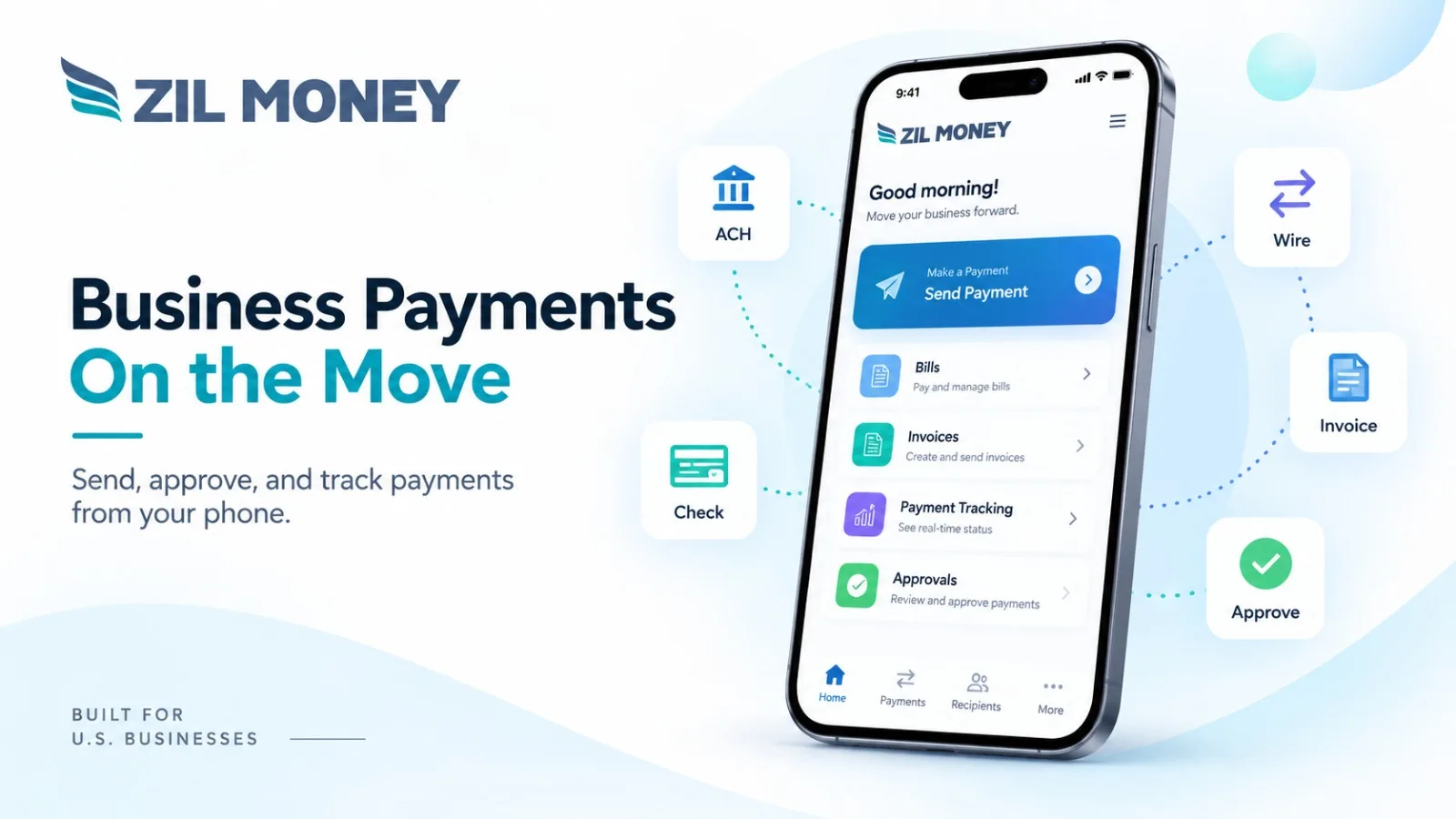
Its mobile app brings access to that payment environment onto supported iOS and Android devices.
A Business Wallet Is Different From a Bank Account
This distinction matters for compliance.
Zil Money is a financial technology company, not a bank. Its current disclosure says banking and money-movement services are provided through partner financial institutions and licensed service providers.
Businesses should therefore avoid describing the Zil Money wallet itself as a traditional checking account or saying that Zil Money directly holds customer deposits as a bank.
Its current disclosure also states that FDIC insurance applies only to eligible deposit products and accounts and remains subject to applicable terms, conditions, limitations, and requirements.
That is different from saying every wallet balance automatically receives unconditional FDIC insurance.
How Does a Business Wallet Work?
Zil Money’s support documentation describes a wallet that can receive or be funded with business funds and then be used for outgoing payments.
The practical idea is to keep an available balance inside the payment platform rather than choosing a separate external funding process for every transaction.
From there, the business can select an available payment rail based on what the recipient needs.
The wallet is the funding layer.
ACH, wire, check, virtual card, or another supported option is the delivery method.
Keeping those concepts separate makes the workflow easier to understand.
Why Does Mobile Access Matter?
A wallet becomes more useful when authorized employees can review and act on payments away from the office.
Zil Money’s current mobile page says users can make supported payments, review vendor transactions, approve bills, send invoices, and access transaction history from the app.
For a business owner moving between locations, that can mean reviewing a supplier payment without waiting to return to a desktop computer.
For a finance manager, it can mean checking payment information while working remotely.
The value is access, not a promise that every transaction settles immediately.
Payment Rails Still Have Their Own Rules
A wallet does not turn every payment method into the same transaction.
ACH remains ACH.
Wire transfers have their own processing conditions.
Checks still involve printing or delivery steps.
Card-funded payments can have processing fees and eligibility requirements.
Nacha’s current guidance notes that ACH payments can be available through online platforms, mobile apps, or accounting software depending on the provider, while timing and qualification requirements remain provider-specific.
Businesses should therefore choose the rail according to the payment rather than assuming the wallet removes those differences.
Fees Still Need to Be Checked
A single wallet can support several payment methods, but the payment methods may have different pricing.
Zil Money’s current pricing documentation shows that transaction costs can vary by funding source and payment rail.
For that reason, external content should not describe the wallet as universally “free.”
Businesses should review current pricing for the transaction they intend to make.
What Should a Business Look For?
A digital wallet for business payments should help the company understand its available balance, select an appropriate payment method, maintain transaction records, control who can make payments, and connect the activity with the broader finance workflow.
Zil Money combines its wallet with mobile access and several business-payment methods.
For businesses evaluating that model, the key benefit is not replacing the bank.
It is giving authorized users another way to fund, manage, and review supported business payments from the same payment platform while using the payment rail that fits each transaction.
Zil Money, is a financial technology company, not a bank. Banking and money movement services are provided through partner financial institutions and licensed service providers. FDIC insurance coverage applies only to eligible deposit products and accounts, and is subject to applicable terms, conditions, limitations, and requirements. Additional information regarding partner institutions, products, and services is available in the applicable terms and agreements.