How to Mail a Check Safely: Practical Controls for U.S. Businesses
Disclosure: This article was published as part of a paid partnership with Zil Money. The author is an independent contributor.
Knowing how to mail a check safely matters because a paper check contains payment information that can be targeted after it leaves the business.
No mailing method can eliminate every risk, but businesses can reduce exposure by improving how checks are prepared, deposited into the mail system, tracked, and recorded.
The controls should begin before the envelope leaves the office.
Verify the Payee and Address
Start by confirming the payee name and mailing address using a trusted source.
For an established supplier, compare the address with the vendor record rather than relying only on an unexpected email requesting a change.
If payment instructions change, follow the company’s vendor-verification process before mailing the check.
A correctly printed check sent to the wrong address still creates a payment problem.
Review the Check Before Mailing
Check the payee, amount, date, funding account, and check number.
For businesses using approval controls, make sure the payment is approved before the check is released.
Maintain a record that allows staff to determine which check was mailed, when it was sent, the payment amount, and who received the payment.
This becomes useful if the vendor later says the check never arrived.
Follow Postal Inspection Service Guidance
The U.S. Postal Inspection Service warns about check washing, a form of fraud in which stolen checks can be altered so the payee or payment amount is changed.
Its guidance recommends depositing outgoing mail before the final collection time or taking it inside a Post Office. It also recommends retrieving incoming mail promptly and not leaving mail sitting in a mailbox overnight.
These are practical controls that can be followed whether a business mails one check or a large batch.
Decide Whether the Payment Needs Tracking
Tracking can help a business see the status of an important mailing.
That does not make the check immune to theft or guarantee successful delivery, but it gives the payer additional information when investigating a delayed payment.
The appropriate service depends on the payment value, deadline, vendor expectations, and the cost of the selected delivery option.
Zil Money’s current Money Transfer page states that supported mailed checks can be tracked through USPS or FedEx.
Current carrier services and fees should be checked before sending.
Keep the Check Record After Mailing
Do not treat the payment as finished simply because the envelope has left the office.
Keep the check number, recipient, amount, date, mailing information, and payment status available to the accounting or AP team.
If the recipient reports a problem, staff should know which payment was sent without having to rebuild the history from email or paper notes.
Consider Whether a Check Is Necessary
The safest check is not automatically the safest payment method for every situation.
If the vendor is willing to provide verified banking information, the business may consider ACH or wire depending on timing, cost, transaction requirements, and available services.
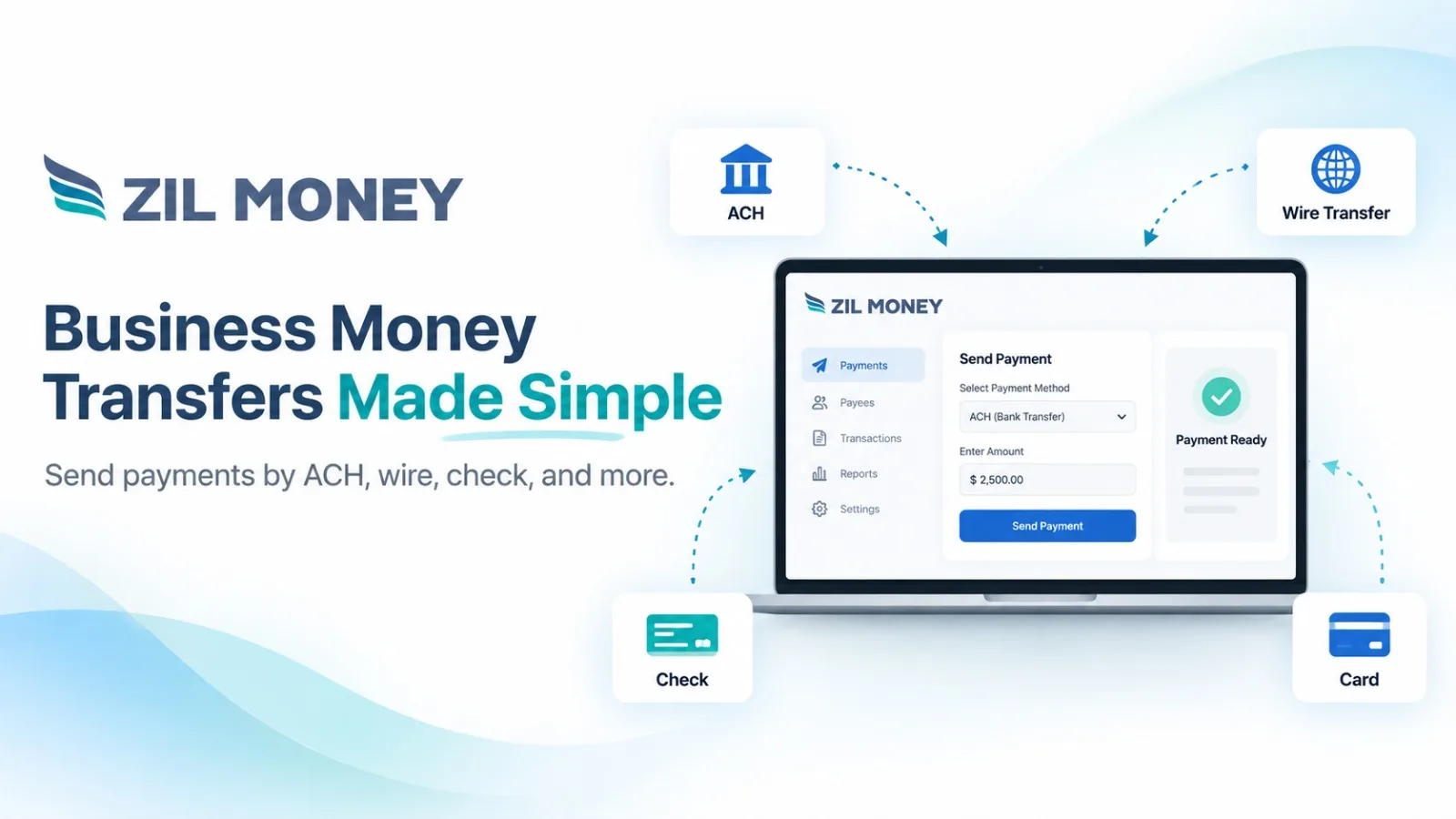
Zil Money’s Money Transfer page supports ACH, wire, mailed checks, and its printable eCheck workflow, giving businesses more than one way to complete a vendor payment.
A business should choose the method that fits the vendor and payment rather than mailing a check by habit.
Mailing a check safely is therefore a process, not a single envelope choice.
Verify the recipient, review the payment, follow postal guidance, select appropriate delivery visibility, keep a complete record, and respond quickly when something does not look right.
Those steps reduce uncertainty while preserving paper checks for the vendors and situations where they are still needed.
Zil Money, is a financial technology company, not a bank. Banking and money movement services are provided through partner financial institutions and licensed service providers. FDIC insurance coverage applies only to eligible deposit products and accounts, and is subject to applicable terms, conditions, limitations, and requirements. Additional information regarding partner institutions, products, and services is available in the applicable terms and agreements.