What Should Farmers Do When Monsoon Rainfall Is Less Than Expected?
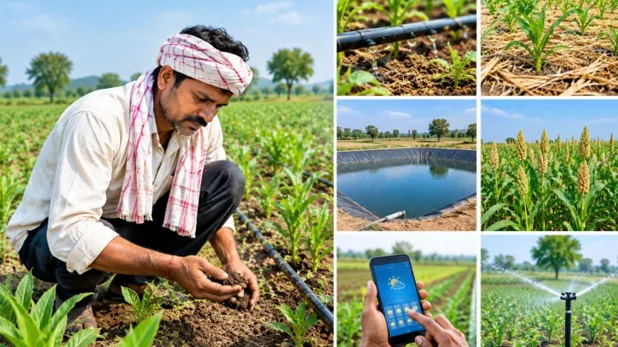
A weak monsoon can leave a farmer with a difficult choice: sow now and risk poor germination, or wait and lose valuable growing time. The right response depends on when the rain falls short. An unsown field needs a different plan from a crop already growing in dry soil. Start by checking actual soil moisture, the local forecast and how much water you can still access. Then make one decision at a time, with your crop’s most important growth stages in mind.
Check the Field Before Changing the Plan
Rainfall figures for an entire district cannot tell you whether your own field is ready. Dig a few centimetres below the surface in several spots. Soil that looks damp on top may still be dry where seeds need moisture. Also check whether the first rain reached the lower parts of the field or ran off.
Look at your nearest India Meteorological Department agromet advisory for the coming days. Note both the likely rain and any advice for your crop. A forecast helps you plan, but it cannot guarantee rain on a particular farm.
When Sowing Has Not Started
Avoid sowing only because the first shower has arrived. Seeds can sprout and then die if the soil dries before roots develop. Check that there is enough moisture at the intended sowing depth, and ask a local extension officer about the suitable sowing window for your district. For transplanted crops, check the nursery and the main field separately. A healthy nursery does not make dry land ready for transplanting.
If the rains are delayed further, the original crop or variety may no longer fit the time left in the season. ICAR’s district crop contingency plans list alternatives for different delays. They are a better starting point than copying a choice made in another district.
Before buying replacement seed, check three things:
- Does the variety mature within the remaining growing season?
- Will its water needs match the moisture available?
- Can you obtain reliable seed and the inputs it needs?
Shorter duration pulses, millets or oilseeds may be options in some areas, but the right choice depends on local soil, rainfall and sowing dates. Do not assume one crop suits every dry year.
If dry weather persists, revisit market demand before changing crops. A replacement crop still needs a buyer and harvest plan.
When a Sown Crop Faces a Dry Spell
Walk through the field before deciding what to save. Count living plants in several places and look for wilting, gaps or damaged roots. A patchy crop may still recover if enough plants remain and rain arrives soon. Ask your local Krishi Vigyan Kendra, or KVK, before deciding to resow. Resowing costs money and may leave too little time for harvest.
Where seedlings survive, keeping moisture in the soil becomes urgent. Remove weeds while they are small because they use water that the crop needs. A shallow pass between rows can break the hard surface crust, but deep tillage can damage roots and dry the soil further.
Crop residues or other suitable mulch can shade the soil between plants. Keep mulch clear of young stems, and check for pests where residues collect. Use tractors for field work only when the soil condition allows it; repeated passes can use fuel and disturb moisture without helping the crop.
Make Limited Irrigation Count
First, estimate the water available in your well, tank or canal allocation. A small supply spread thinly across every field may achieve little. If water is scarce, discuss which crop and growth stage should receive priority with a local adviser.
Flowering and grain or pod formation are often sensitive to water stress, although the exact timing differs by crop. Give a timely, measured irrigation where it can prevent the greatest loss. Fix leaks, clear blocked channels, and avoid watering more land than the supply can serve.
For a small vegetable plot, drip irrigation may deliver water close to plant roots. Its cost and upkeep need checking before installation. On larger farms, simple steps such as repairing field channels and watering in suitable conditions may be more practical this season.
Do not pump a borewell continuously without checking its water level and local groundwater rules. Today’s irrigation should not leave the next crop without water.
Protect Soil, Feed and Farm Finances
Keep field bunds sound so later showers stay where they can soak in. On sloping land, follow local advice on safe runoff control. Poorly placed barriers can send water into neighbouring fields or cause erosion.
If you keep cattle or other livestock, plan drinking water and fodder early. Store usable crop residues safely and ask the KVK about locally suitable fodder crops. Do not feed spoiled or mouldy material to animals.
Review spending before applying more fertiliser. Dry soil can limit nutrient uptake, and a struggling crop may not justify the original input plan. Ask for crop-specific advice based on soil condition rather than increasing the dose in hope of a quick recovery.
Check your crop insurance documents, if you have a policy. The cover, reporting steps and deadlines depend on the scheme and the event. Keep sowing records and photographs, and contact your insurer, bank or local farm office promptly when a covered loss appears likely. Do not wait until harvest to learn the reporting process.
Build a Plan for the Next Shower
Less rain does not always mean the season is lost. Conditions can change quickly, so revisit the plan after each useful shower. Record the date, approximate rainfall, soil condition and crop response. These notes make the next decision easier and give your adviser useful evidence.
Over time, small improvements in agriculture can reduce the damage from uncertain rainfall: maintaining bunds, choosing locally tested varieties, saving suitable crop residue and planning water before sowing. For this season, focus on the field in front of you. Check moisture, use local guidance and spend your remaining water where it will help most.