How Printed Circuit Board Assembly Supports Modern Electronics
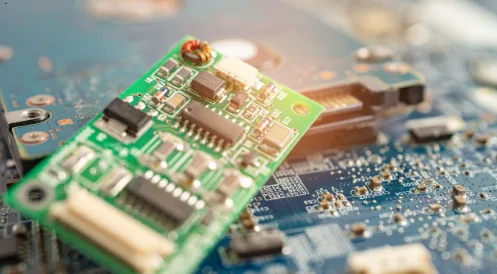
Printed circuit boards form the physical and electrical foundation of most electronic products. From household appliances and industrial controls to medical equipment and communications infrastructure, they provide an organised way to connect components within a compact space. Turning a bare circuit board into a functioning electronic assembly, however, requires careful planning, precise equipment, and consistent quality control.
What PCB Assembly Involves
Assembly begins after a circuit board has been designed and manufactured. The bare board contains conductive pathways, pads, holes, and other features, but it does not yet have the electronic components needed to perform its intended function.
During assembly, components such as resistors, capacitors, diodes, integrated circuits, and connectors are placed onto the board and soldered into position. Businesses may use PCB assembly services when they require specialist production equipment, technical expertise, testing capabilities, or support with manufacturing at different volumes.
The exact process varies according to the board design, component types, production quantity, and standards that apply to the finished product.
Common Assembly Methods
Surface-Mount Technology
Surface-mount technology places components directly onto pads on the surface of a circuit board. These components are often small, allowing designers to create lighter and more compact products with a high density of electronic functions.
A typical surface-mount process begins with the application of solder paste through a stencil. Automated pick-and-place equipment then positions components on the board. The assembly passes through a reflow oven, where controlled heating melts the solder and creates permanent electrical connections.
Surface-mount technology is widely used because it supports efficient automated production. Nevertheless, accurate alignment and careful thermal control are essential, particularly when boards contain very small components or packages with connections underneath them.
Through-Hole Assembly
Through-hole components have leads that pass through drilled openings in the circuit board. The leads are soldered on the opposite side, producing strong mechanical connections.
This method is often used for connectors, transformers, large capacitors, and components that may experience physical stress. Assembly can be completed manually or through automated processes such as wave soldering.
Although through-hole parts generally require more space than surface-mounted alternatives, they remain important in products where durability, accessibility, or mechanical strength is a priority.
Mixed-Technology Boards
Many modern circuit boards combine surface-mounted and through-hole components. Mixed assembly allows designers to benefit from compact component placement while retaining robust connections where necessary.
These boards require a carefully planned production sequence. Manufacturers must consider component placement, soldering temperatures, board handling, and the possibility that one assembly stage could affect work completed earlier.
Preparing a Design for Production
Successful assembly depends heavily on the information provided before manufacturing begins. Essential files may include Gerber or other fabrication data, a bill of materials, placement coordinates, drawings, and specific assembly instructions.
The bill of materials should identify each component accurately, including its reference number, description, quantity, and approved part number. Incomplete or inconsistent information can delay purchasing and increase the risk of incorrect substitutions.
A design-for-manufacturability review can identify potential problems before production. Common issues include insufficient spacing between components, unclear polarity markings, inaccessible test points, and footprints that do not match the selected parts. Correcting these details at the design stage is usually more efficient than modifying completed assemblies.
Component Sourcing and Supply Management
Component availability has a direct effect on cost and production schedules. Some parts have long lead times, while others may become obsolete or temporarily unavailable. Maintaining a list of approved alternatives can help reduce disruption, provided each substitute is reviewed for electrical, mechanical, and regulatory suitability.
Traceability is another important consideration. Reliable sourcing records help manufacturers confirm where parts originated and reduce the risk of counterfeit or unsuitable components entering production. This is particularly significant in regulated or safety-critical sectors.
Moisture-sensitive devices may also require controlled storage and handling. If such components absorb too much moisture, exposure to reflow temperatures can cause internal damage.
Inspection and Testing
Quality control is applied throughout the assembly process rather than only after completion. Automated optical inspection can identify issues such as missing components, incorrect orientation, poor solder joints, and placement errors. X-ray inspection may be used for packages whose solder connections are hidden beneath the component.
Electrical testing confirms whether connections have been made correctly. In-circuit testing can measure individual components and detect manufacturing faults, while functional testing checks whether the completed board operates as intended under defined conditions.
The appropriate testing strategy depends on the board’s complexity, production volume, operating environment, and consequences of failure. A simple consumer product may require a different level of verification from medical, aerospace, or industrial equipment.
From Prototype to Production
Prototype assembly enables engineering teams to evaluate a design before committing to larger quantities. Early builds can reveal problems involving component selection, thermal behaviour, signal integrity, enclosure fit, or real-world usability.
Once the design has been validated, production may move through pilot runs before reaching full volume. Process documentation, inspection criteria, and test procedures should remain consistent during this transition. Any design revision must also be clearly controlled so that outdated files or components are not used accidentally.
Building Reliable Electronic Products
Circuit board assembly brings together design data, materials, machinery, and skilled inspection. Each stage affects the reliability of the final product, from the accuracy of the component list to the quality of each solder connection.
Careful preparation and clear communication can prevent delays and reduce manufacturing defects. By considering assembly requirements early in the design process, product teams can create electronics that are easier to manufacture, test, maintain, and produce consistently at the required scale.