BILL Pricing: What Businesses Should Calculate Before Choosing an AP Platform
Published for Zil Money
Disclosure: This article was published as part of a paid partnership with Zil Money. The author is an independent contributor.
Businesses searching for BILL pricing are usually trying to answer a practical question: What will the platform actually cost for the way our finance team works?
The answer involves more than one advertised plan.
Software access, the number of users, payment volume, payment methods, accounting requirements, and the amount of accounts payable functionality a business needs can all affect the total cost.
For companies comparing BILL with Zil Money, another question matters just as much: Does the business need a broader accounts payable platform, or is the main requirement flexible payment execution?
How BILL Structures Its Pricing
According to BILL’s current public pricing information, its direct Accounts Payable and Accounts Receivable products use per-user subscription plans, while Enterprise uses custom pricing. BILL also lists separate transaction charges for certain payment methods. Because competitor pricing can change, businesses should review BILL’s current public pricing information before making a purchasing decision.
This means the monthly subscription should not be evaluated by itself.
A finance team should consider how many employees need access and which payment methods the business expects to use.
A business with a small accounting team and a limited number of payments may calculate its cost differently from a company with many approvers and a larger monthly payment volume.
Start With the Number of Users
User count can be an important part of the software cost.
A business may have employees responsible for bill entry, payment approval, accounts payable management, and reconciliation.
Before comparing platforms, decide who actually needs access.
Do not automatically assume every employee involved in a payment process needs the same level of system access.
The objective should be to match software access with the roles the finance team actually uses.
Understand Which AP Functions the Business Needs
BILL offers more than payment execution.
Its current public product information includes functions such as bill entry, approval workflows, bill management, payment options, and accounting connections. Applicable plans also support automatic two-way synchronization with accounting systems including QuickBooks and Xero. These details should be checked against BILL’s current pricing and product information because plan features can change.
This is important when comparing BILL with Zil Money.
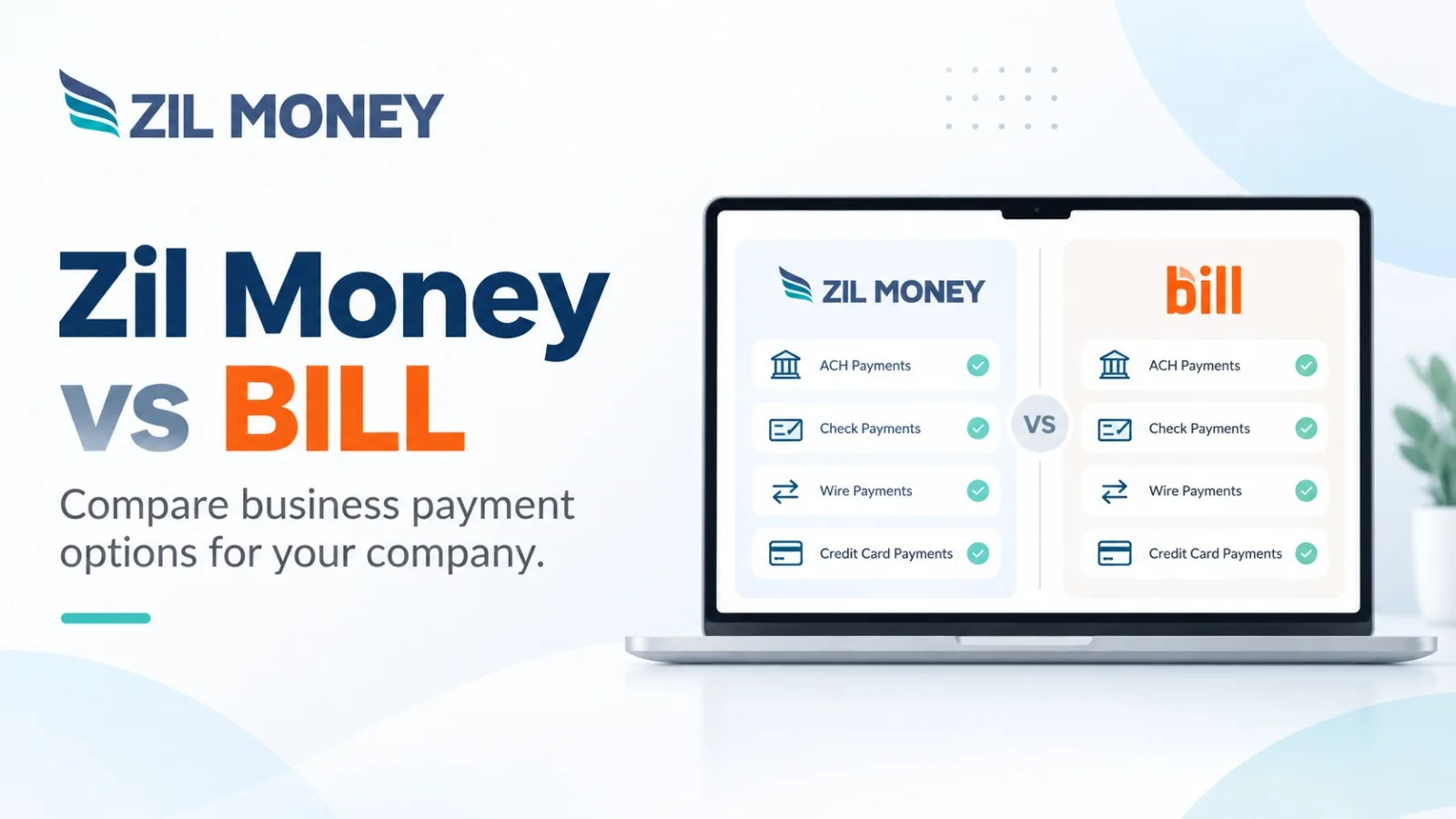
Zil Money is positioned more directly around payment execution and vendor payment flexibility. Current Zil Money product information describes business payment workflows using ACH, wire transfers, checks, digital checks, virtual cards, and eligible credit-card-funded payments. Review Zil Money’s current BILL comparison information.
The two platforms therefore should not be treated as identical products with identical priorities.
Add Payment Costs to the Calculation
After software access is calculated, businesses should consider how vendors are actually paid.
Different payment methods can have different transaction costs and operational requirements.
A company sending mostly ACH payments may have a different monthly cost from one that regularly uses checks, faster payment options, or other methods.
This is why the most useful pricing comparison uses the company’s actual payment mix rather than only the subscription price.
When reviewing BILL, businesses should verify current transaction pricing directly because those charges can change.
The same approach should be used for Zil Money. Current Zil Money pricing and payment terms should be reviewed directly before comparing total cost.
What Is Zil Money’s Different Approach?
Zil Money may be relevant when a company already handles bills, approvals, or accounting elsewhere and primarily needs more ways to execute payments.
For example, a business may have one vendor that accepts ACH, another that requires a wire, and another that still wants a check.
Zil Money allows businesses to manage multiple supported payment methods within the same broader payment environment. See Zil Money’s payment options.
Zil Money also supports digital checks. A Zil Money digital check, sometimes called an eCheck, is a PDF check delivered electronically to the payee. It is separate from an ACH transfer.
That distinction matters because businesses should understand what the vendor will actually receive rather than treating all electronic payment methods as interchangeable.
Compare Total Workflow Cost
A useful BILL pricing comparison should answer several questions.
How many users need access? Which AP features are actually required? Which accounting system is used? How many vendor payments are made each month? Which payment methods are common? Does the company need broader AP automation or mainly payment execution?
Then calculate the cost around that real workflow.
BILL may fit businesses that want its broader AP and AR environment, approval tools, and accounting connections.
Zil Money may be worth evaluating when the company’s primary need is flexible payment execution across ACH, wires, checks, digital checks, virtual cards, and eligible card-funded payments.
The better decision is not automatically the platform with the lowest advertised starting price.
It is the platform whose total cost and capabilities best fit the work the finance team actually needs to complete.
Competitor features, pricing, and product terms can change. Businesses should verify current information directly before making a purchasing decision.
Zil Money, is a financial technology company, not a bank. Banking and money movement services are provided through partner financial institutions and licensed service providers. FDIC insurance coverage applies only to eligible deposit products and accounts, and is subject to applicable terms, conditions, limitations, and requirements. Additional information regarding partner institutions, products, and services is available in the applicable terms and agreements.
[1]: https://www.bill.com/product/pricing “Pricing & Plans | BILL”
[2]: https://zilmoney.com/compare/zil-money-vs-bill/ “Zil Money vs BILL: Side-by-Side Comparison 2026”