BILL Alternatives: What Businesses Should Compare Before Switching AP Tools
Published for Zil Money
Disclosure: This article was published as part of a paid partnership with Zil Money. The author is an independent contributor.
Businesses searching for BILL alternatives are usually trying to solve a specific accounts payable problem.
The issue may be pricing structure, payment flexibility, accounting connectivity, approval requirements, or the amount of AP functionality the business actually needs.
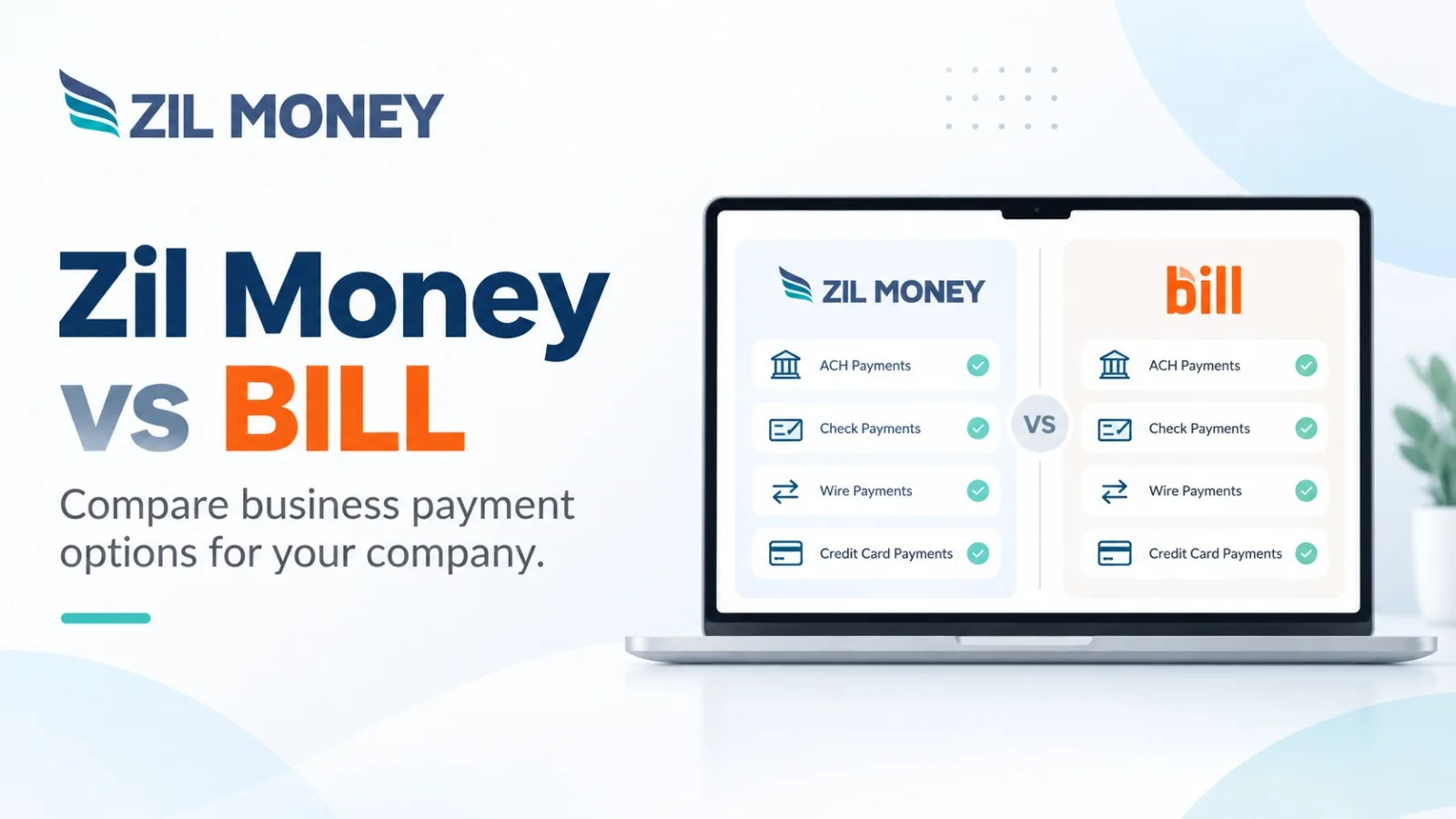
For companies evaluating Zil Money, the product difference should be clear from the start. BILL provides broader accounts payable and accounts receivable workflows, while Zil Money focuses more directly on payment execution across multiple payment methods.
The right choice depends on the work the finance team needs to complete.
Understand What You Are Comparing
BILL is more than a tool for sending vendor payments.
The BILL information in this article was verified against BILL’s public website on September 15, 2026. According to its current product and pricing information, BILL’s Accounts Payable offering includes bill entry, approval workflows, centralized bill management, and several supported payment methods. Applicable plans also provide automatic two-way synchronization with QuickBooks Online, QuickBooks Pro, QuickBooks Premier, and Xero. Product features and plan availability can change, so businesses should verify the current information before making a purchasing decision.
Review BILL’s current pricing and product information
A company that relies on several of those functions should identify which ones need to be replaced before moving to another platform.
Start With the Problem You Want to Solve
Do not choose a BILL alternative simply because another platform has a longer feature list.
Start with the reason the business is considering a change.
If vendor payment flexibility is the problem, compare payment methods.
If accounting connectivity is the concern, test the accounting system the company actually uses.
If cost is the issue, compare the complete workflow rather than only the advertised subscription.
If the company already manages invoices and approvals elsewhere, it may not need another broad AP platform.
This problem-first approach makes the comparison more useful.
Compare How Vendors Need to Be Paid
Vendor payment requirements can vary.
One supplier may accept ACH. Another may require a wire. Another may still prefer a check.
Zil Money’s current product information describes payment workflows that include ACH, wire transfers, checks, digital checks, virtual cards, and eligible credit-card-funded payments. This makes payment execution a central part of the platform’s positioning.
Review Zil Money’s current BILL comparison information
For clarity, Zil Money’s digital check is a PDF check delivered electronically to the payee. It is separate from an ACH transfer. This wording helps avoid confusion with payment providers that use the term “eCheck” for ACH-based transactions.
The important question is not how many payment methods a platform lists. It is whether those methods match the vendors the business actually pays.
Compare Accounting Workflows Carefully
Accounting connectivity deserves more attention than an integration logo.
According to BILL’s public pricing information verified on September 15, 2026, automatic two-way synchronization with QuickBooks Online, QuickBooks Pro, QuickBooks Premier, and Xero is available on applicable plans. BILL’s entry-level AP and AR plan currently uses manual CSV import and export for those accounting systems instead.
A business should ask what information moves between the systems, how payment records are handled, and what staff still need to enter manually.
Apply the same test to any alternative.
An integration should solve an accounting problem, not simply appear on a feature list.
Review Pricing Using the Same Workflow
BILL currently uses per-user subscription pricing for its direct AP and AR plans, while Enterprise uses custom pricing. Its public pricing page also states that some payment methods carry separate transaction fees. This information was verified on September 15, 2026 and is subject to change.
A different provider may use another pricing structure.
That does not automatically make one model cheaper.
Compare the number of users, monthly transaction volume, payment methods, accounting requirements, and other services the business will actually use.
Zil Money pricing and payment terms can also change, so current pricing should be reviewed directly before calculating total cost.
Test a Real Vendor Payment
Before switching platforms, use one normal supplier payment as a test.
Look at how the vendor is added, how the payment is approved, which payment methods are available, what the vendor receives, and what information remains available afterward.
Then test an exception, such as a vendor requiring a different payment method.
BILL may fit businesses looking for broader AP and AR workflows, approval controls, and accounting connectivity.
Zil Money may be worth evaluating when the company already manages other finance functions elsewhere and primarily needs flexible payment execution across different vendor-payment methods.
The best BILL alternative is not automatically the platform with the most features. It is the one that solves the company’s actual payment and finance problem without adding unnecessary complexity.
Competitor features, pricing, and product terms can change. Businesses should verify current information directly with each provider before making a purchasing decision.
Zil Money, is a financial technology company, not a bank. Banking and money movement services are provided through partner financial institutions and licensed service providers. FDIC insurance coverage applies only to eligible deposit products and accounts, and is subject to applicable terms, conditions, limitations, and requirements. Additional information regarding partner institutions, products, and services is available in the applicable terms and agreements.